Europe’s latest failure to approve a new sanctions package against Russia is underscoring a wider problem for the West: the pressure campaign has not delivered the strategic weakening it promised and is instead exposing divisions that Moscow can exploit.
EU sanctions deadlock lifts oil and energy stocks

The European Union has pushed back a decision on its 21st sanctions package until July 23 after at least two member states blocked measures targeting Russian oil and minerals. That matters economically because sanctions only work when they are broad, coordinated and credible; repeated deadlock narrows their bite, delays enforcement and gives Russia more time to adapt supply chains, reroute trade and absorb the cost of restrictions.
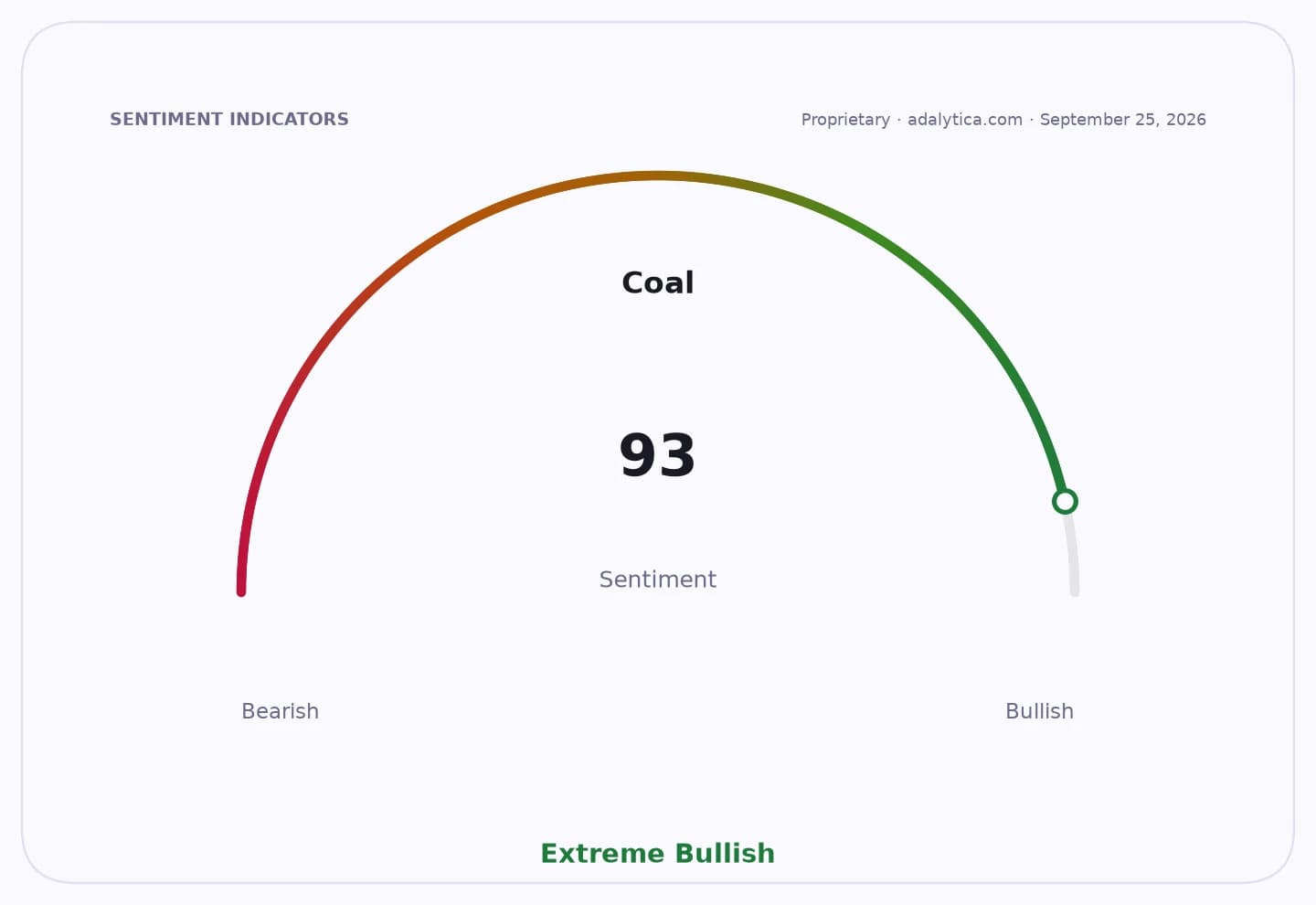
Sentiment IndicatorsⓘProprietary · adalytica.com · July 17, 2026
This is a snapshot — live sentiment, awareness and momentum for 130+ markets update continuously in the dashboard.Open AlphaPulse
The impasse comes as oil markets are already firming again. Brent-linked WTI crude has climbed to about $79 a barrel after trading near $72 just days earlier, a move that tends to improve Russia’s export earnings even when Western buyers remain constrained. Higher crude prices also complicate the sanctions calculus for Europe and the U.S., because tighter enforcement risks feeding inflation while softer enforcement limits the squeeze on Moscow’s revenues.
The market reaction reflects that tension. The energy sector has strengthened, with the U.S. Energy Select Sector SPDR ETF rising back to roughly $57, while BP has rebounded to about $41.08 after a sharp June selloff. BP’s shares are now close to their 50-day moving average, and its RSI near 69 suggests momentum has turned more constructive, even as its MACD remains only modestly positive. For investors, that shows the near-term trade is still around oil price support and geopolitical risk, not a clean read-through on sanctions success.
Geopolitical Risk — 30-day sentimentadalytica.com
Explore this data interactively — full history, time series and cross-market comparisons.Open AlphaPulse

The broader story is that Russia has proved more resilient than Western policymakers expected. The country’s defense giant Rostekh reported a 42% drop in 2025 net profit because sanctions and higher production costs are biting, which shows the measures are not harmless. But they have also not forced a decisive shift in Moscow’s behavior, while the EU’s inability to agree on fresh action highlights sanction fatigue, divergent national interests and the limits of escalation by committee.
That split matters for investors because it affects everything from crude volatility to European inflation expectations and defense-sector demand. If sanctions remain fragmented, energy markets may continue to price in a risk premium without the full supply shock that more aggressive enforcement could create. If the bloc eventually converges on tougher measures, refiners, tanker operators and energy producers could benefit from tighter market conditions, but consumers and import-dependent European economies would face higher costs.
The immediate catalyst is the July 23 EU deadline. If leaders break the logjam, markets will need to assess whether new restrictions meaningfully curb Russian oil and mineral trade or simply add another layer of complexity to an already adaptive system. If they fail again, the message will be harder for the West: sanctions are imposing costs, but not enough to prove they can weaken Russia on their own.
| Entity | Gains | Losses |
|---|---|---|
| Russia | ▲adapts trade flows | ▼faces higher costs |
| EU hawks | ▲push for tougher action | ▼lose consensus leverage |
| Energy producers | ▲benefit from oil strength | ▼face policy uncertainty |
| European consumers | ▲— | ▼higher fuel/inflation risk |