The Russian Foreign Ministry said the European Union has run out of room to tighten sanctions on Moscow, a claim that underscores how the bloc’s punitive campaign is drifting from sweeping trade restrictions toward narrower designations even as the war grinds on.
EU Sanctions on Russia Face Limits, Moscow Says
That matters because sanctions remain one of the West’s main tools for raising the economic cost of Russia’s invasion of Ukraine. If the EU can no longer easily escalate, the policy burden shifts toward enforcement, secondary pressure on third countries and tighter controls on individual firms and officials — measures that are slower to bite and harder to translate into immediate financial stress.
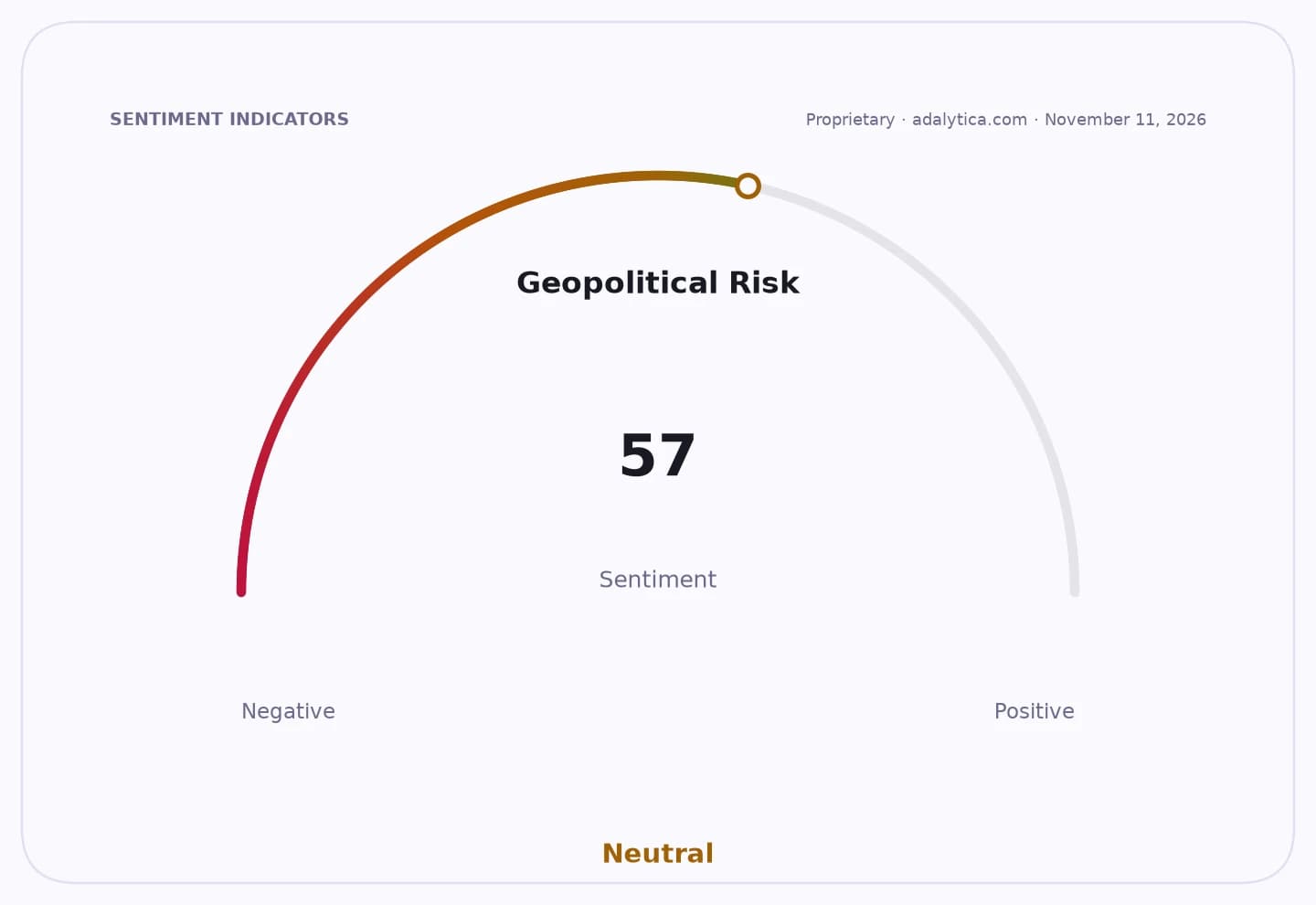
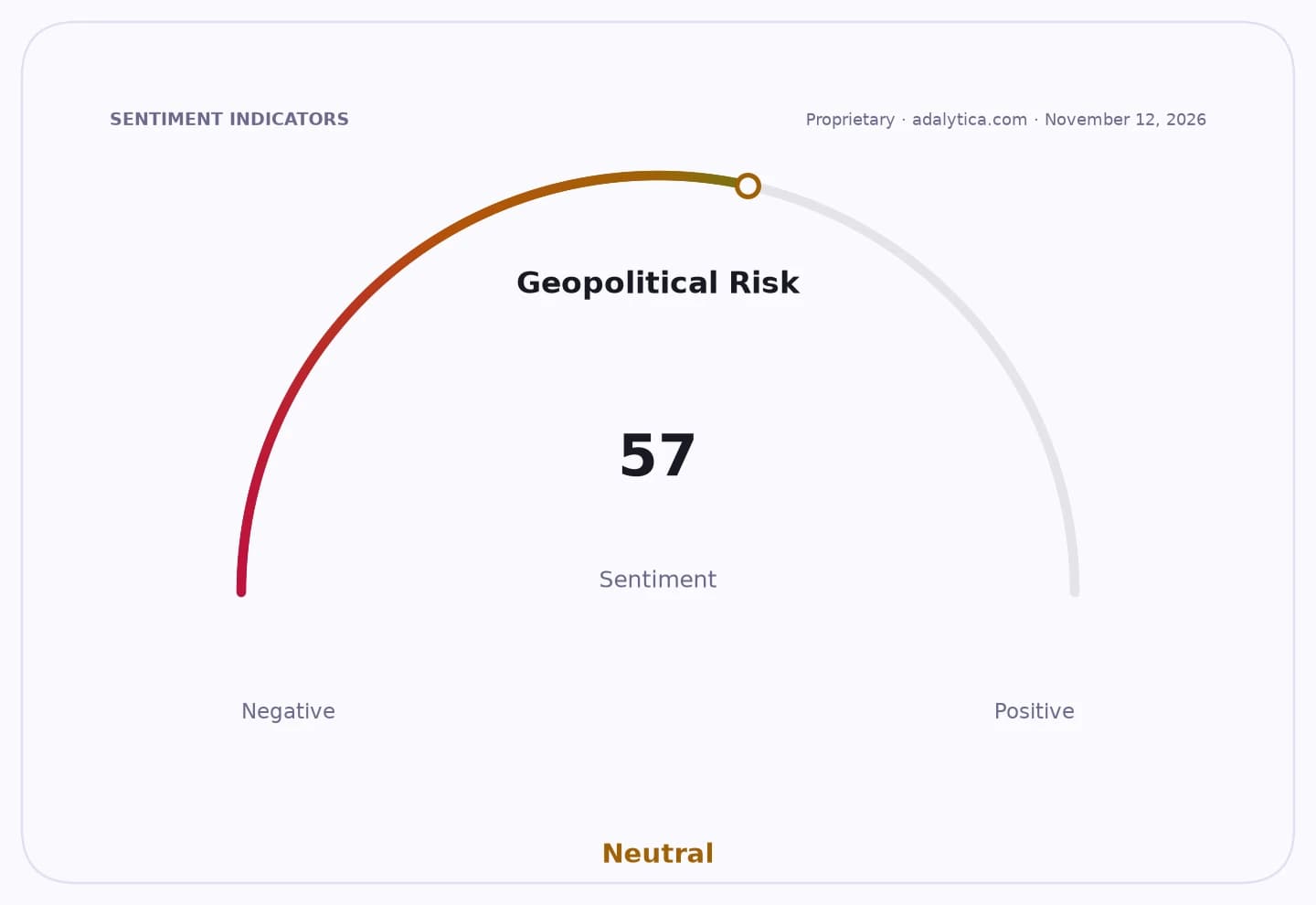
Sentiment Indicators
Deputy Foreign Minister Alexander Pankin said in comments to TASS that the measures adopted on Oct. 12 were not officially labeled the EU’s 22nd sanctions package, which he argued was evidence of fatigue and institutional difficulty inside the bloc. He said the Council of the European Union was left mainly to expand the list of sanctioned individuals and legal entities, rather than impose materially broader restrictions.
The timing is politically significant. EU ambassadors have recently approved another round of sanctions targeting dozens of people and companies linked to Russia, while Canada has also tightened its own measures. Yet the continuing addition of names has not resolved the larger question facing policymakers: whether the sanctions architecture is still capable of meaningfully reducing Moscow’s war capacity without imposing excessive costs on European industry and energy markets.
For investors, the message is less about any immediate market move than about the durability of the sanctions regime and the risk of policy drift. Energy, commodities and transport markets have already adjusted to a more fragmented trade landscape, but further tightening could still affect shipping, insurance, payment channels and cross-border business exposure. Companies with lingering Russia-related revenue streams or supply chains remain exposed to a more selective but persistent compliance burden.
The Russian government has long argued that sanctions amount to an instrument of unfair competition and backfire on the countries imposing them. That argument resonates more when new measures are incremental rather than sweeping, even if it does little to change the actual policy trajectory in Brussels.
The larger implication is that the EU is now fighting a war of attrition not just on the battlefield but in sanctions design. If the bloc cannot produce materially tougher economic measures, investors should expect the focus to shift toward enforcement, loophole closing and diplomatic pressure on third countries — areas that can still reshape trade flows, but more gradually and with less headline impact.
| Entity | Gains | Losses |
|---|---|---|
| Russia | ▲More room to absorb sanctions | ▼Less immediate escalation pressure |
| European Union | ▲Keeps policy unity | ▼Leverage from fresh restrictions |
| Sanctioned firms and officials | ▲Narrower-than-broader measures | ▼Expanded compliance and asset risk |
| European exporters/importers | ▲Potentially fewer abrupt shocks | ▼Ongoing regulatory uncertainty |