The European Commission has proposed a new €45 billion financing package for Ukraine in 2027, a move designed to blunt a projected cash shortfall and keep Kyiv funded for defense and day-to-day state spending as the war with Russia grinds on.
EU proposes €45 billion Ukraine financing for 2027

The proposal matters economically because Ukraine is facing an estimated €70 billion funding gap next year, and the EU plan would cover almost two-thirds of that need. Of the new money, €25 billion would go to military needs and €20 billion would support the state budget, tying the bloc more directly to both Ukraine’s war effort and its core public finances.
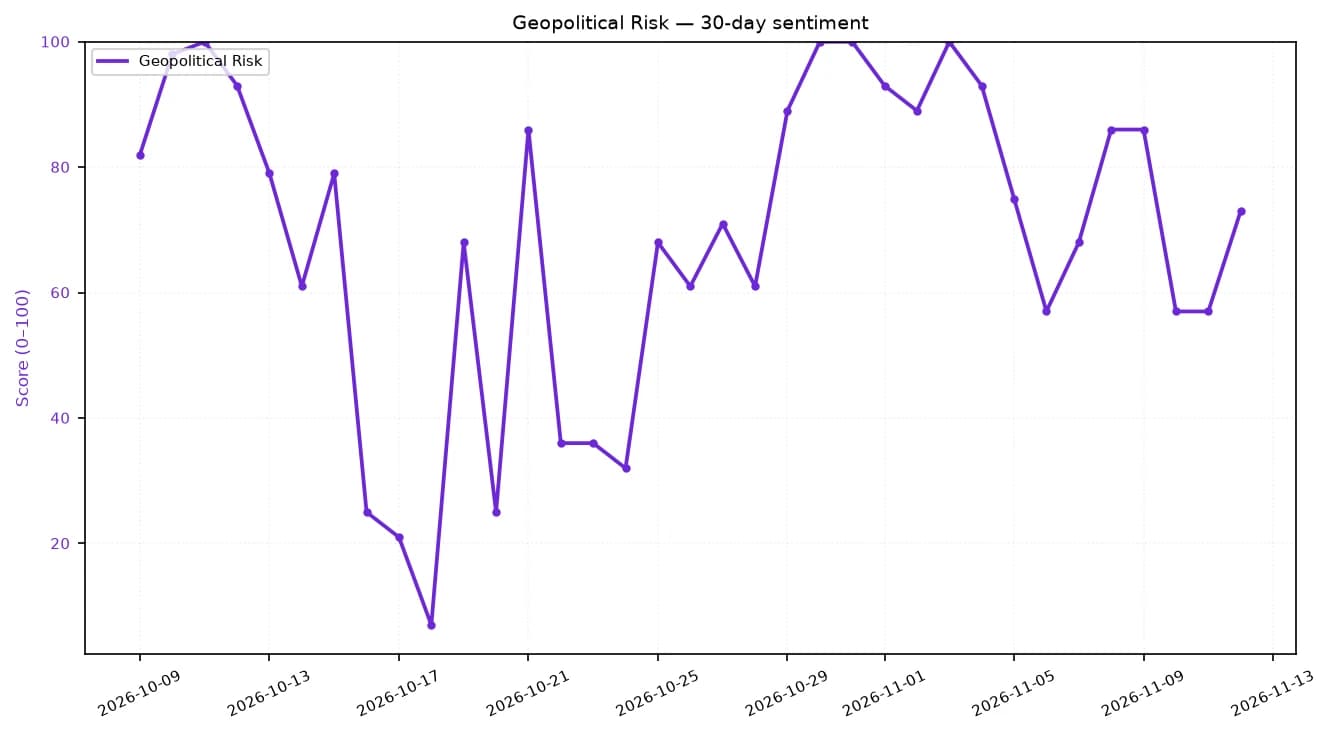
Sentiment Indicators
Brussels is seeking to use the EU budget as a guarantee to raise the funds on international capital markets through a new Instrument for Coordinated Support to Ukraine. The structure is notable: the loan would be “limited-recourse,” meaning Ukraine would repay the principal only after receiving reparations from Russia, while budget support would be conditional on reforms in rule of law and anti-corruption under the EU’s Fundamentals Cluster.
For investors, the proposal reinforces the EU’s willingness to keep underwriting Ukraine’s financing over a multiyear horizon, reducing near-term sovereign stress and the risk of a disorderly funding crunch. It also underscores how Ukraine’s fiscal survival remains tied to external official lending, a setup that continues to shape sentiment in European rates, FX and defense-related assets.
The plan is not yet final. EU leaders are due to review it at an extraordinary European Council meeting on Nov. 26-27 in Brussels, and any approval would still require changes to the bloc’s multiannual financial framework as well as backing from the European Parliament.
Ukrainian President Volodymyr Zelenskiy welcomed the proposal, while Prime Minister Serhii Koretskyi said it would provide a significant part of the country’s 2027 budget and defense needs. The next catalyst is political: whether EU capitals can agree quickly enough to convert the proposal into hard financing before Ukraine’s funding gap becomes a market and geopolitical stress point.
| Entity | Gains | Losses |
|---|---|---|
| Ukraine | ▲Funding certainty | ▼Near-term cash pressure |
| EU institutions | ▲Strategic leverage | ▼Budget and political risk |
| Russian government | ▲— | ▼Reparation-linked liability narrative |
| EU taxpayers/bondholders | ▲Stronger regional stability | ▼Higher contingent fiscal exposure |