The European Union is heading into winter with a potentially severe gas shortfall, and Moscow is using the warning to argue that Brussels has only itself to blame.
EU Faces Winter Gas Shortfall Risk
Kirill Dmitriev, a special representative of the Russian president, said the bloc had created a “strong, self-inflicted” gas deficit as reports circulated that the EU could face its largest winter supply gap in 15 years. The comments come as European storage levels have fallen to the lowest since 2011 and countries are already accelerating injections into underground facilities ahead of colder weather.
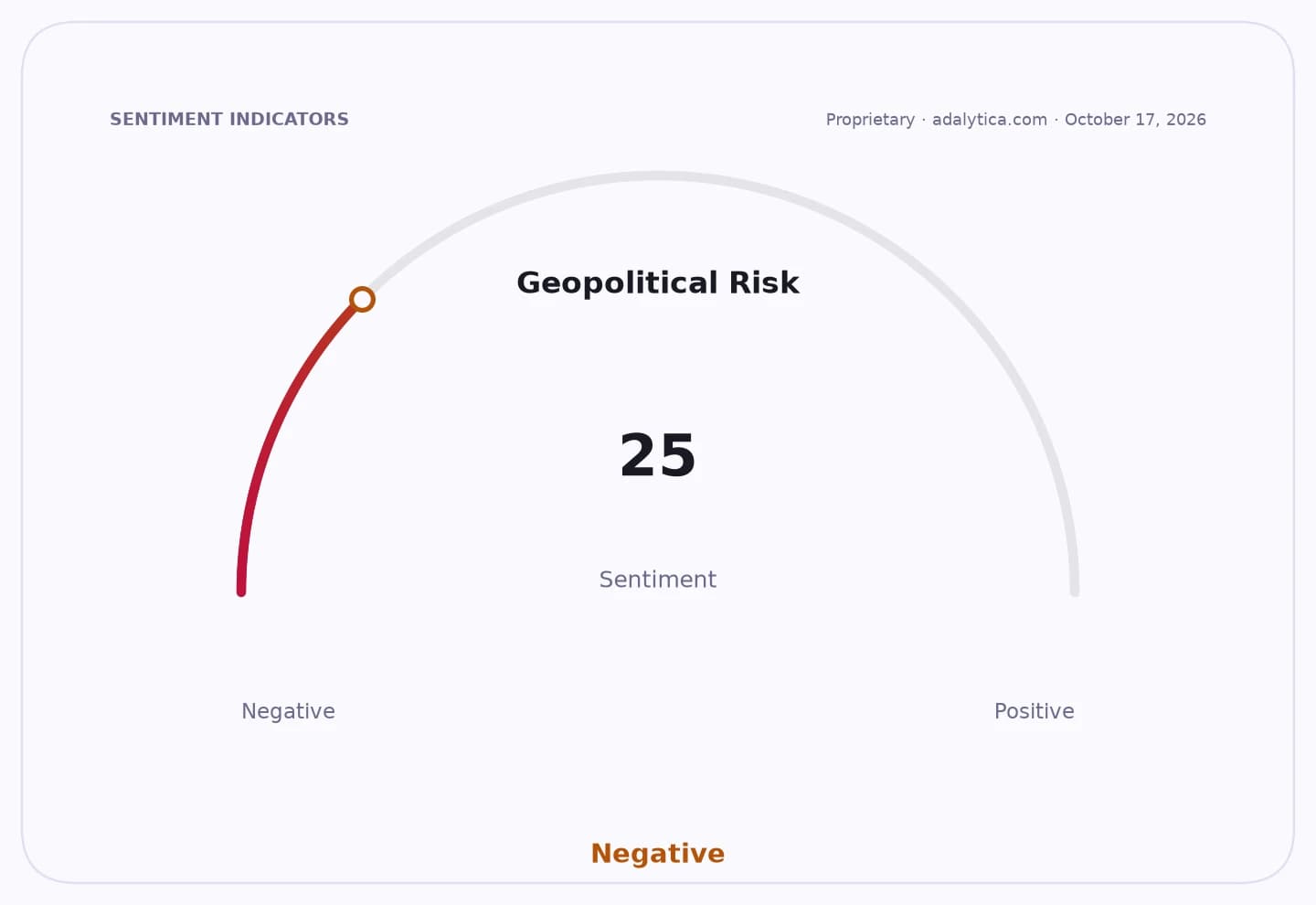
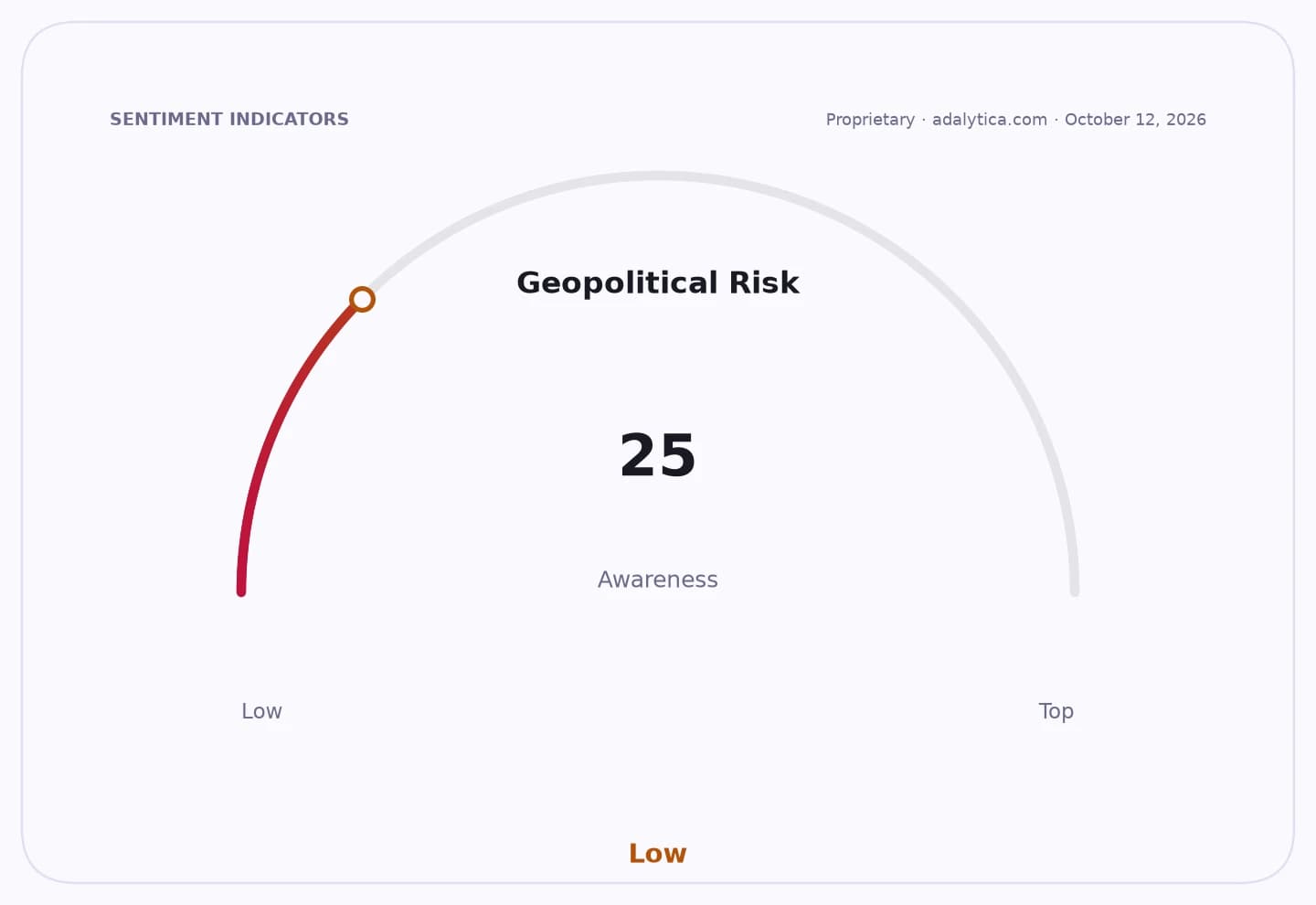
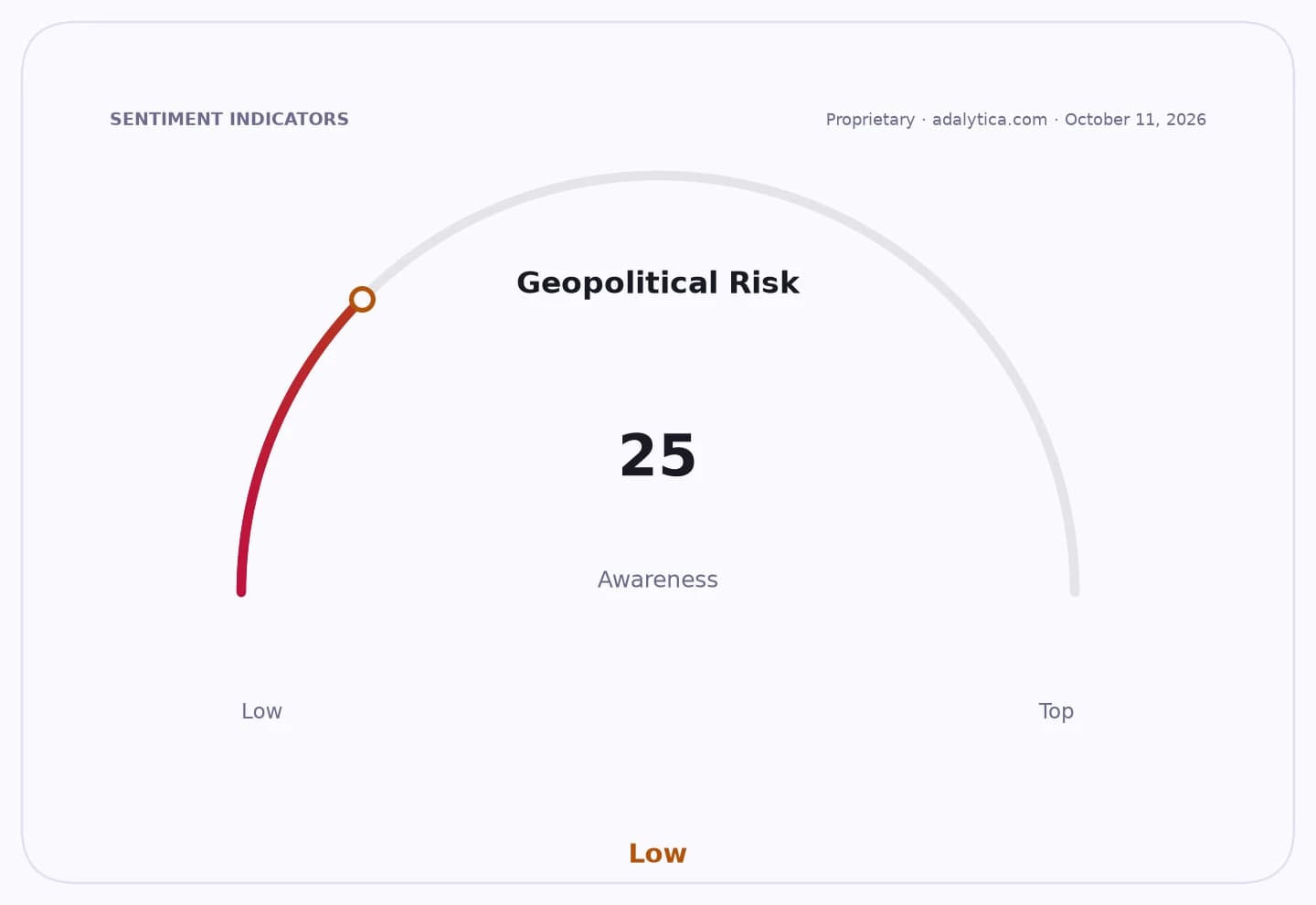
Sentiment IndicatorsⓘProprietary · adalytica.com · October 11, 2026
This is a snapshot — live sentiment, awareness and momentum for 130+ markets update continuously in the dashboard.Open AlphaPulse
The economic significance is straightforward: gas is still the marginal fuel for Europe’s power system, industrial production and household heating. A shortage large enough to matter on this scale can lift electricity prices, squeeze heavy industry and add to inflation just as policymakers are trying to protect growth. A deficit of as much as 14 billion cubic meters, or about 7% of consumption, would not only test Europe’s storage system but also increase the risk of demand curbs if winter is colder than normal or LNG inflows disappoint.
For investors, the issue is less about the rhetoric and more about the price consequences. European gas tightness tends to spill over into power markets, utility earnings and energy-intensive sectors such as chemicals, metals and fertilizer. It also keeps a floor under global LNG prices, which can reshape trade flows and benefit exporters while punishing import-dependent buyers. In the U.S., the natural gas benchmark has already shown how sensitive the market is to tighter supply assumptions: the contract has swung sharply, with Adalytica’s natural gas trade signals showing “Extreme Greed,” while price action has remained volatile around the $6 to $7 range and technical readings have stayed unstable.
The broader narrative is that Europe’s energy security remains fragile even after years of emergency policy, new infrastructure and aggressive storage targets. That fragility has made the bloc more exposed to weather, shipping disruptions and competition from Asia for cargoes. If the winter proves cold, the market will quickly shift from a discussion of storage levels to one of rationing, industrial curtailment and government intervention. If temperatures stay mild, the shortage may be manageable, but the region’s reliance on imported gas will remain a structural vulnerability.
Dmitriev’s message is also geopolitical. By framing the shortage as self-inflicted, Moscow is trying to cast Europe’s energy problem as a policy failure rather than a supply shock. That argument will resonate differently depending on the winter outcome, but for markets the key point is unchanged: the EU enters the heating season with little margin for error, and any disruption could move prices sharply higher.
| Entity | Gains | Losses |
|---|---|---|
| LNG exporters | ▲Higher prices and stronger demand | ▼ |
| EU industrial users | ▲ | ▼Higher input costs, possible curbs |
| Gas producers | ▲Better pricing power | ▼ |
| European consumers | ▲ | ▼Higher heating and power bills |