The euro rose modestly against the dollar as hopes for an agreement with Iran encouraged investors to trim safe-haven demand and eased pressure on European markets from higher energy costs.
Euro near $1.15 as Iran hopes ease pressure

The currency move was small, but the broader message to investors was larger: any sign of progress in the Iran dispute can lower the geopolitical risk premium embedded in oil, bonds and foreign exchange. That tends to support the euro indirectly by improving the outlook for Europe’s import bill, inflation trajectory and growth-sensitive sectors, while putting the dollar under some pressure as funds rotate out of defensive positioning.
Sentiment IndicatorsⓘProprietary · adalytica.com · August 4, 2026
This is a snapshot — live sentiment, awareness and momentum for 130+ markets update continuously in the dashboard.Open AlphaPulse
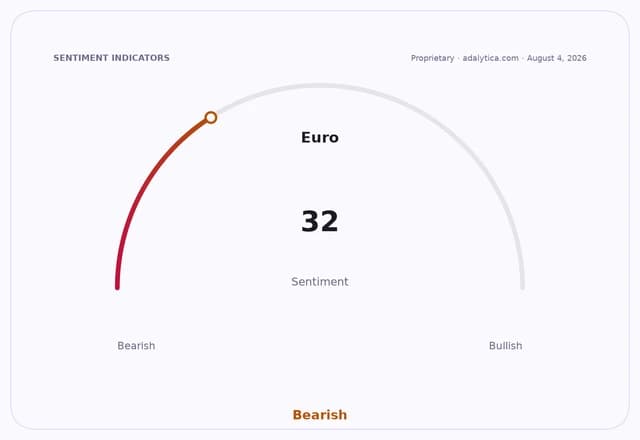
In spot trading, the euro was little changed around $1.15, but the tone in the market was firmer than in recent sessions. The currency had been drifting below its 50-day and 200-day moving averages, and technical readings had been mixed, with RSI still elevated but momentum indicators flattening. That suggests the latest bounce is more of a relief move than a confirmed trend reversal.
The policy backdrop also matters. US Treasury yields remain high, with the 10-year around 4.75% and the 2-year near 4.23%, keeping the dollar supported on rate differentials. Even so, the dollar’s own trading signals show stretched positioning, with Adalytica’s USD snapshot at extreme greed, while euro sentiment is only neutral. That makes the single currency vulnerable to headline-driven swings if geopolitical risk continues to ebb.
For Europe, lower oil prices are the key transmission channel. A durable reduction in crude-linked stress would help airlines, transport, chemicals and other energy-intensive industries, while also improving the inflation outlook for the euro area. That would be welcomed by bond investors, but it could complicate the case for a stronger euro unless the growth benefit proves substantial.
The bullish case for the currency is that easing Middle East tensions, together with better European corporate earnings and a calmer energy market, could draw capital back into euro assets. The bearish case is that a broad dollar bid, anchored by higher US yields and the Federal Reserve’s tighter stance, will cap gains unless the geopolitical backdrop improves materially.
For now, traders appear content to keep the euro on a short leash: helped by softer risk aversion, but still constrained by rate spreads and a market that has yet to believe in a sustained breakout.
| Entity | Gains | Losses |
|---|---|---|
| Euro / EUR | ▲Slight relief bid | ▼Breakout traders |
| Europe importers | ▲Lower energy costs | ▼None immediately |
| Oil-sensitive sectors | ▲Margin support | ▼Producers tied to higher crude |
| US dollar / DXY | ▲Safe-haven appeal if risk returns | ▼Yield-sensitive bulls |




