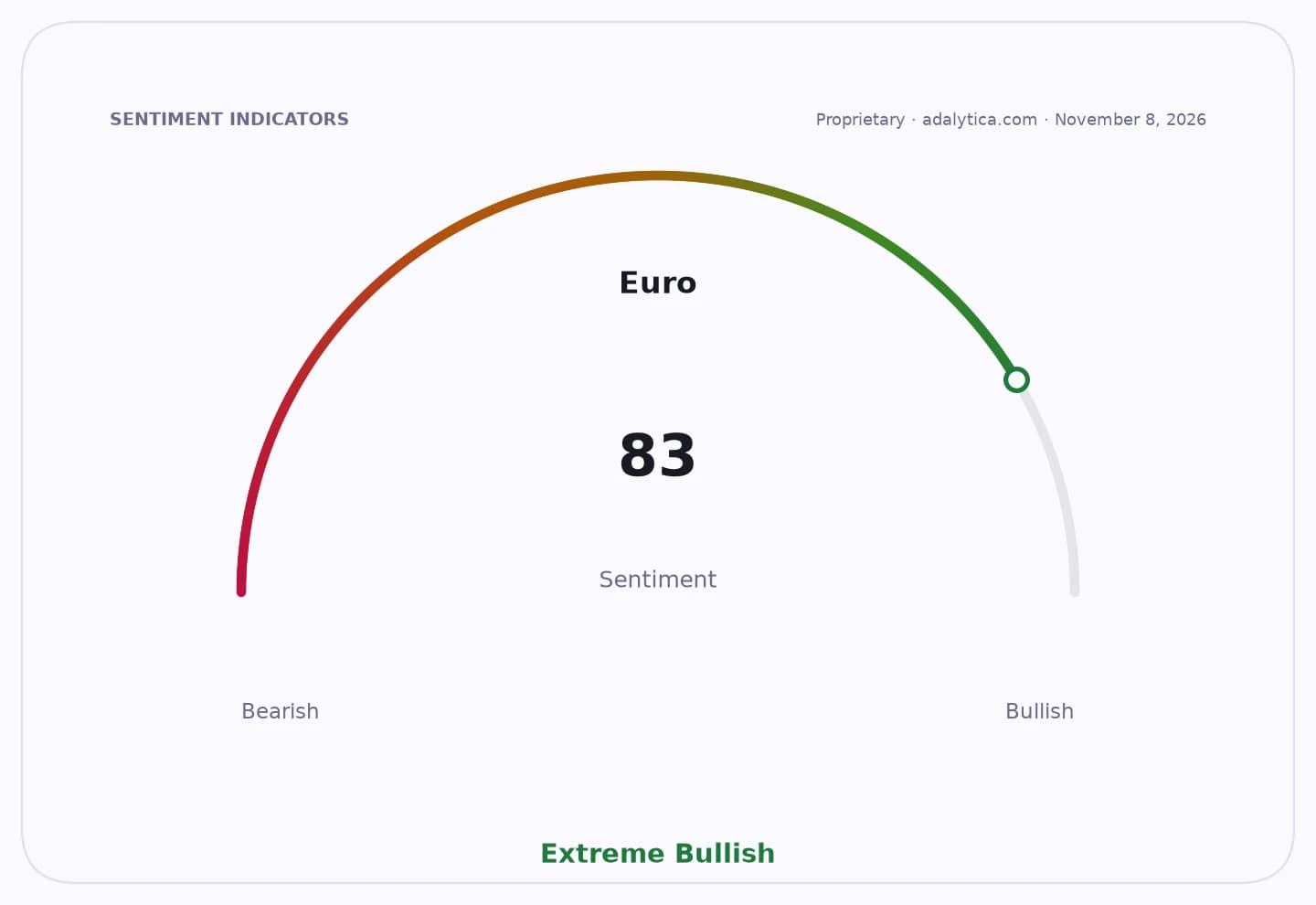
The euro weakened against the dollar, with the European Central Bank setting its reference rate at $1.1165, down from $1.1224 a day earlier, underscoring how firmly the dollar remains in control of the foreign-exchange market.
Euro falls to $1.1165 against dollar

The move, while modest on the day, matters because it reinforces a broader shift in currency leadership: the dollar is drawing support from higher-yield expectations and persistent demand for safe, liquid assets, while the euro is struggling to sustain momentum. For Europe, a softer currency can provide some relief to exporters by making goods cheaper abroad, but it also raises the imported cost of energy and other dollar-priced commodities at a time when the euro area is still highly sensitive to external price shocks.
Sentiment Indicators

The latest ECB fix also leaves the euro close to the lower end of its recent trading range against the greenback. On the data available, the euro has been under sustained pressure in recent sessions, with technical readings on the EUR/USD pair showing the exchange rate below its 50-day and 200-day moving averages and RSI levels still in bearish territory. That suggests the recent decline is not just a one-off fix but part of a wider trend that market participants are watching for follow-through.
For investors, the currency move has implications across asset classes. A weaker euro typically supports European exporters and foreign earnings translated back into local currency, but it can weigh on euro-denominated consumer purchasing power and complicate the ECB’s inflation task if imported costs re-accelerate. For dollar-based investors, it also changes the relative return picture in European assets, where currency translation can amplify or offset equity and bond performance.
ECB Policy Direction
The ECB’s reference rate against other major currencies also reflected a firmer dollar backdrop, with the euro little changed versus sterling and weaker against the yen and Swiss franc. That pattern points to a market driven less by Europe-specific news than by broad dollar demand.
Adalytica’s Euro Trade Signals remain elevated, while its ECB policy sentiment gauge is still in extreme fear, suggesting investors continue to price a cautious policy backdrop rather than a clear catalyst for euro strength. Unless upcoming data or central-bank messaging shifts that balance, the euro is likely to remain vulnerable to further dollar-led swings.
| Entity | Gains | Losses |
|---|---|---|
| US dollar | ▲Higher purchasing power | ▼Euro bulls |
| Euro area exporters | ▲Cheaper goods abroad | ▼Importers of dollar-priced goods |
| ECB policy makers | ▲Weaker euro may help competitiveness | ▼Inflation fight if import costs rise |
| Dollar-based investors | ▲Better euro asset returns in USD terms | ▼Euro-denominated savers |