The euro fell against the dollar after the Federal Reserve’s latest meeting, as traders pared bets on further U.S. rate hikes and focused instead on how long policy will stay restrictive.
Euro Falls After Fed Meeting as Dollar Holds Near 100
That shift matters because the dollar still dominates global pricing conditions. Even when growth slows, as it has in the U.S., a Fed that stays tighter for longer can keep financing costs elevated, pull capital toward dollar assets and cap the euro’s recovery. The latest move shows markets are responding less to the size of the Fed’s next move than to the expected duration of high rates.
Treasury yields reinforced that message. The 10-year U.S. note was around 4.618% in the latest forecast data after trading near 4.65% earlier this week, still well above levels that prevailed during the post-pandemic easing cycle. Fed funds were projected at 3.627%, underscoring that policy is expected to remain above neutral even as inflation cools from the peaks. For currency markets, that keeps the dollar’s carry advantage intact against the euro.
The Dollar Index slipped only modestly, with the latest close near 99.95 after touching 100.8 on July 29, while the euro ETF FXE held at 106.5. That combination suggests the market is not in a broad dollar unwind, but rather in a recalibration of rate expectations. FXE has also been trading above its 50-day moving average and near its 200-day average, while RSI readings above 70 earlier this week pointed to a stretched rebound that has since cooled.
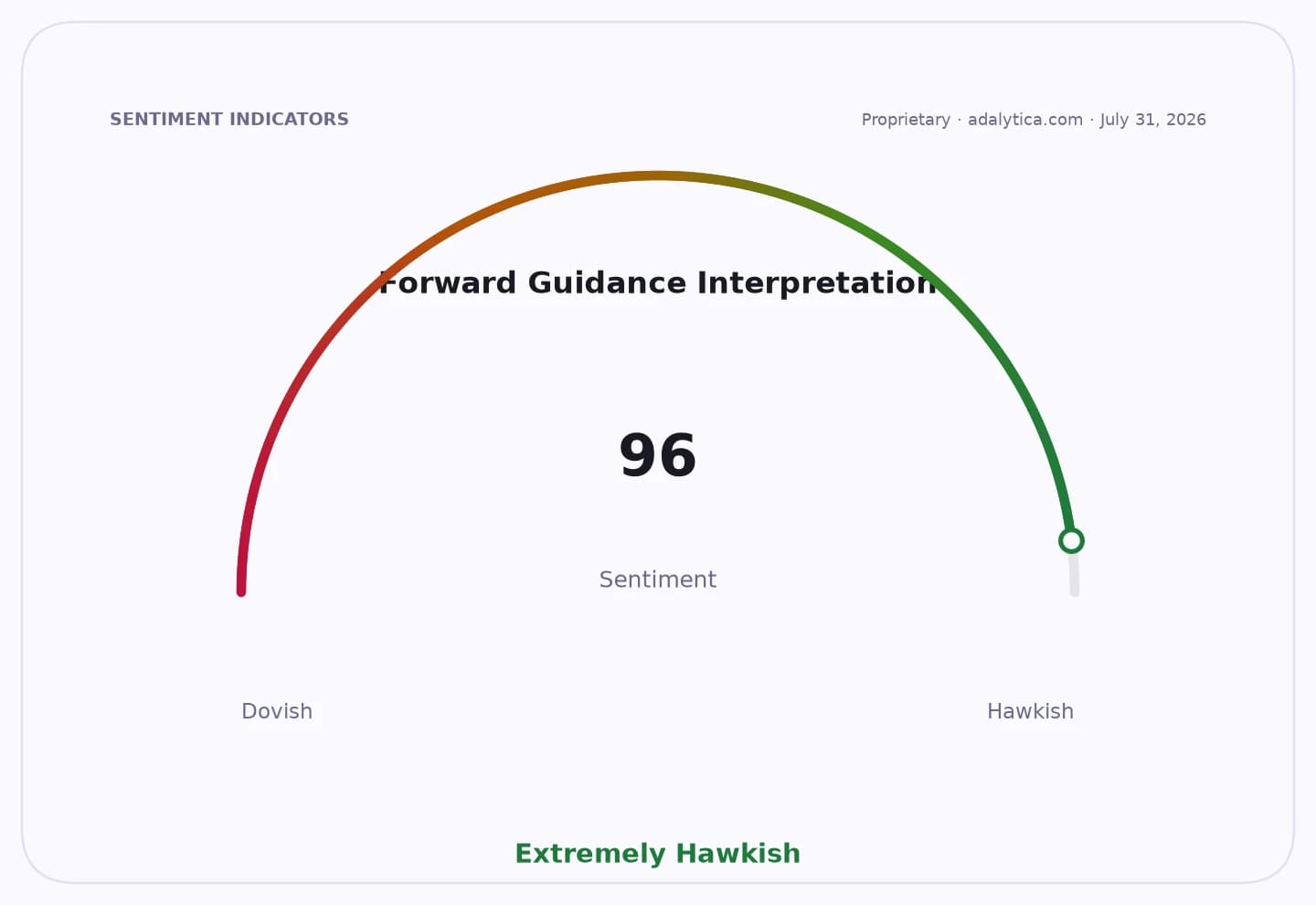
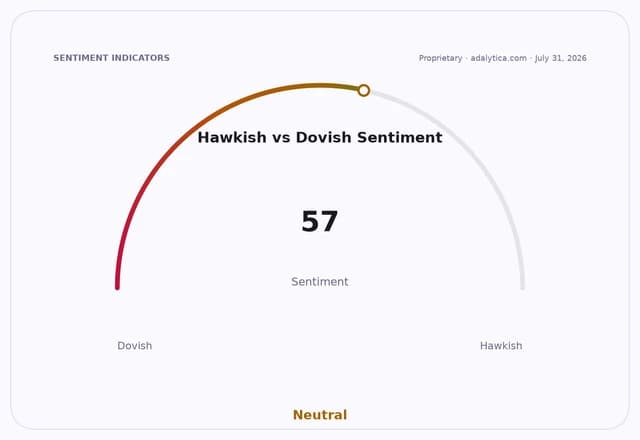
Adalytica’s Fed forward-guidance sentiment gauge remains at 96, or “Extreme Greed,” even as its hawkish-versus-dovish policy snapshot dropped to 57 from 79 in the past two sessions. That is a useful read on positioning: investors still expect a firm policy stance, but they are less convinced the Fed will add another hike soon. In other words, the market is shifting from “higher rates” to “higher for longer.”
For investors, that leaves EUR/USD vulnerable unless U.S. inflation softens more decisively or the Fed opens the door to cuts sooner than expected. A stable or firmer dollar would continue to pressure multinational earnings translation, commodity prices and emerging-market funding conditions. A deeper break lower in Treasury yields, by contrast, would likely be the clearest catalyst for a more durable euro rebound.
| Entity | Gains | Losses |
|---|---|---|
| U.S. dollar | ▲Higher-for-longer carry | ▼Eur/ USD bulls |
| U.S. Treasury yields | ▲Policy premium support | ▼Duration buyers |
| Euro / FXE | ▲Limited upside from dovish hopes | ▼Dollar strength |
| Equity and EM risk assets | ▲Only if yields fall | ▼If Fed stays restrictive |