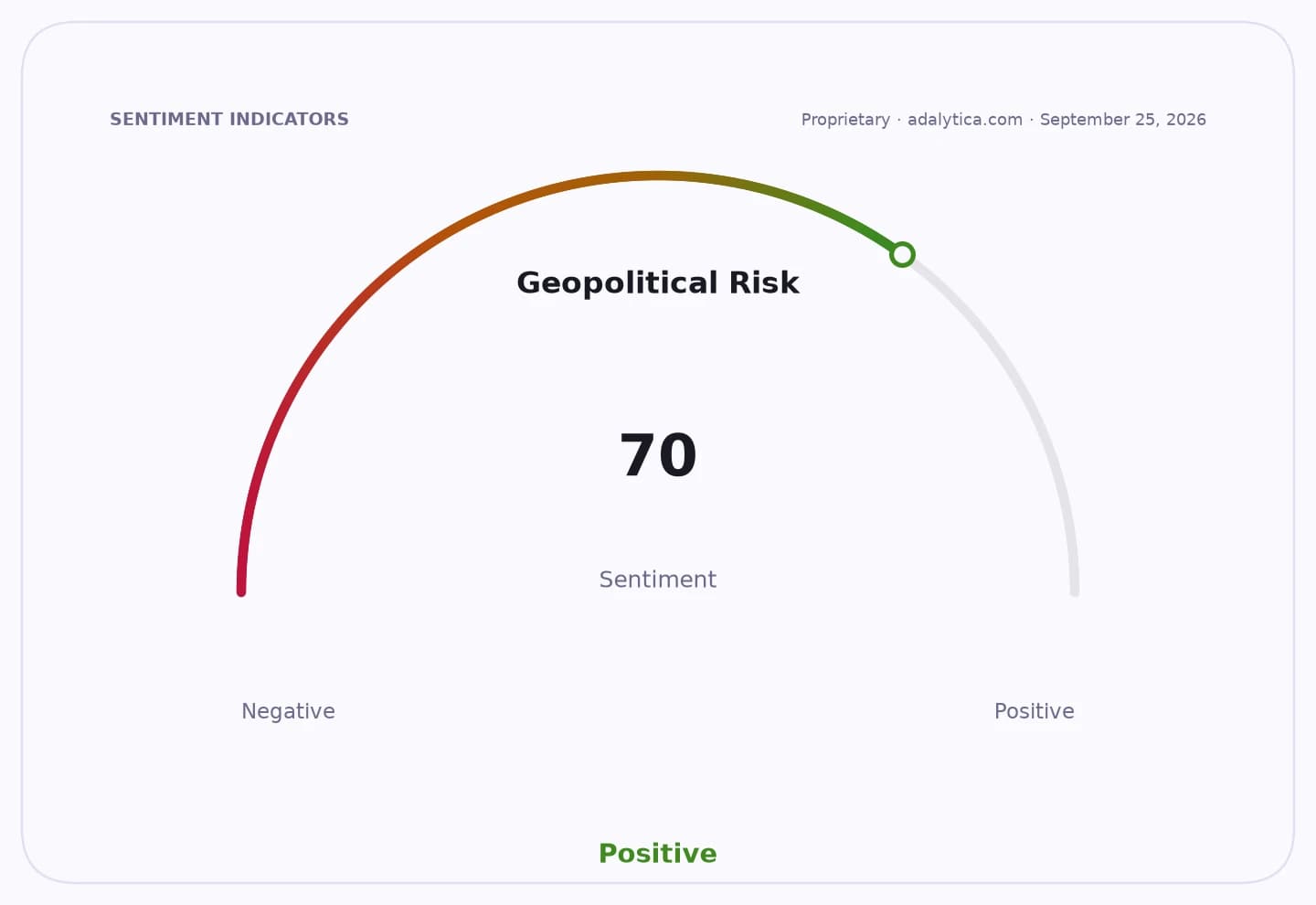
The euro is holding around $1.16 even as the dollar weakens sharply in sentiment gauges and volatility remains elevated across currency markets, underscoring a broader shift in foreign-exchange positioning that is squeezing emerging-market exchange rates and testing central banks’ ability to stabilize their currencies.
Euro Holds Near $1.16 as Dollar Weakens
The move matters because the dollar still sits at the center of global funding, trade and portfolio flows. When the greenback softens, it can ease imported inflation and debt-servicing pressure for dollar borrowers, but it also tends to expose fragility in markets where local demand for foreign currency is already high. That is visible in the Libyan parallel market, where the dollar and other foreign currencies have surged to record levels, and in the Philippines, where a weaker peso has added pressure to equities already hit by MSCI’s benchmark review and seasonal caution around Ghost Month.
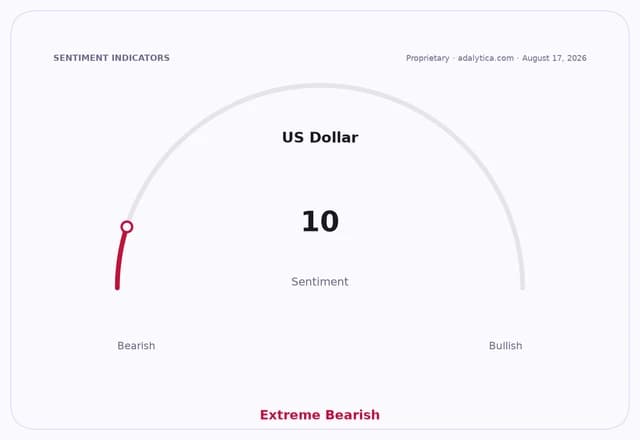
Sentiment IndicatorsⓘProprietary · adalytica.com · August 17, 2026
This is a snapshot — live sentiment, awareness and momentum for 130+ markets update continuously in the dashboard.Open AlphaPulse

Against that backdrop, the euro’s relative stability looks less like a simple one-currency story and more like a sign that the market is rotating out of dollar strength without yet embracing a clean risk-on trade. The currency pair has been largely range-bound in recent sessions, with EUR/USD last at 1.16, above its 200-day average near 1.16 and slightly above its 50-day average around 1.15. Conventional technical readings suggest the pair is stretched in the short term, with RSI readings near 77 pointing to overbought conditions even as momentum remains positive.
The dollar side of the trade is more telling. Adalytica’s US Dollar Trade Signals show sentiment at 10, labeled Extreme Fear, after a steep one-day drop and a 30-day slide, while FX volatility signals have cooled from recent peaks but remain far from benign. In market terms, that implies investors are still wary of holding dollars aggressively, yet not confident enough to sell volatility entirely. For FX desks, that is the kind of backdrop that can produce sudden whipsaws rather than a smooth trend.
The euro, by contrast, is benefiting from much stronger positioning. Adalytica’s Euro Trade Signals show sentiment at 95, or Extreme Greed, with rapid gains over the past week and month. That kind of crowding can support the single currency in the near term, but it also raises the risk of a correction if macro data or policy expectations shift. The bull case for the euro is that a softer dollar and relatively firmer European positioning can keep EUR/USD pinned above key moving averages. The bear case is that the market is already leaning too far in one direction, leaving the pair vulnerable if US yields rebound or if risk appetite worsens.
For investors, the practical implications extend well beyond the euro-dollar chart. A weaker dollar typically relieves pressure on commodity importers and dollar debtors, but the benefits are uneven. Malaysia’s ringgit has already drawn support from a stronger-than-expected second-quarter GDP reading, helping the central bank justify a more measured intervention approach and reducing reserve purchases to curb dollar demand. That shows how local fundamentals can amplify or offset the broader dollar trend. In poorer or more dollarized markets, however, policy tools are often weaker, and the same global move can translate into sharper inflation and higher financial stress.
The near-term question is whether the dollar’s recent drop is a temporary positioning unwind or the start of a more durable downtrend. If US data, rates expectations or risk sentiment shift back in the dollar’s favor, EUR/USD could struggle to hold current levels. If not, the combination of a softer greenback, strong euro sentiment and emerging-market currency stress could keep FX markets highly selective, with winners and losers increasingly determined by domestic growth, intervention policy and exposure to foreign funding.
| Entity | Gains | Losses |
|---|---|---|
| Euro | ▲Firmer positioning | ▼Crowded long risk |
| Dollar | ▲Lower imported inflation | ▼Reserve-currency demand |
| Emerging-market borrowers | ▲Easier debt burden | ▼Currency volatility |
| Central banks | ▲Slightly less pressure to defend FX | ▼Higher intervention risk |