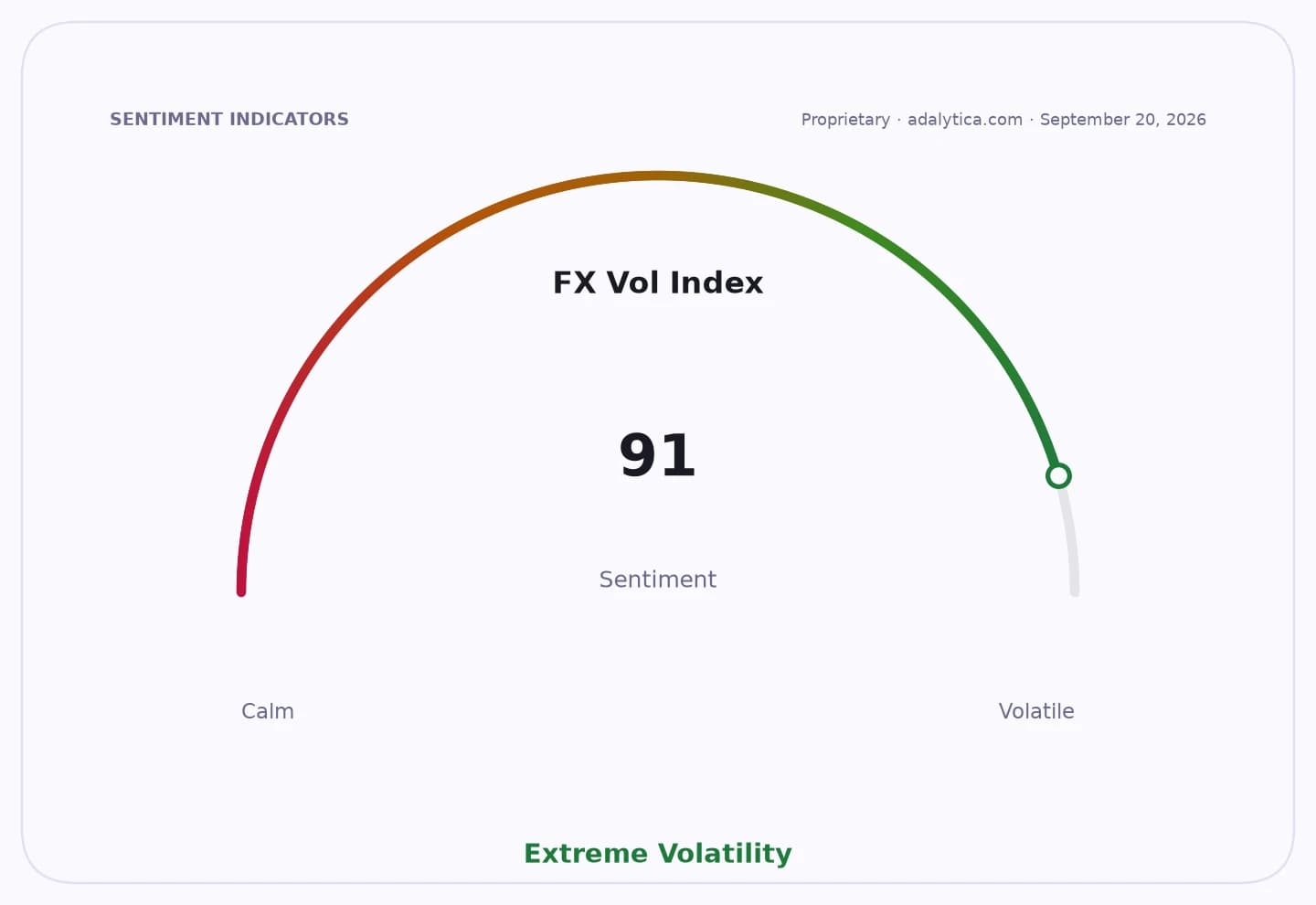
The euro eased against the dollar at the start of the week as a fresh jump in oil prices revived inflation concerns and kept investors leaning toward a stronger US currency.
Euro Falls as Oil Prices Lift Dollar
The common currency was last seen at $1.1216 on Monday afternoon, down from Friday’s close, while the European Central Bank set its reference rate at $1.1225 versus $1.1253 at the end of last week. The dollar’s firmer tone reflected a market view that higher energy costs are more likely to keep US inflation elevated and support the Federal Reserve staying restrictive for longer.
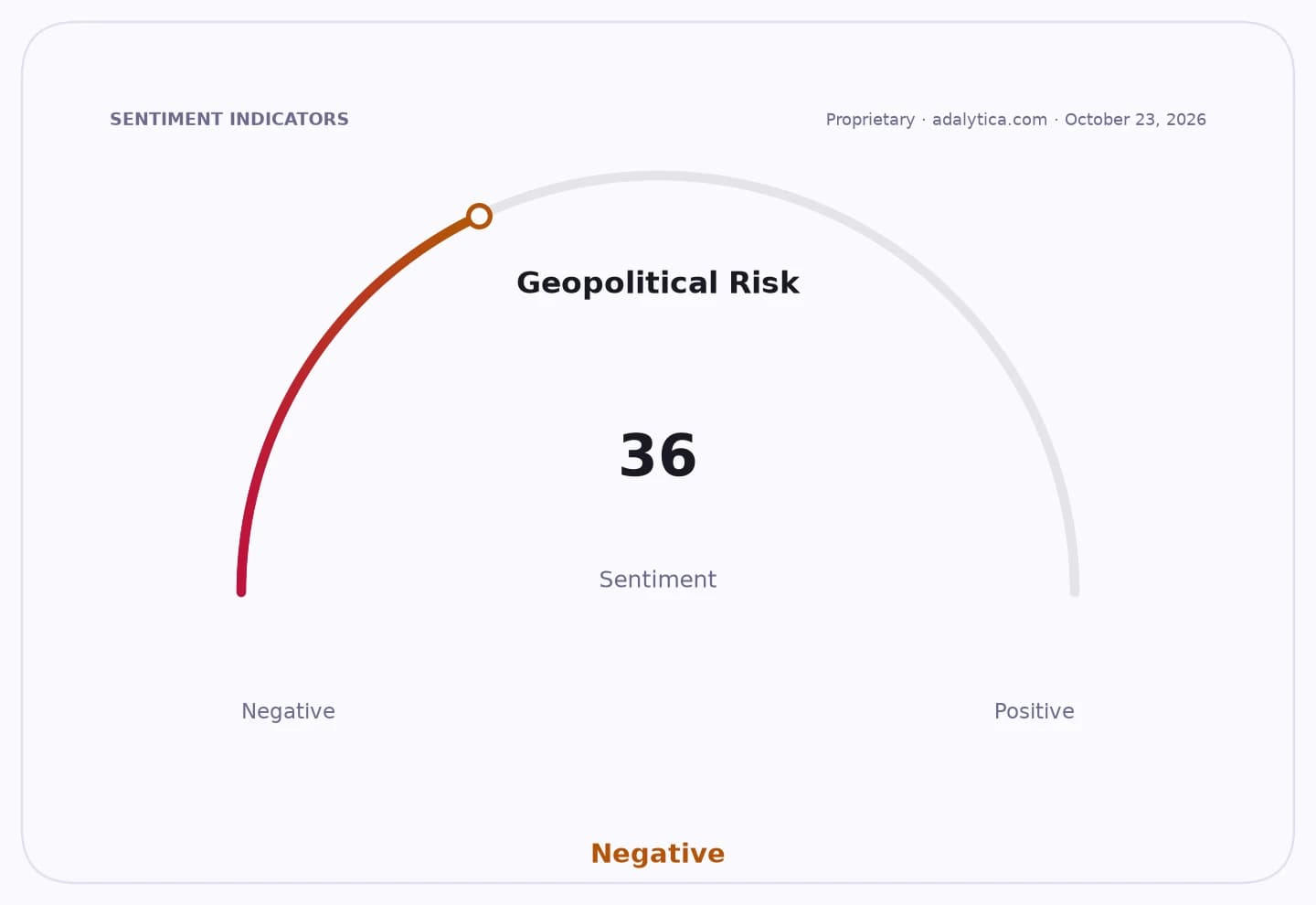
Sentiment IndicatorsⓘProprietary · adalytica.com · October 23, 2026
This is a snapshot — live sentiment, awareness and momentum for 130+ markets update continuously in the dashboard.Open AlphaPulse
That gap matters for investors because exchange rates are increasingly being driven by relative interest-rate expectations, not just growth differentials. Commerzbank foreign-exchange strategist Thu Lan Nguyen said the key question is how central banks respond to the oil move, with the dollar likely to benefit if the Fed reacts more forcefully than the ECB.
Oil prices have eased a little at the start of the new week but remain elevated, leaving markets sensitive to the risk that energy costs feed through into consumer prices. For the euro area, which is more dependent on imported energy, that is a bigger headwind than for the United States and can weigh on growth and the currency at the same time.
Geopolitics is still part of the equation, with the Middle East remaining a major factor for financial markets and for crude prices in particular. That keeps the euro-dollar pair vulnerable to more swings if energy markets stay unsettled or if traders push US rate expectations higher again.
In other major currencies, the ECB set the euro at 0.84205 British pounds, 177.63 yen and 0.9261 Swiss francs. Gold eased to $4,148 an ounce, down about $17 from Friday.
Forward-looking, the euro’s next move is likely to hinge on whether higher oil prices translate into firmer US rate expectations than in Europe, and on whether Middle East tensions keep crude markets elevated.
| Entity | Gains | Losses |
|---|---|---|
| US dollar | ▲Higher rate expectations | ▼Euro buyers |
| Eurozone exporters | ▲Weaker euro support | ▼Importers facing energy costs |
| Oil markets | ▲Higher inflation hedge demand | ▼Central banks seeking price stability |
| Fed hawks | ▲Stronger policy case | ▼Dovish rate-cut bets |