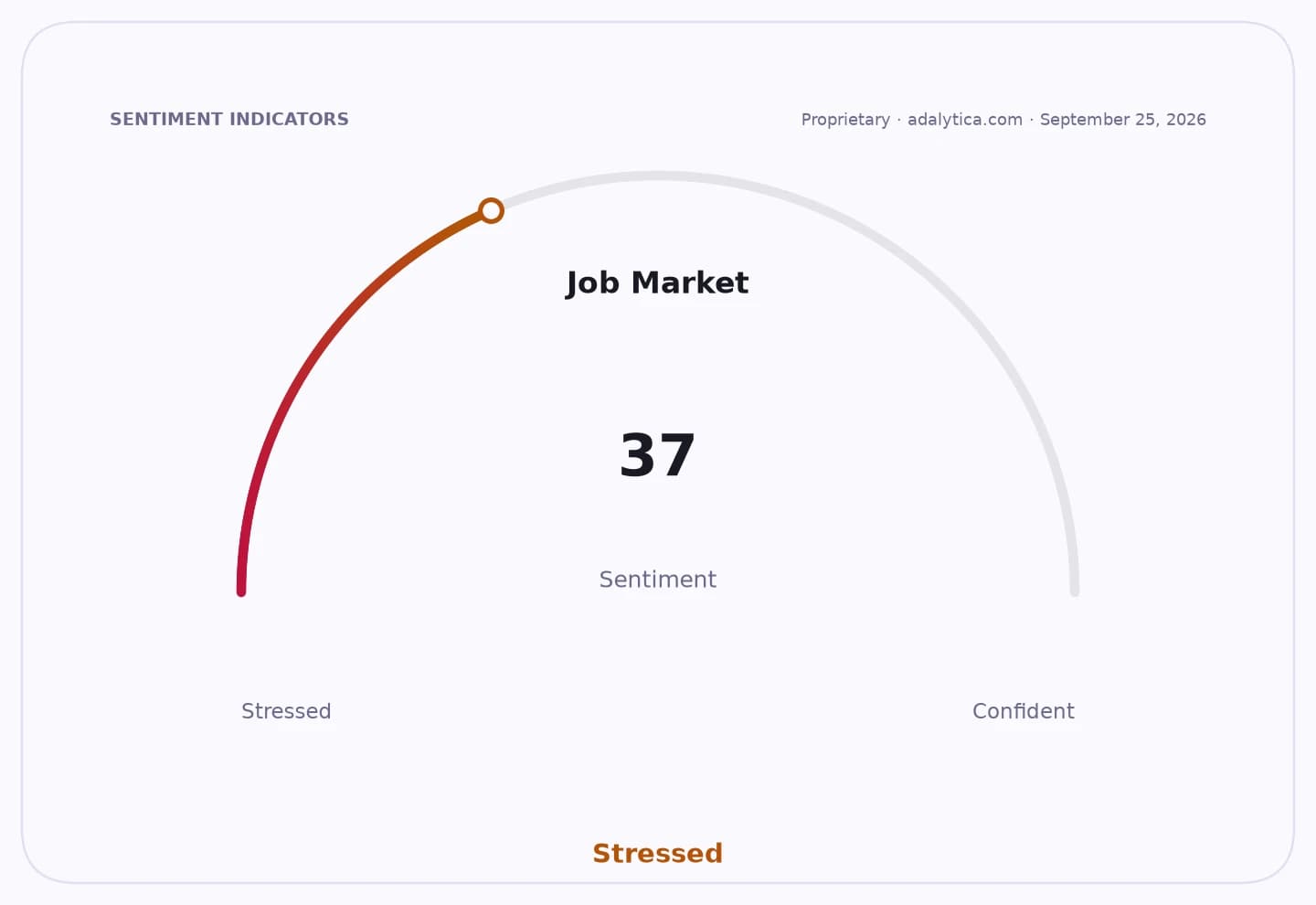
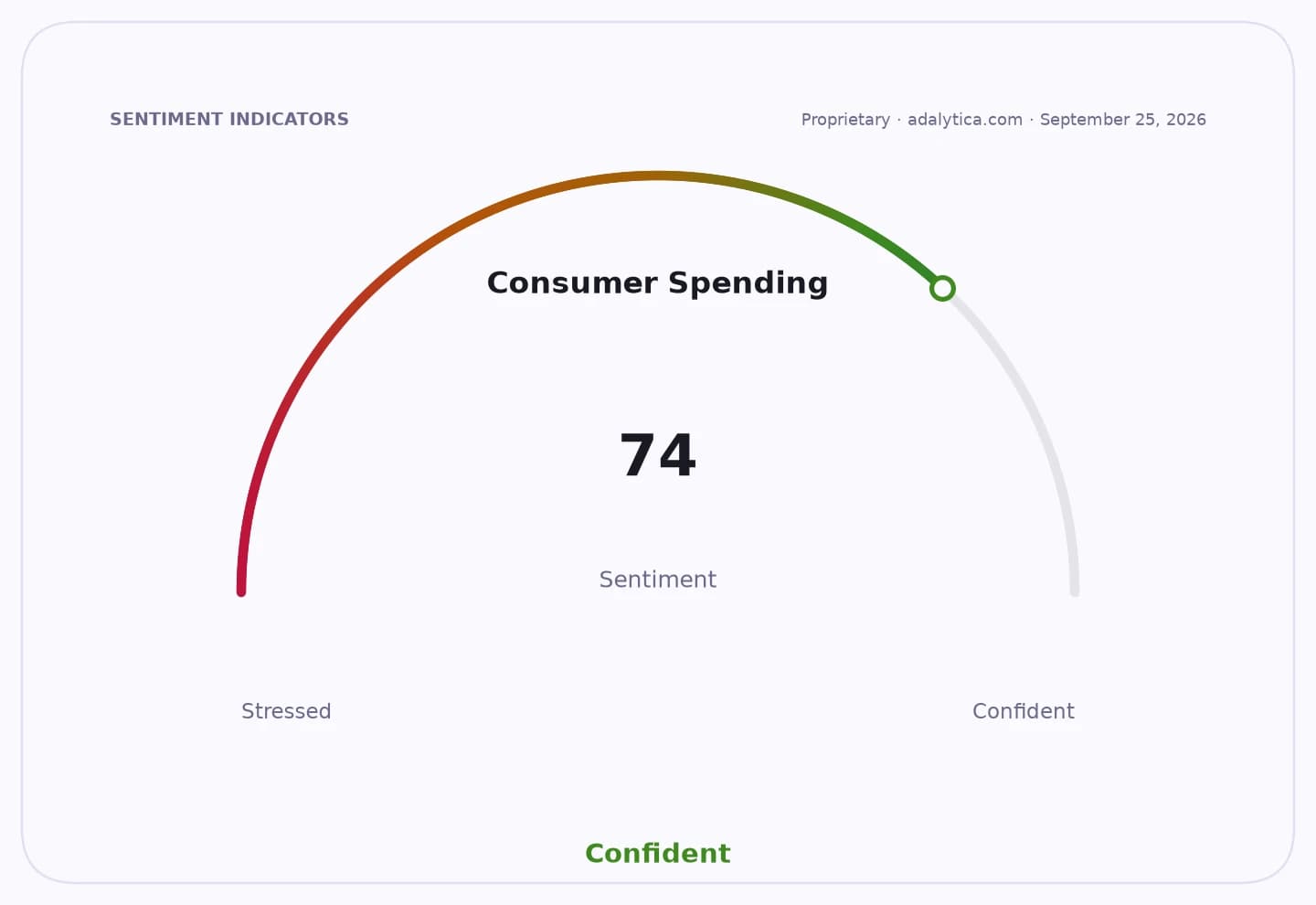
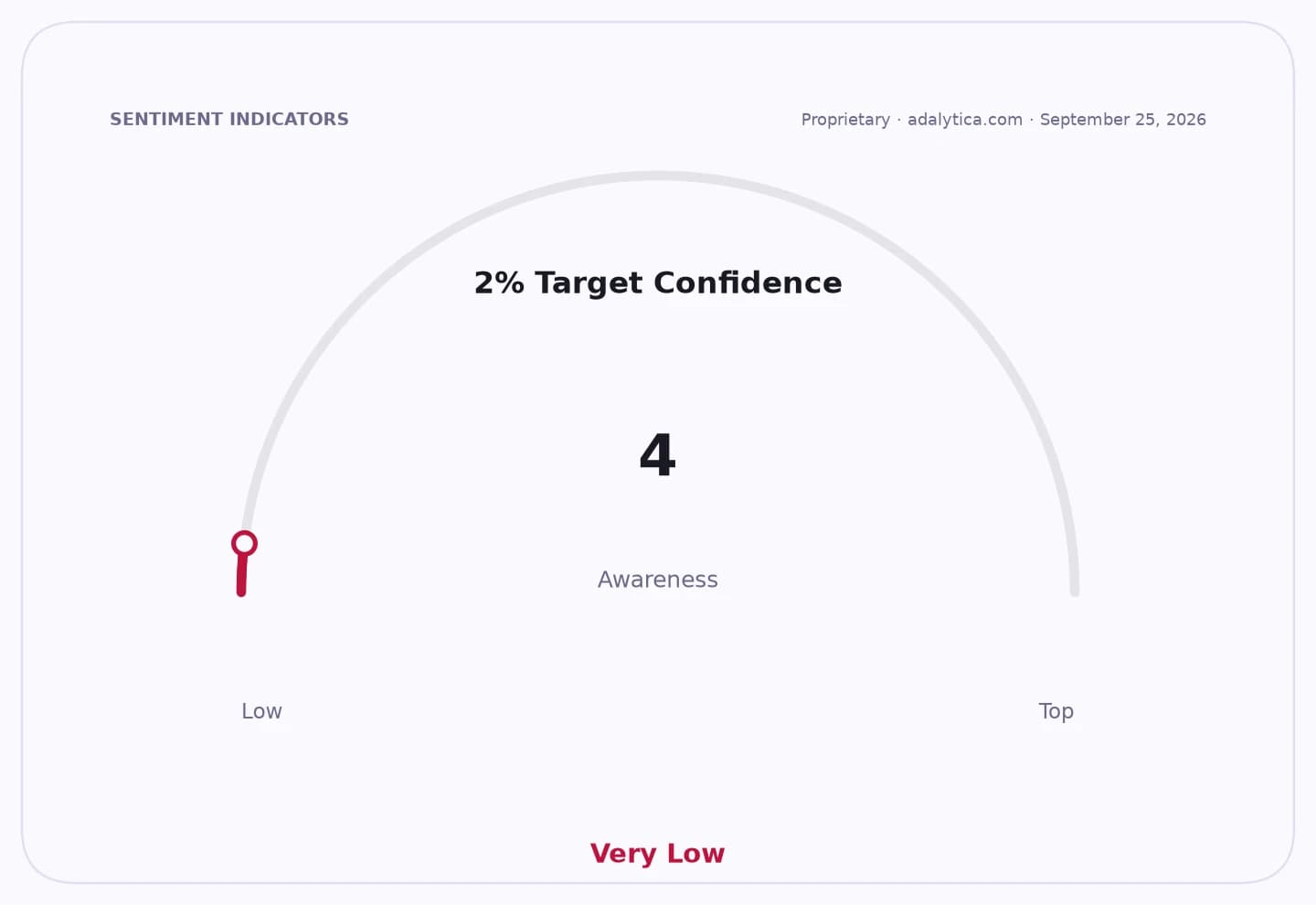
The euro edged higher against the dollar as softer US jobs data and falling oil prices eased pressure for the Federal Reserve to keep tightening, reinforcing a market view that US interest rates may have peaked.
Euro rises as softer US jobs data lifts rate-cut bets

That matters because the currency move is really a reflection of shifting rate expectations. A weaker labor market reading cools the case for another Fed hike, while lower oil prices help damp inflation risk and reduce the urgency for policymakers to stay hawkish. Together, they support bonds, pressure the dollar and give the euro room to recover after being pinned down by the prospect of US rate outperformance.
Sentiment IndicatorsⓘProprietary · adalytica.com · August 5, 2026
This is a snapshot — live sentiment, awareness and momentum for 130+ markets update continuously in the dashboard.Open AlphaPulse
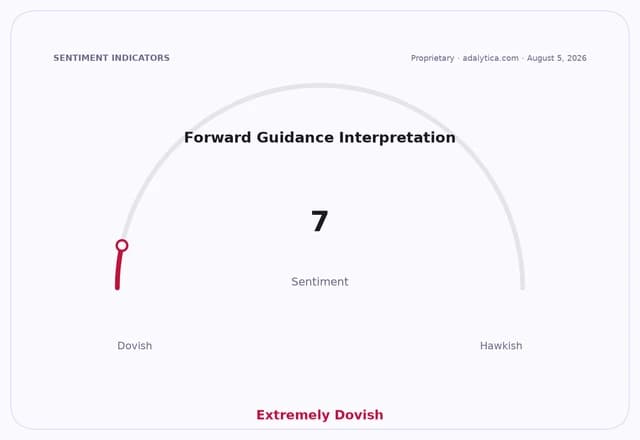
The policy backdrop is still mixed. Fed funds are around 3.63%, according to the latest data, and markets are still parsing whether officials will need to deliver any further tightening. But sentiment gauges from Adalytica show hawkish Fed positioning remains elevated even as forward-guidance sentiment sits in extreme fear territory, suggesting traders are increasingly doubting the central bank’s willingness to follow through on more hikes. That split between rhetoric and market pricing is what’s moving currencies.
For investors, the key point is that this is not just a FX story. A softer dollar tends to support European assets, from exporters in the euro zone to dollar-sensitive commodities and global equities. It also helps explain why Treasury-linked positioning remains firm: lower oil and weaker labor data both point to less inflation pressure, which is constructive for duration and negative for the dollar’s yield premium.
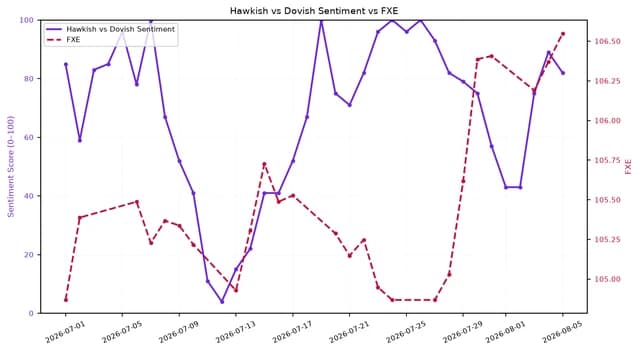
Oil’s decline adds another layer. West Texas Intermediate recently eased to the mid-$80s after a sharp run-up earlier in the year, taking some heat out of the inflation narrative. For the Fed, that reduces one of the arguments for staying aggressive. For markets, it lowers the risk that energy costs will reaccelerate headline inflation and force rate expectations higher again.
The investment implication is straightforward: the market may still be underestimating how quickly the policy narrative can pivot from “higher for longer” to “done for now.” That is typically bullish for EUR/USD, European cyclicals and longer-duration assets, while it is a headwind for the dollar and for sectors that rely on a stronger greenback and tight financial conditions. If weak labor prints persist and oil remains contained, the next leg in FX could favor the euro more than the consensus expects.
| Entity | Gains | Losses |
|---|---|---|
| Euro | ▲Relative rate support | ▼None immediate |
| US bond bulls | ▲Lower hike risk | ▼Yield-curve bears |
| European exporters | ▲Softer dollar | ▼Dollar-funded buyers |
| Fed hawks | ▲Policy credibility if inflation persists | ▼Rate-hike expectations |