Europe’s biggest economic challenge in dealing with China is no longer whether to engage, but how to do so without sacrificing the competitiveness of its own companies in third markets.
Europe Weighs China Trade Defenses

That is the implication of remarks attributed to Pablo López Gil, which land at a moment when China’s trade machine is still expanding sharply and European policymakers are under growing pressure to respond. China’s foreign trade rose 16.9% in the first half of the year, powered by AI-linked demand and a more diversified export footprint, while trade with Africa jumped 24% in early 2026. For Europe, the issue is not just bilateral commerce with Beijing. It is the collateral damage from a Chinese export surge that is increasingly reshaping competition in markets where European manufacturers, industrial groups and exporters have traditionally relied on scale, pricing power and brand strength.
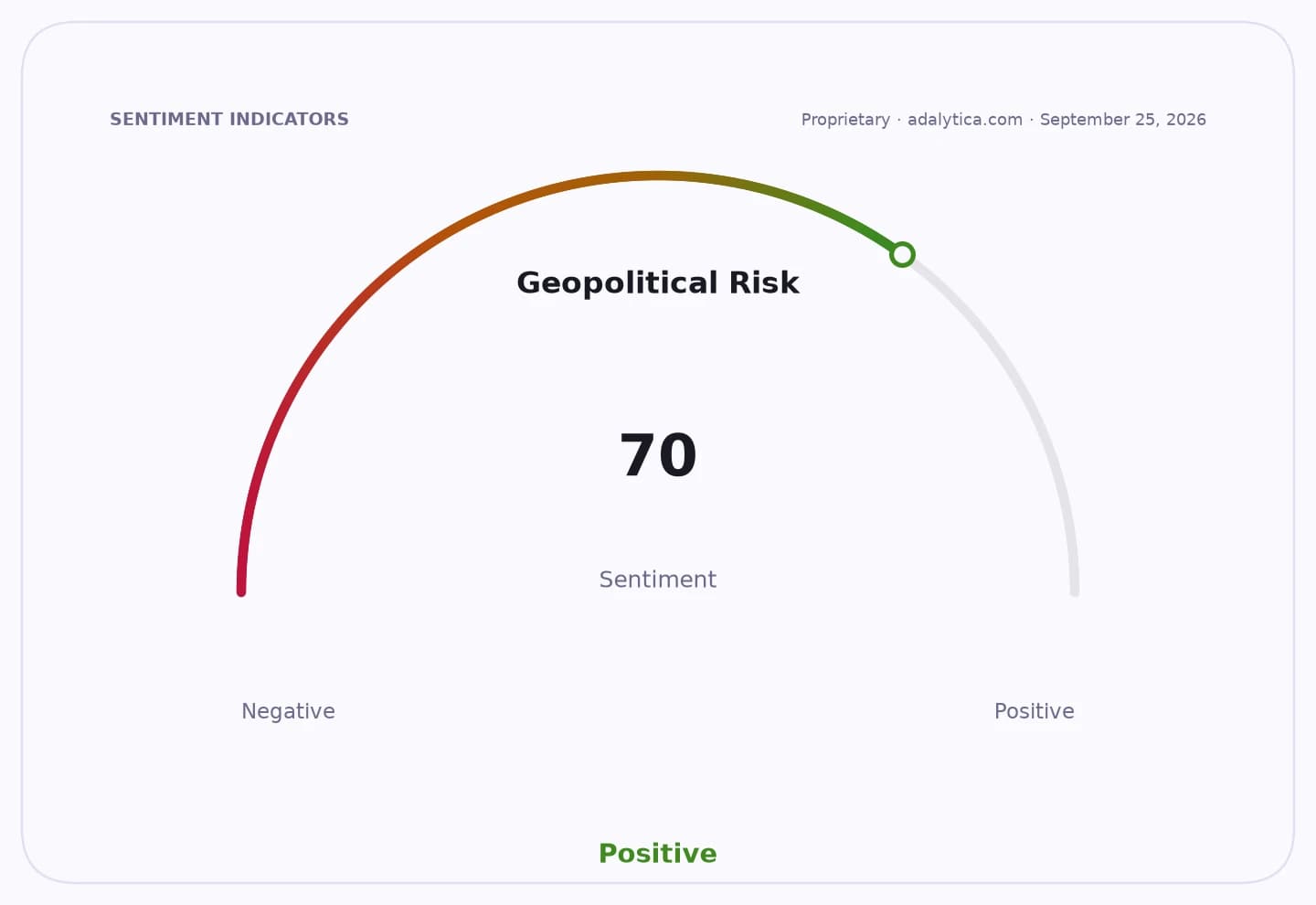
Sentiment IndicatorsⓘProprietary · adalytica.com · July 18, 2026
This is a snapshot — live sentiment, awareness and momentum for 130+ markets update continuously in the dashboard.Open AlphaPulse
That matters economically because a China strategy focused only on the bilateral relationship can miss the wider spillovers. If Chinese firms are winning share in Africa, Latin America and parts of Asia with aggressive pricing and faster industrial upgrading, European companies can lose margin and market access even if direct EU-China trade remains steady. The record EU trade deficit with China points to that imbalance. It also helps explain why European officials and business leaders are pushing for a more calibrated approach: preserve access to the Chinese market where possible, but avoid policies that leave European firms exposed to retaliatory pressure or unfair competition in other regions.
The investment angle is equally clear. European industrial names with large export exposure face a more complicated operating backdrop if China keeps redirecting surplus capacity into third-country markets. That can pressure pricing across machinery, autos, chemicals and capital goods, especially for companies already dealing with slower domestic demand and higher financing costs. By contrast, firms with more protected local franchises or diversified supply chains may be better insulated. The trade data also reinforces the case for selective exposure to beneficiaries of supply-chain realignment, logistics and sectors tied to AI hardware and advanced manufacturing.
Market signals suggest investors are already pricing in a more fragile global backdrop. Adalytica’s US-China relations sentiment gauge is deep in “Fear,” while its global stability score sits at “Extreme Fear,” underscoring how quickly policy and trade headlines can move risk appetite. At the same time, the S&P 500 has remained resilient, reflecting a market still anchored by US megacaps and AI enthusiasm rather than a broad repricing of global trade risk. The divergence suggests investors are treating China not as a simple growth story, but as a source of both opportunity and geopolitical compression.
The bull case for a more pragmatic European stance is that engagement can still secure access to the world’s second-largest economy and support firms that depend on China for revenue, inputs or scale. The bear case is that engagement without sharper trade defenses simply extends Europe’s exposure to Chinese overcapacity and weakens its bargaining position in third markets. López Gil’s warning points to the middle path Europe is trying to hold: avoid decoupling, but also avoid a China policy that undermines its own companies elsewhere.
For investors, the key catalyst is whether Brussels moves from rhetoric to more targeted trade tools, industrial policy support and market-access negotiations. If it does, the winners are likely to be European firms with pricing power and regional diversification. If it does not, the pressure on margins and export share could intensify as China continues to use trade as a lever of industrial strategy.
| Entity | Gains | Losses |
|---|---|---|
| European exporters | ▲Better protection in third markets | ▼Margin pressure from China competition |
| China | ▲Wider export reach | ▼Higher scrutiny from EU |
| Brussels policymakers | ▲More leverage over trade policy | ▼Political pressure from industry |
| Multinational manufacturers | ▲Clearer trade rules | ▼Exposure to retaliation and overcapacity |