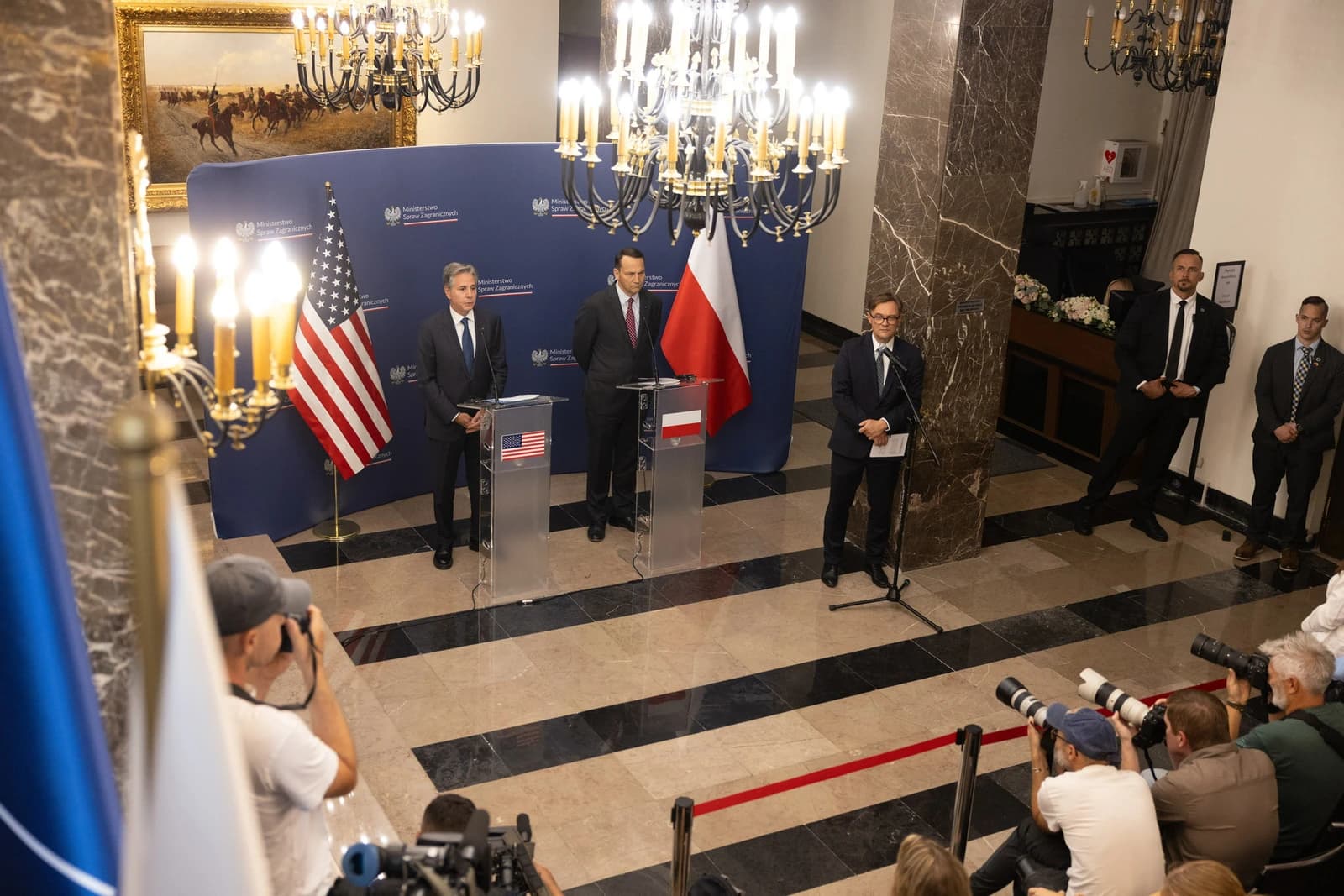
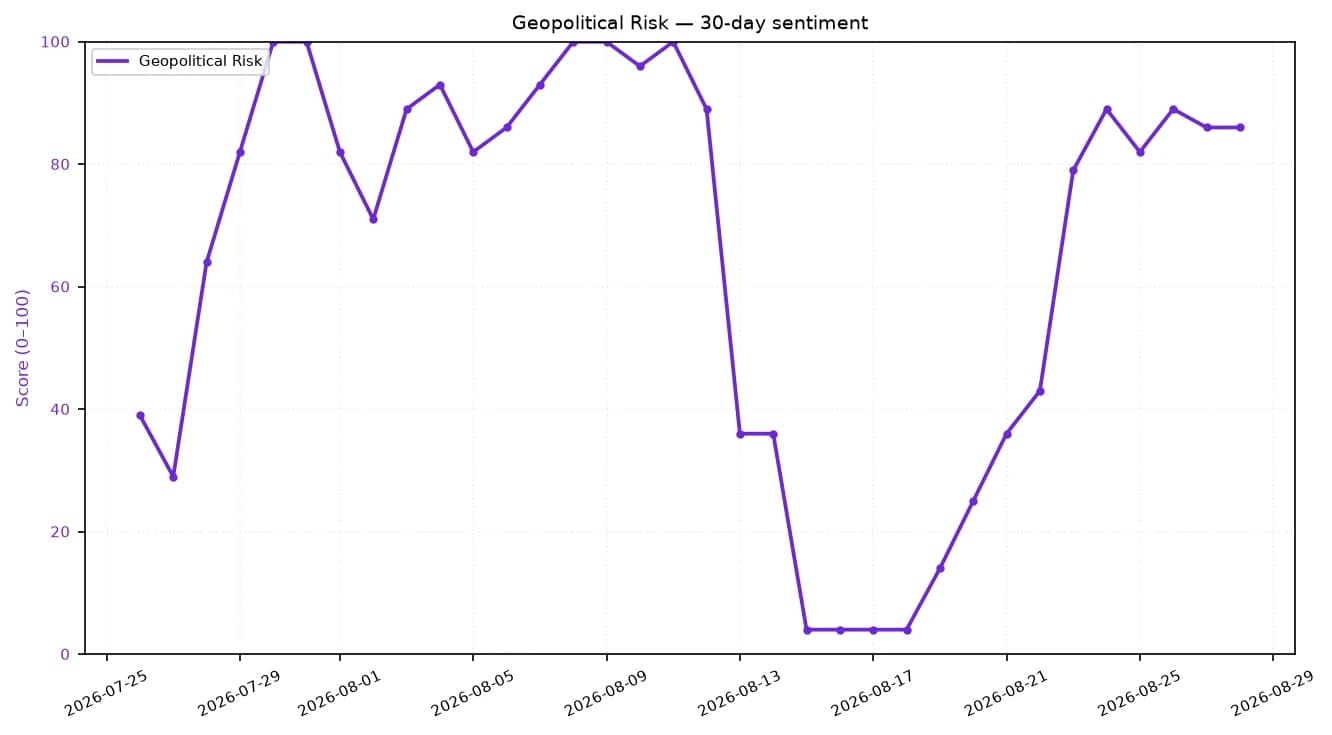
European intelligence warnings that Russia could target NATO countries backing Ukraine are pushing the market toward a harsher but increasingly investable reality: the region is no longer pricing only a long war in Ukraine, but the possibility of spillover into NATO territory.
Europe Defense Spending on NATO Spillover Risk

That matters because even without an imminent attack, the prospect of limited incursions, sabotage, drone activity or false-flag provocations raises the odds of a lasting defense upcycle in Europe. Governments that have spent years talking about deterrence are now being forced to budget for it, and investors are starting to treat security spending as a structural theme rather than a headline risk.
Senior officials from the CIA and intelligence services in the Czech Republic, Latvia and Sweden told The Guardian that Moscow could act within months, potentially through border provocations, influence campaigns or covert drone launches hidden in shipping containers. The warning is not that a full-scale war is next, but that Russia may look for lower-cost ways to pressure the alliance and test NATO cohesion while its forces remain tied down in Ukraine.
That distinction is crucial for markets. A direct invasion of NATO territory would be a geopolitical shock, but a campaign of hybrid warfare would still force Europe to spend more on surveillance, drones, cyber defense, air defense and border security. Those are not one-off purchases. They are recurring procurement lines, the kind that support multi-year revenue visibility for defense contractors, electronics suppliers and cybersecurity firms.
The message from Baltic officials also shows the split in the alliance’s posture. Latvia’s intelligence chief said there were no signs of an imminent attack, while Estonia urged calm and continued support for Ukraine. Yet that caution itself is bullish for defense budgets: governments can publicly avoid panic while privately accelerating readiness, stockpiling systems and hardening infrastructure.
The market implication is straightforward. Investors should view this as another catalyst for European defense names, suppliers tied to drone detection and electronic warfare, and broader NATO-linked industrial spending. The same is true for exchange-traded funds with heavy European exposure such as EFA and country-specific proxies like EWU and EWG, where any sustained rise in security spending could filter into industrial and defense-heavy holdings even if the broader region remains choppy.
The recent price action reinforces that investors are already leaning toward caution. EFA has been slipping back toward its 50-day moving average after failing to hold above recent highs, while EWU and EWG are also hovering below their 50-day averages with momentum fading. That does not mean the trade is broken. It means the market has not fully embraced the second-order beneficiaries of a more militarized Europe.
Our thesis is that the underappreciated opportunity lies in the picks-and-shovels of deterrence. If Russia keeps probing NATO’s edge, Europe will be forced to buy more sensors, more missiles, more drones, more cyber tools and more logistics resilience. That is the secular trade beneath the headlines, and it is exactly the kind of shift that can re-rate defense-linked assets long before the next crisis becomes obvious.
For investors, the takeaway is to stay overweight the security complex and the industrial suppliers that sell into it. In a world where hybrid warfare is becoming the baseline risk, preparedness is no longer a defensive stance — it is a growth market.
| Entity | Gains | Losses |
|---|---|---|
| European defense contractors | ▲Higher procurement demand | ▼Peace-dividend valuations |
| Cybersecurity firms | ▲More government contracts | ▼Low-urgency spending cycles |
| NATO member governments | ▲Stronger deterrence posture | ▼Budget pressure |
| Russia | ▲Strategic leverage from fear | ▼Sanctions risk, isolation |