Europe is heading into winter with a gas deficit that could reach 14 billion cubic meters, enough to cover the annual needs of 10 million to 12 million households, and the market is already pricing in the risk of tighter supply and higher heating bills.
Europe Gas Deficit Raises Winter Price Risk
That shortfall matters because it arrives when European storage is only a little above 70% full, the weakest start to the heating season since records began in 2011. With inventories running low, Europe has less room to absorb a cold snap, a disruption to liquefied natural gas cargoes or further losses from the pipeline network. The result is a market that may have to ration by price rather than by policy, pushing utilities, industrial users and households to compete for limited volumes in a volatile global LNG market.
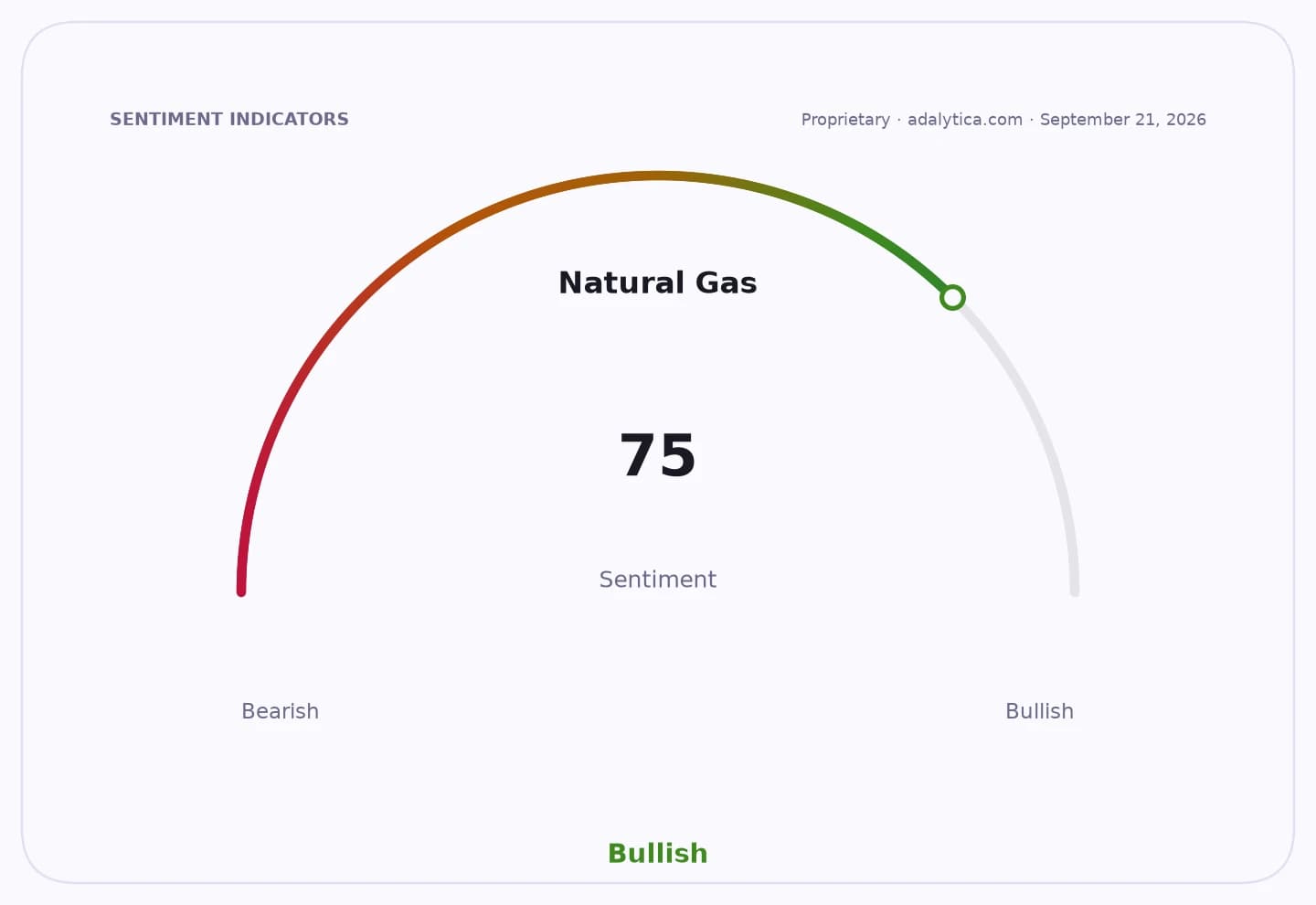
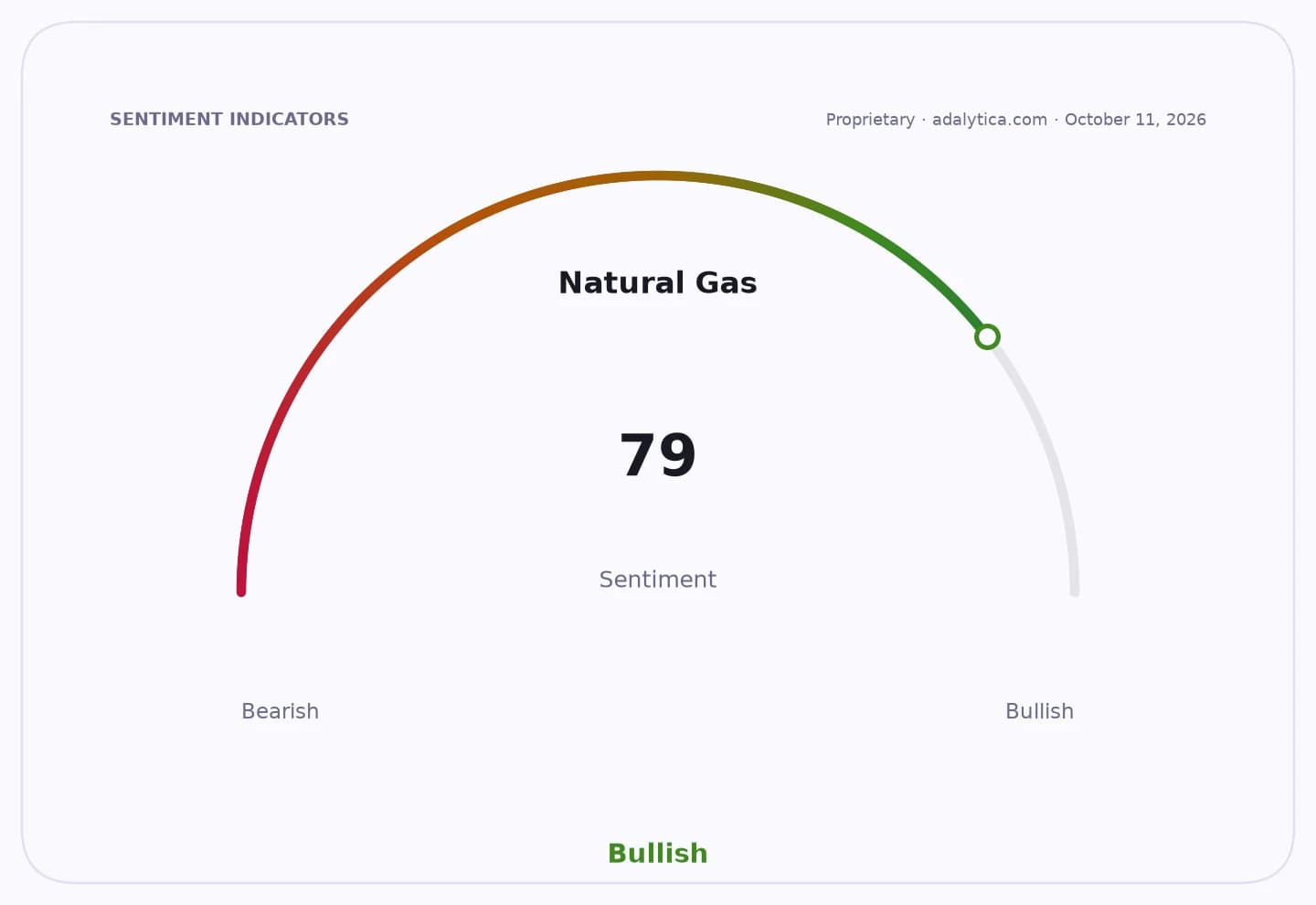
Sentiment IndicatorsⓘProprietary · adalytica.com · October 11, 2026
This is a snapshot — live sentiment, awareness and momentum for 130+ markets update continuously in the dashboard.Open AlphaPulse
The warning comes from parallel studies by the Institute for Energy Economics and Financial Analysis and the European Network of Transmission System Operators for Gas, which both point to a structural squeeze rather than a temporary weather-driven event. IEEFA said summer prices made it more profitable for traders to sell gas than store it, while demand has risen over the past two years and imports have been largely flat. That combination has forced Europe to lean harder on reserves just as those reserves are being depleted.
The immediate investor read-through is straightforward: higher European gas prices could spill into power costs, industrial margins and inflation expectations. For energy-intensive manufacturers, another winter of elevated fuel costs would deepen pressure on competitiveness and could revive talk of production curbs. For utilities and gas traders, it raises the value of optionality in LNG cargoes and storage, but also increases the risk of sharp price swings if weather turns colder than normal.
The policy backdrop adds another layer of strain. A European Union ban on long-term Russian LNG contracts is due to take effect in January, which IEEFA says would remove another 7 billion cubic meters of supply. That would force the bloc to replace Russian volumes with pricier LNG imports, much of it from the US. IEEFA estimates doing so at current prices would cost Europe an additional 3 billion euros, about 12% more than the same amount cost a year ago.
But the market is not a one-way bet. Analysts at S&P Global Energy argue that higher prices themselves should attract more LNG cargoes toward Europe, especially if Asian demand stays softer. The problem is that US LNG export capacity is already close to its limits, which means any meaningful increase in flows would tighten a global market that is still adjusting to more constrained supply.
For investors, the key issue is not whether Europe runs out of gas entirely, but whether it is forced to burn through storage faster than the market can replenish it. If inventories drop too quickly early in the winter, prices could spike enough to trigger demand destruction in industry, while leaving households exposed to another round of energy inflation. If temperatures stay mild and LNG arrivals hold up, the shortage may prove manageable. The next catalyst is therefore the weather, followed closely by LNG availability and the pace at which European demand responds to already elevated prices.
| Entity | Gains | Losses |
|---|---|---|
| LNG exporters | ▲Higher spot prices | ▼Capacity constraints |
| European utilities | ▲Storage scarcity premiums | ▼Volatile procurement costs |
| Energy-intensive industry | ▲Potential demand rationing relief | ▼Margin pressure |
| European households | ▲None | ▼Higher heating bills |