European natural gas prices have jumped to fresh multi-year highs as the widening conflict involving Iran rattles energy markets and forces traders to price in a higher risk of supply disruption across a system already short on slack.
Europe Gas Prices Surge on Iran Conflict Risk
The move matters because Europe’s gas market is far more exposed to geopolitical shocks than it was before Russia’s invasion of Ukraine. With storage still a key buffer and import dependence elevated, any threat to Middle East flows or LNG shipping routes can quickly translate into higher benchmark prices, tighter power markets and renewed inflation pressure just as policymakers had hoped energy volatility was fading.
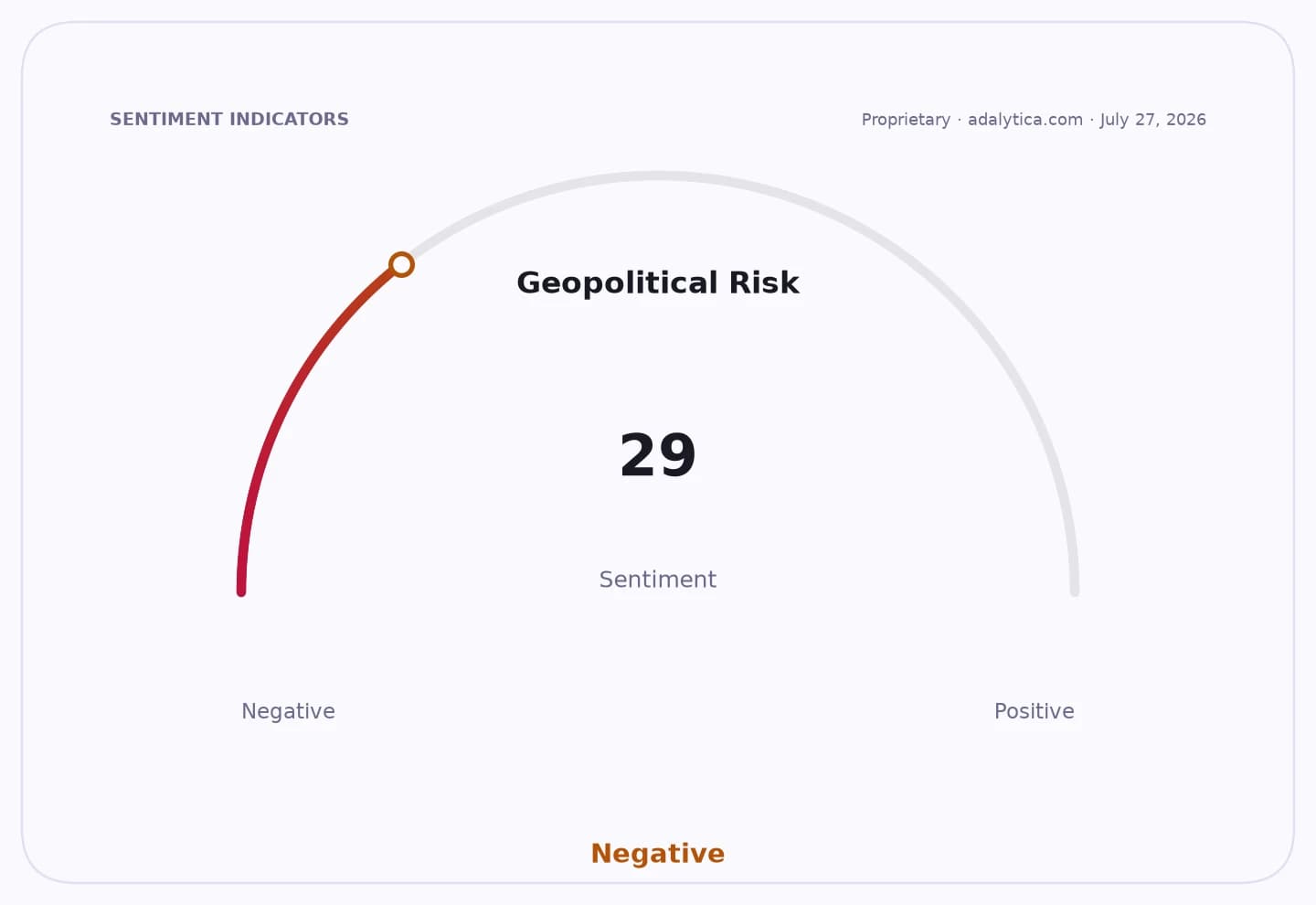
Sentiment IndicatorsⓘProprietary · adalytica.com · July 27, 2026
This is a snapshot — live sentiment, awareness and momentum for 130+ markets update continuously in the dashboard.Open AlphaPulse
The Dutch TTF benchmark, Europe’s main gas price reference, rose to 58.7 on July 27 after touching 63.58 three days earlier, according to the price data. That compares with 29.82 in mid-February and 38.77 in mid-April, underscoring how sharply the market has repriced since tensions escalated. Even after the latest pullback, the contract remains well above its 50-day moving average of 48.84 and close to the upper end of its recent trading range.
The rally reflects not just fear, but a change in the market’s probability-weighting. The most immediate concern is that the conflict could disrupt LNG shipments, tanker traffic or infrastructure linked to the wider Gulf region, including flows that ultimately support Europe’s winter supply balance. Traders are also watching the Strait of Hormuz, a chokepoint for a large share of global hydrocarbon trade. In a market where winter demand can expose any shortfall quickly, the premium for optionality rises fast when shipping insurance, freight rates and replacement cargo availability become uncertain.
Geopolitical Risk — 30-day sentimentadalytica.com
Explore this data interactively — full history, time series and cross-market comparisons.Open AlphaPulse
That pressure has spilled into U.S. natural gas as well. The front-month contract, NG=F, is trading at 2.81, down from a recent January spike to 7.46 but still showing the kind of volatility that comes when geopolitics, weather and inventory expectations collide. The iShares U.S. Natural Gas ETF, UNG, has eased to 10.2 after earlier surges, highlighting that the current move is not just about Europe-specific fundamentals but about a broader repricing of global gas risk.
For investors, the implications are mixed. Bullish energy traders benefit from a geopolitical risk premium that can persist as long as shipping lanes, production assets and regional diplomacy remain unstable. LNG exporters, especially those with flexible cargoes and exposure to spot pricing, stand to gain from firmer benchmarks. Utilities, industrial gas users and European consumers, by contrast, face higher input costs and renewed margin pressure. If the shock persists, the inflation pass-through could complicate the European Central Bank’s path just as rate cuts were expected to support growth.
Technical indicators also show how stretched the market has become. TTF’s relative strength index has been elevated at 73.3, while the front-month U.S. gas contract’s RSI has fallen to 19.4, suggesting the European market is far more overbought after the latest spike. Adalytica’s Global Stability Sentiment gauge sits in “Fear” at 29, while its natural gas trade signals show “Extreme Greed” awareness at 91, a sign that the market is highly alert to further upside risk but vulnerable to abrupt reversals if the geopolitical picture stabilizes.
The key question now is whether the conflict produces a temporary risk premium or a sustained supply shock. If diplomacy falters and any physical flow disruption emerges, European gas could test new highs quickly. If tensions ease and exports remain uninterrupted, some of the premium could unwind just as rapidly. For now, investors are being paid to own volatility, not certainty.
| Entity | Gains | Losses |
|---|---|---|
| LNG exporters | ▲Higher spot pricing | ▼Volume risk from disruption |
| European utilities | ▲Hedging urgency | ▼Higher fuel costs |
| Industrial gas users | ▲— | ▼Margin pressure |
| Gas bulls | ▲Risk premium | ▼Mean reversion risk |