Europe is pulling gas out of storage at a record pace as the cold snap lifts heating demand and drains inventories to their weakest level for this time of year since 2013, raising the odds of a more volatile winter for utilities, industrial users and traders.
Europe gas storage draws to weakest since 2013
Geopolitical Risk
The strain matters because Europe entered the heating season with less cushion than in prior years, leaving the region more exposed to any interruption in pipeline flows, liquefied natural gas arrivals or weather-driven demand spikes. Storage levels at about 61% capacity are already below the comfortable range that has helped calm the market since the energy crisis, and every additional withdrawal tightens the buffer for the rest of winter.
Sentiment Indicators
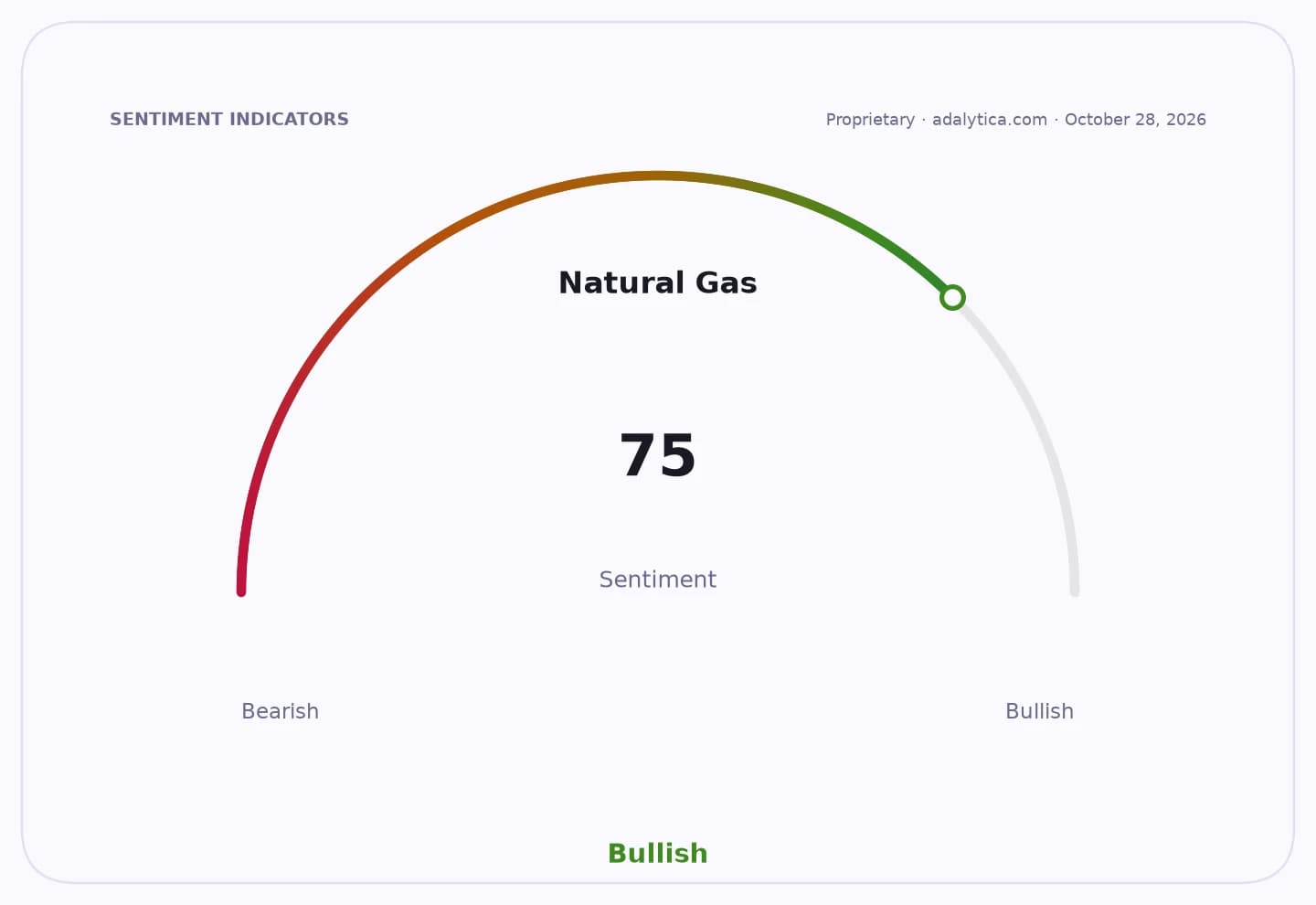
That has kept a floor under gas prices and fed into broader energy-market risk. The UNG natural gas fund has been whipsawed in recent weeks, sliding to $9.82 on Nov. 16 before recovering to $10.04 on Nov. 17, while the broader energy sector fund XLE has pulled back from an Oct. 30 peak of $70.02 to $63.36, underscoring how quickly sentiment can shift when inventories tighten and traders reassess supply risk.
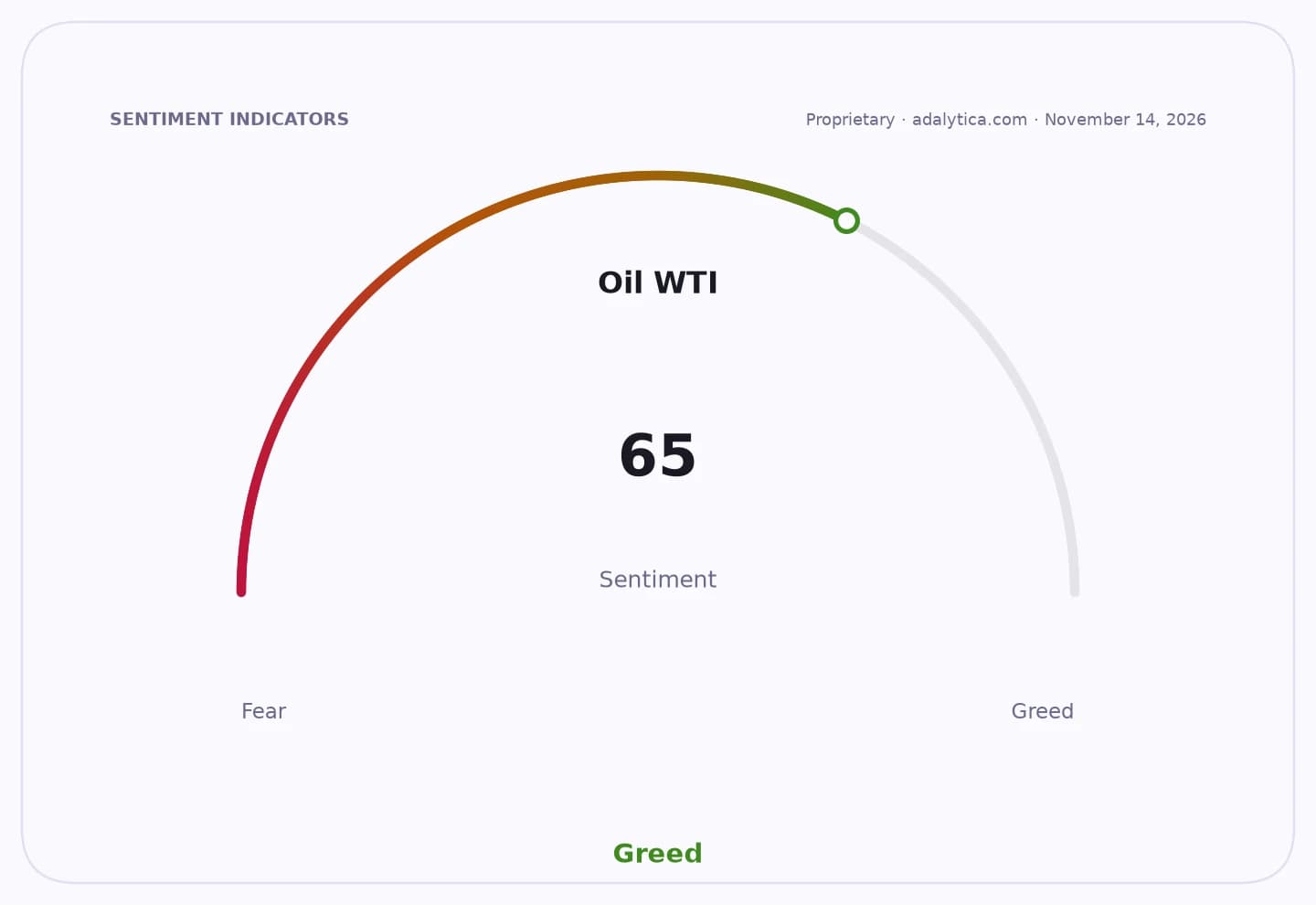
Oil has also remained firm, with WTI around $87.53 a barrel in the latest forecast, reinforcing the view that energy markets are still pricing in geopolitical and supply-side uncertainty. Adalytica’s Global Stability Sentiment gauge has fallen to 4, or “Extreme Fear,” while its oil signal shows “Greed,” a combination that points to heightened risk aversion even as crude holds up.
For investors, the key question is whether this early-season drawdown is a one-off weather event or the start of a structurally tighter winter. If temperatures stay low, Europe may need more spot LNG cargoes and could compete harder with Asia for supplies, which would support gas-linked assets and energy producers while pressuring European consumers and energy-intensive industries.
The next catalyst is the pace of withdrawals through the rest of the heating season, along with any fresh disruption to Middle East supply routes or European import flows.
| Entity | Gains | Losses |
|---|---|---|
| Gas producers/LNG exporters | ▲Higher spot prices | ▼Weaker pricing power if storage recovers |
| European utilities and buyers | ▲None | ▼Higher procurement costs |
| Energy equities/ETFs | ▲Support from tighter supply | ▼Volatility if demand eases |
| Industrial gas users | ▲None | ▼Higher input costs |