Europe is drawing down gas storage at an unprecedented pace for early November, a shift that matters because it tightens the region’s buffer just as winter demand is starting to rise and leaves gas prices more vulnerable to weather and supply shocks.
Europe gas storage withdrawals hit record early November
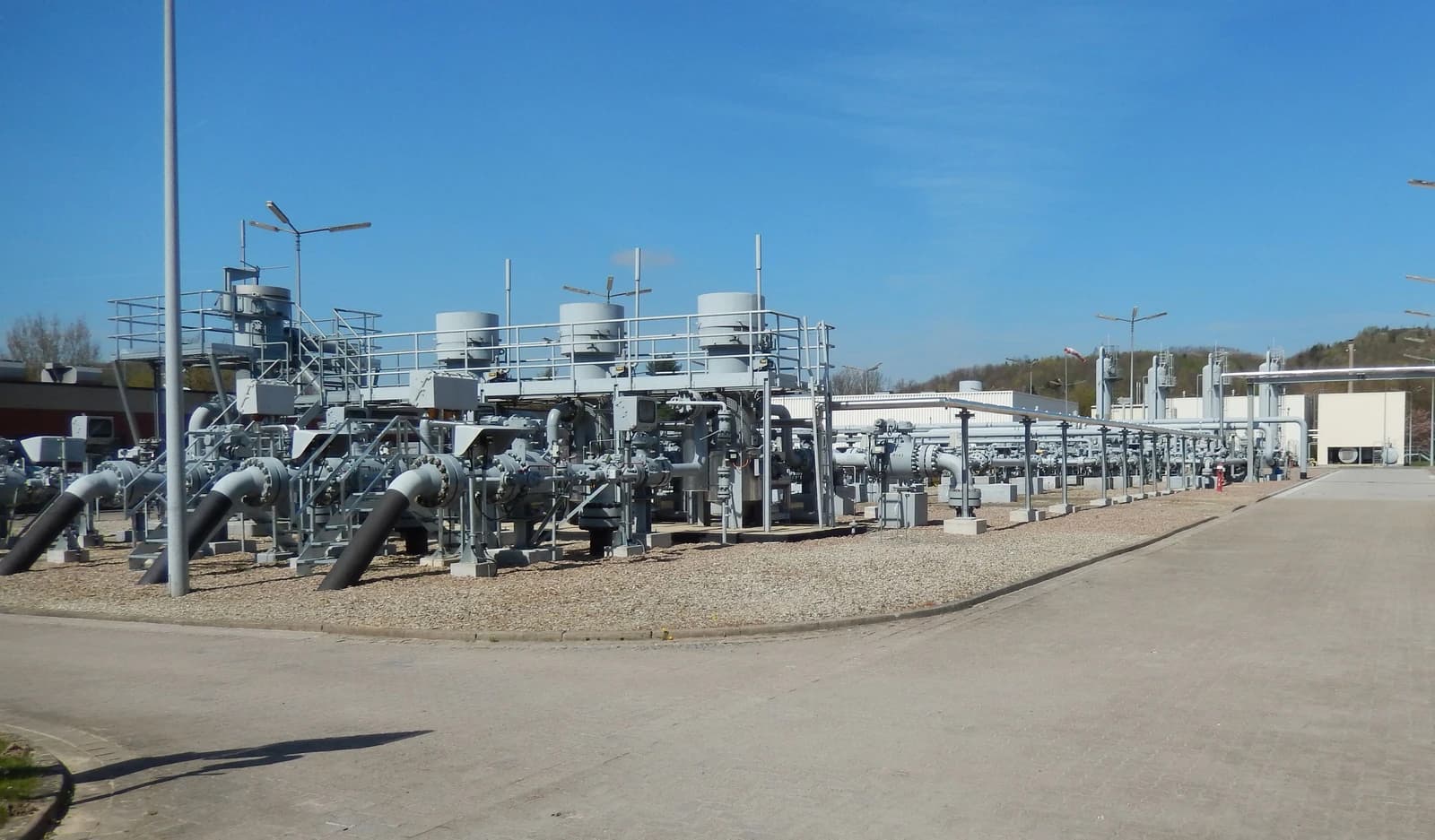
Gazprom said Europe set a historical record for gas withdrawals from storage on Nov. 6, citing Gas Infrastructure Europe data that showed the region pulled 23.9% more gas than the previous daily record for that date, or 83 million cubic meters above it. Germany, the continent’s largest storage market, fell below 60% full, a first for the opening week of November in the period of observation. Its daily withdrawal also hit an anti-record, exceeding the previous high for that date by 58.7%, or 37 million cubic meters.
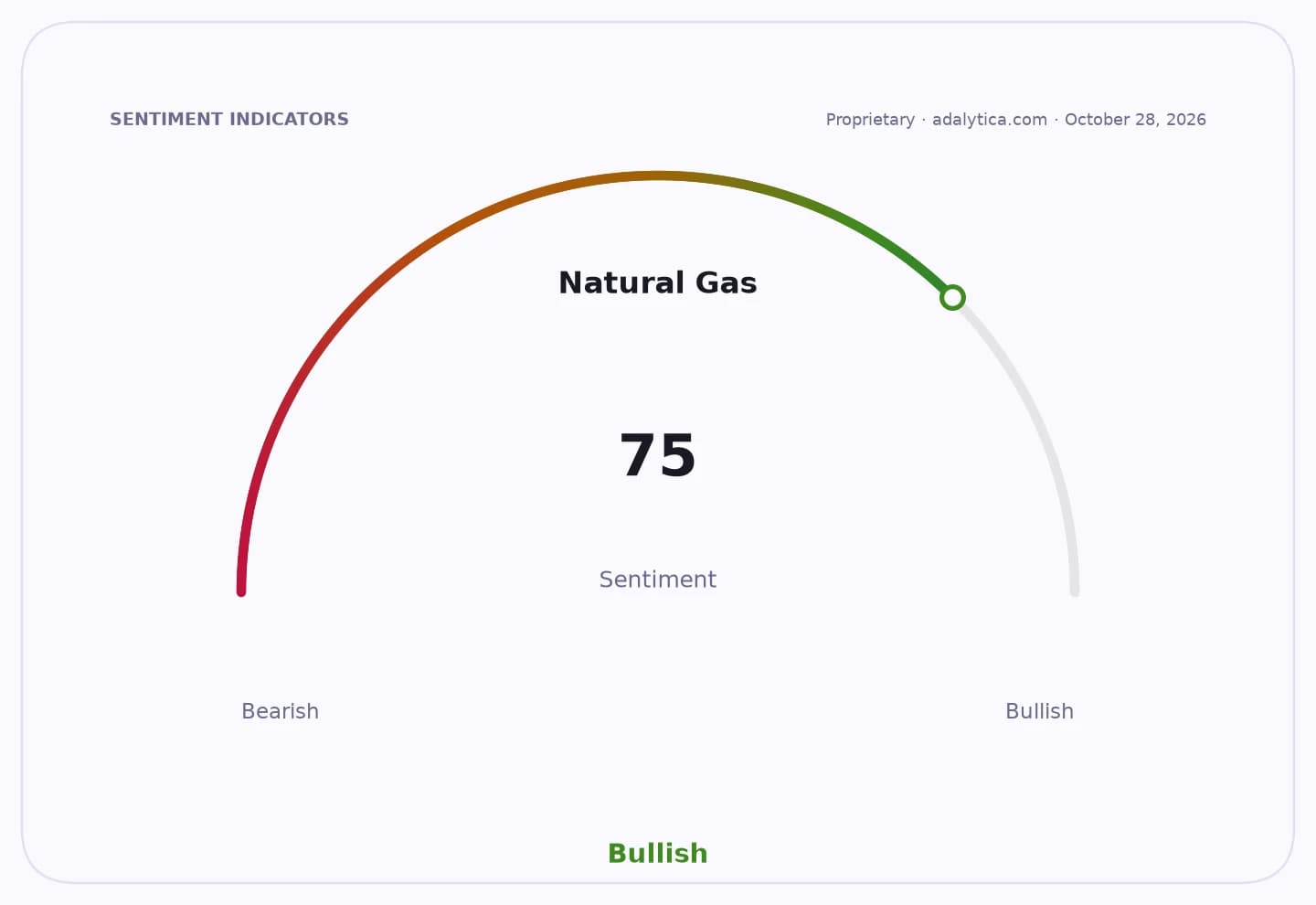
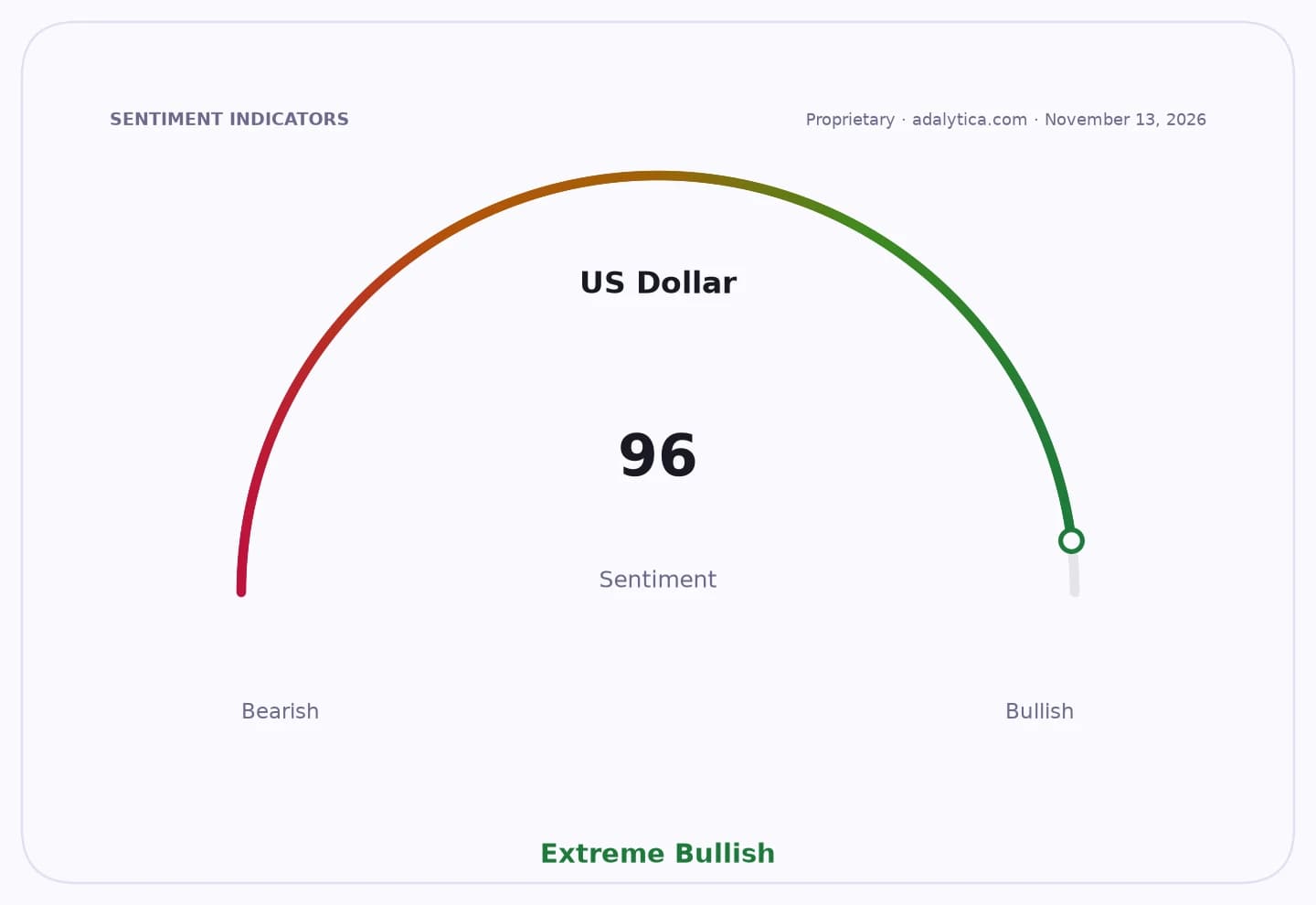
Sentiment Indicators
The market significance is straightforward: the faster Europe burns through storage, the less flexibility it has if temperatures drop sharply, pipeline flows weaken or liquefied natural gas cargoes are disrupted. The fact that withdrawals in the first week of November are already running at record levels suggests the continent is moving into winter with less slack than usual, even before peak heating demand arrives.
That has direct implications for gas traders and utility buyers. Front-month and winter contracts typically become more sensitive when storage coverage falls quickly, because the market must price a higher probability of supply scarcity later in the season. In that environment, any cold snap can trigger outsized moves in benchmark European gas and ripple through power prices, industrial costs and household bills.
Natural Gas
The strain is most visible in Germany, where storage is falling below levels that would normally cushion the winter. Gazprom’s comments said the country’s stocks dropped under 60%, and the company highlighted that this occurred unusually early in the season. The broader European storage level has slipped below 74%, with withdrawals since the autumn peak more than twice the average for the previous five years, according to the Russian producer’s account of the data.
For investors, that keeps a bid under gas-linked assets and reinforces the relative strength of energy equities versus more gas-exposed industrials and utilities. It also helps explain why natural gas prices remain sensitive even when headline demand indicators are mixed: the issue is not just current consumption, but how quickly spare inventory is being consumed before the coldest months.
Technical trading data point to a still-nervous market. U.S. natural gas futures have been volatile, while the broader energy sector has outperformed this year as investors have priced in firmer commodity fundamentals. Conventional technical indicators on natural gas show the contract trading near key moving averages after recent swings, consistent with a market searching for direction rather than discounting a comfortable supply picture.
The broader narrative is that Europe’s gas system is entering winter with less room for error. If temperatures stay mild, the drawdown may remain manageable; if not, the early depletion of storage could force more aggressive LNG procurement, support regional gas prices and put renewed pressure on policymakers to preserve supply security. For now, the record withdrawals are a warning that the market’s winter cushion is thinner than it should be.
| Entity | Gains | Losses |
|---|---|---|
| European gas bulls | ▲Higher price support | ▼Easier winter supply |
| LNG suppliers | ▲Stronger spot demand | ▼Weaker pricing power if winter stays mild |
| Utilities and industrial buyers | ▲None | ▼Higher procurement costs |
| Gas exporters to Europe | ▲Tighter market leverage | ▼Lower inventories in Europe |