Home sales across Europe rose in 17 of 20 countries in 2025, underscoring how even a modest decline in financing costs is translating into more transactions after two years of affordability stress.
Europe Housing Activity Rebounds on Lower Rates
The broad recovery matters because residential real estate is one of the clearest transmission channels from monetary policy to the real economy. As borrowing costs ease from the peaks that froze demand, buyers who had been sidelined by higher mortgage rates are beginning to re-enter the market, supporting transaction volumes, housing-related services and household mobility. France’s market crossed one million transactions, while Slovenia posted the sharpest percentage gain, highlighting that the rebound is not limited to the largest economies.
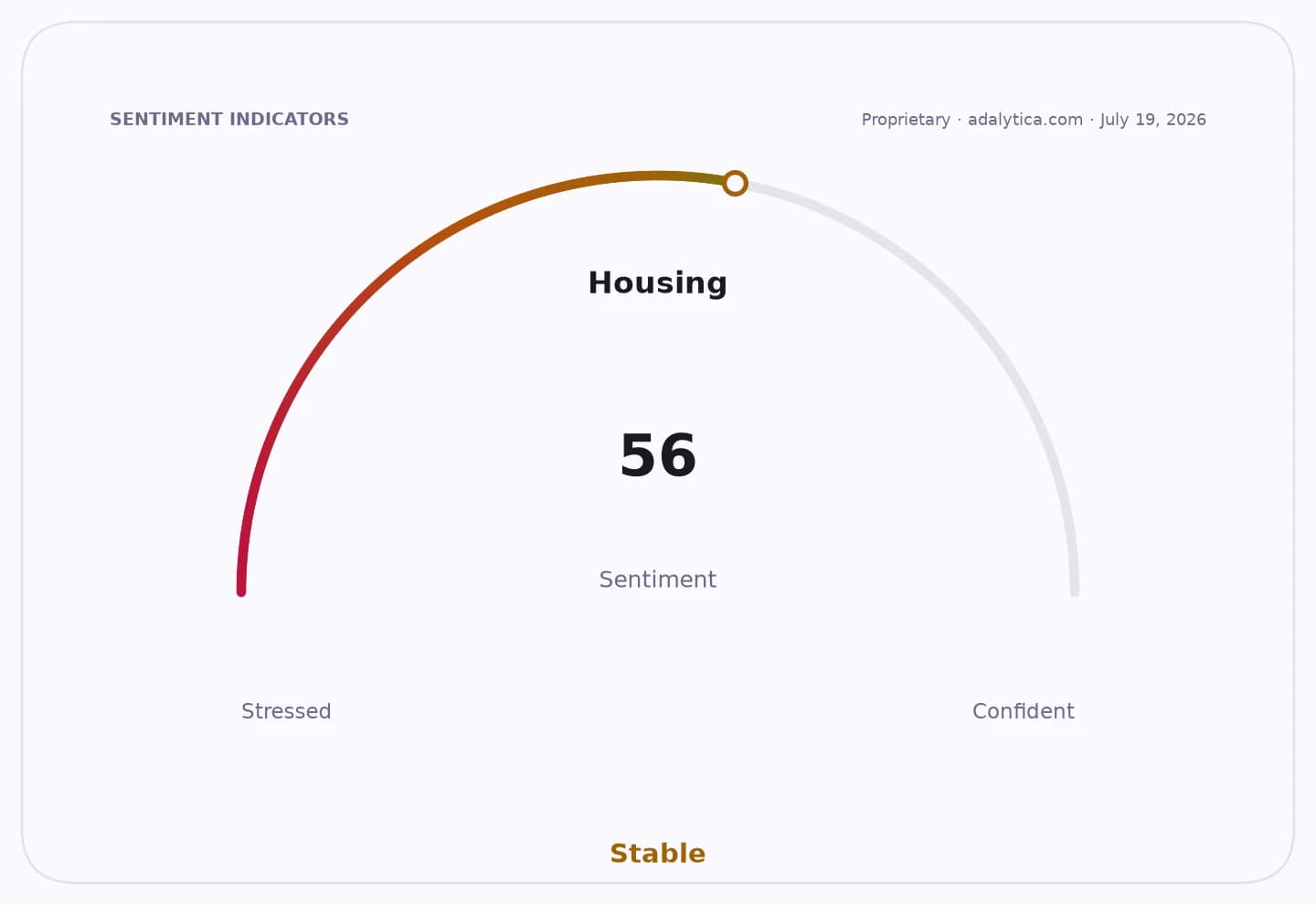
Sentiment IndicatorsⓘProprietary · adalytica.com · July 19, 2026
This is a snapshot — live sentiment, awareness and momentum for 130+ markets update continuously in the dashboard.Open AlphaPulse
The data suggest the market is normalizing unevenly rather than staging a uniform boom. Countries where prices had previously run ahead of incomes are still likely to face tighter affordability constraints, but lower financing costs are reducing the monthly payment hurdle enough to unlock deferred demand. That is particularly important in Europe, where fixed-rate mortgage structures vary widely and the pass-through from central bank easing can be slower than in the US. Even so, the direction is now clear: cheaper money is pulling activity off the floor.
For investors, that improves the outlook for anything tied to housing turnover. Brokers, property platforms, lenders and residential landlords all benefit when more homes change hands, while builders and suppliers tend to see better order flow if transaction momentum feeds into renewed development. CBRE and American Homes 4 Rent have both been trading against that backdrop in the US, and the same logic applies in Europe: more activity generally supports fee income, asset values and confidence in the sector.
The upside case is that the recovery broadens as mortgage rates continue to ease and wage growth gradually repairs affordability. The bear case is that persistent price levels, cautious lenders and uncertain labor markets keep the rebound shallow, limiting the gains to transactions rather than sparking a sustained housing cycle. For now, the main takeaway is that Europe’s housing market is responding to lower rates, but not yet escaping the structural affordability constraints that have defined it for much of the past two years.
| Entity | Gains | Losses |
|---|---|---|
| Homebuyers | ▲Lower financing costs | ▼Still-high prices |
| Sellers | ▲More transactions | ▼Less pricing power |
| Brokers/Platforms | ▲Higher activity | ▼Softer margins if competition rises |
| Lenders/Builders | ▲More deal flow | ▼Credit and execution risk |