Europe’s water shortages are deepening a power-system problem that is forcing utilities and traders to lean harder on gas, with hydropower generation falling to its weakest level in years just as the continent enters its most weather-sensitive period.
Europe hydro shortages lift gas demand, WTI at $88.70
That matters because hydro has long been one of Europe’s cheapest and quickest sources of flexible electricity. When reservoirs are low, the region loses not just energy output but also a key balancing tool that can absorb swings in wind and solar generation. The result is tighter reserve margins, stronger demand for thermal generation and greater price volatility across power markets.
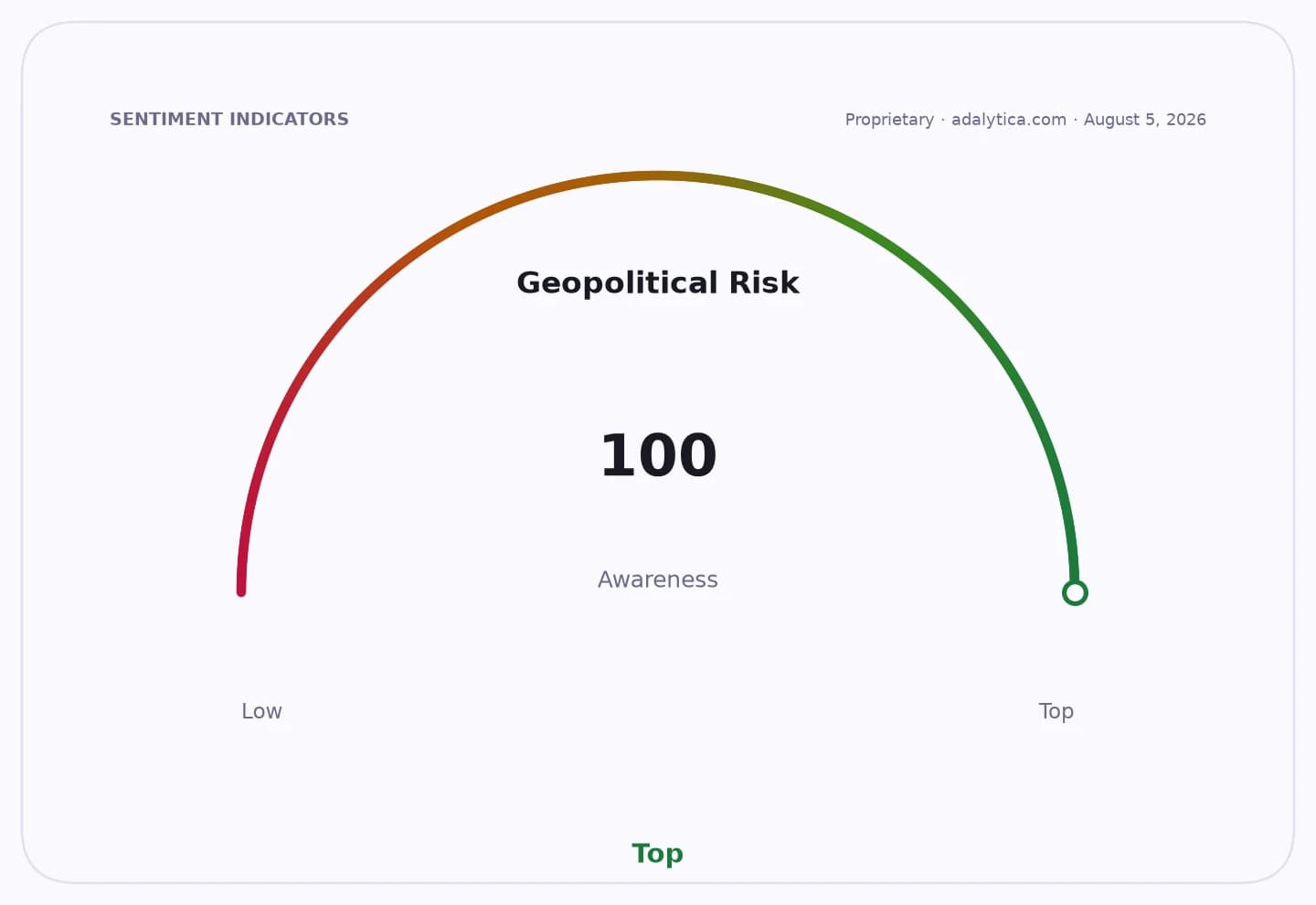
Sentiment IndicatorsⓘProprietary · adalytica.com · August 5, 2026
This is a snapshot — live sentiment, awareness and momentum for 130+ markets update continuously in the dashboard.Open AlphaPulse
The squeeze is showing up in the energy complex. WTI crude has recovered to an estimated $88.70 a barrel for July 28, while investors have also bid up energy equities as the market prices in a firmer fuel backdrop. Shell has risen to about $89.84 and BP to $42.44 in recent sessions, even after both eased from late-July highs. Natural gas futures, meanwhile, have rebounded sharply from earlier this year, with the front-month NYMEX contract around $6.33 after trading below $4 a month earlier and more than $14 in March. The conventional technical indicators on gas — including the 50-day and 200-day moving averages, RSI and MACD — suggest the move is still being driven by a larger repricing rather than a brief spike.
The economic logic is straightforward. Hydro shortages usually push up the marginal cost of electricity because gas-fired plants become the reserve fuel of choice. That is especially true in Europe, where gas generation can still ramp quickly enough to cover sudden deficits from weak hydro output or intermittent renewables. The trade-off is higher fuel imports and stronger exposure to LNG and pipeline markets, which can filter through to industrial power bills, household tariffs and inflation.
DCOILWTICO — macro contextadalytica.com
Explore this data interactively — full history, time series and cross-market comparisons.Open AlphaPulse
For producers, that is supportive. Gas-linked names such as Shell and BP tend to benefit when European balancing demand rises and power prices firm. Shell’s shares remain well above their June lows, while BP has also recovered from a July trough near $36.15, reflecting investor confidence that tighter European power conditions can support upstream and trading earnings. For consumers and industrial users, however, the picture is less favorable: lower hydro availability can lift spot power prices and force more generation from gas, precisely as many European economies are still contending with weak manufacturing demand and high energy sensitivity.
The broader narrative is that Europe’s transition is colliding with climate volatility. More wind and solar have not eliminated the need for dispatchable backup; they have increased the value of flexible resources when weather-dependent supply falters. If reservoir levels remain depressed, gas will keep doing much of the heavy lifting in the continent’s power system, and that keeps the fuel central not just to the energy market, but to Europe’s inflation and industrial outlook as well.
| Entity | Gains | Losses |
|---|---|---|
| Gas producers/traders | ▲Higher power demand | ▼— |
| European utilities with gas fleets | ▲Better dispatch economics | ▼Hydro shortfall risk |
| Industrial power users | ▲— | ▼Higher electricity bills |
| Hydro-dependent power systems | ▲— | ▼Lower output, weaker flexibility |