European natural gas prices opened sharply higher as renewed US attacks in Iran revived fears that Middle East fighting could disrupt flows through the Strait of Hormuz and keep energy costs elevated for longer.
European gas prices rise on Iran conflict fears

The benchmark TTF contract in Amsterdam rose 2.76% to 73.94 euros per megawatt hour, extending a rally that has already pushed European gas to around a three-year high. For Europe, where the TTF sets the reference price for much of the region’s wholesale gas trade, the move matters because it feeds directly into power costs, industrial margins and, with a lag, household bills.
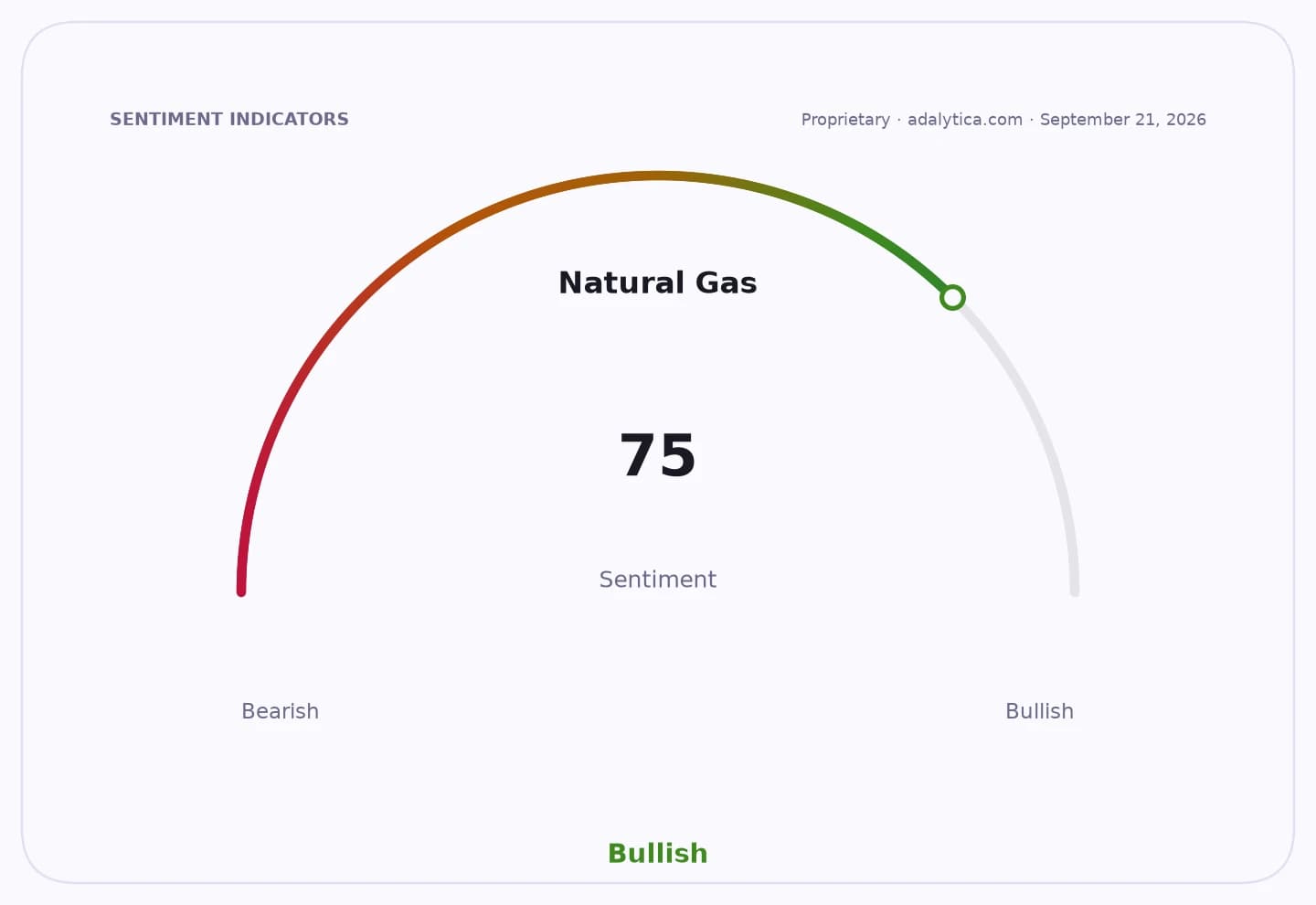
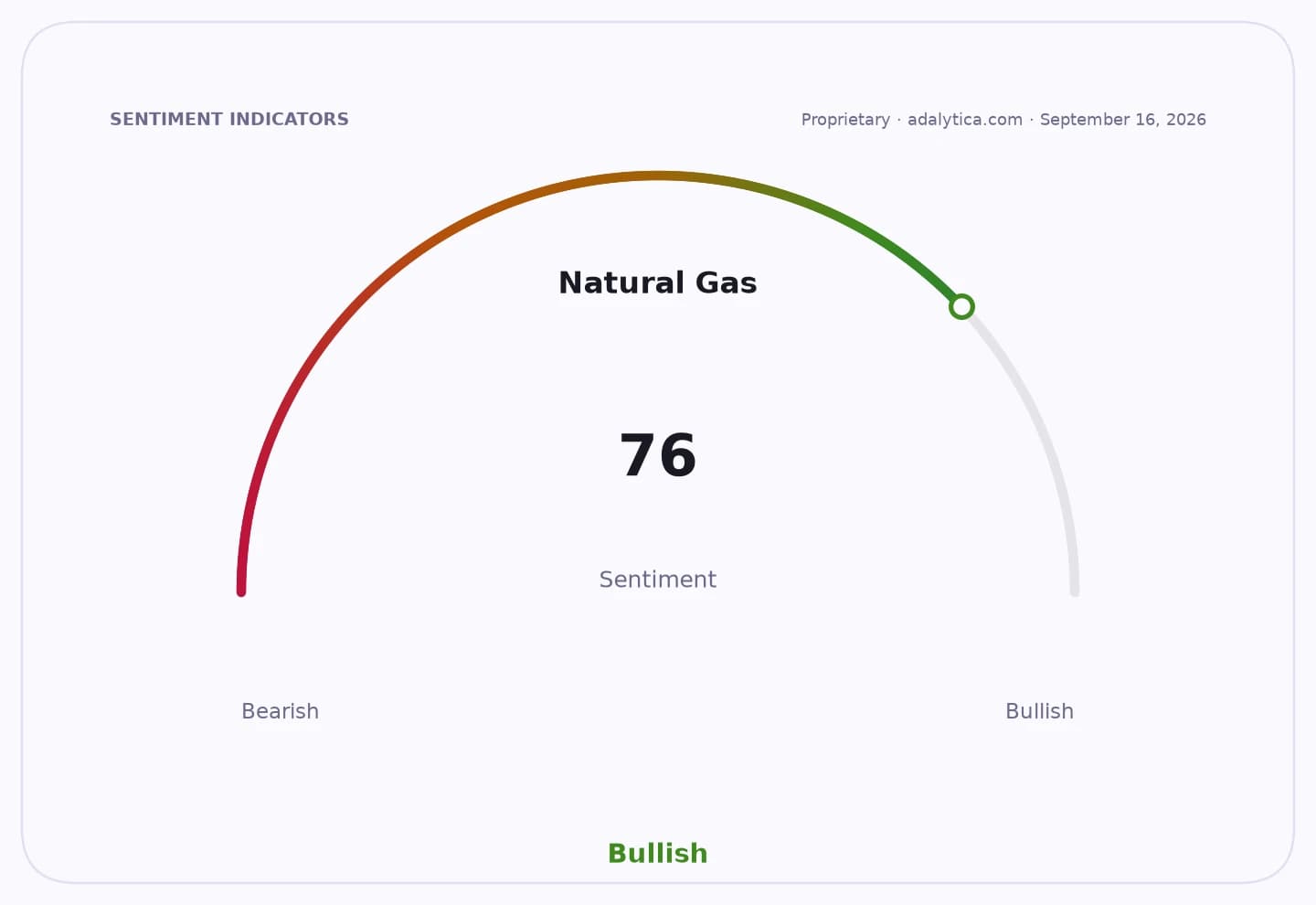
Sentiment IndicatorsⓘProprietary · adalytica.com · September 7, 2026
This is a snapshot — live sentiment, awareness and momentum for 130+ markets update continuously in the dashboard.Open AlphaPulse
The jump is a reminder that the gas market is now pricing not just current supply and demand, but the risk of a broader geopolitical disruption at the heart of global energy shipping. Traders have been bidding up contracts as conflict between the US and Iran intensifies, while executives including Eon chief Leonhard Birnbaum have warned that prices could climb further if tensions persist into winter.
That matters economically because Europe enters the cold season with limited room for error. Even without a physical supply interruption, higher forward prices can tighten financial conditions for energy-intensive manufacturers, lift hedging costs for utilities and feed inflation expectations just as central banks are trying to normalize policy. The effect is asymmetric: producers and exporters with gas exposure can benefit from higher prices, while import-dependent economies absorb the hit through wider trade deficits and weaker real incomes.
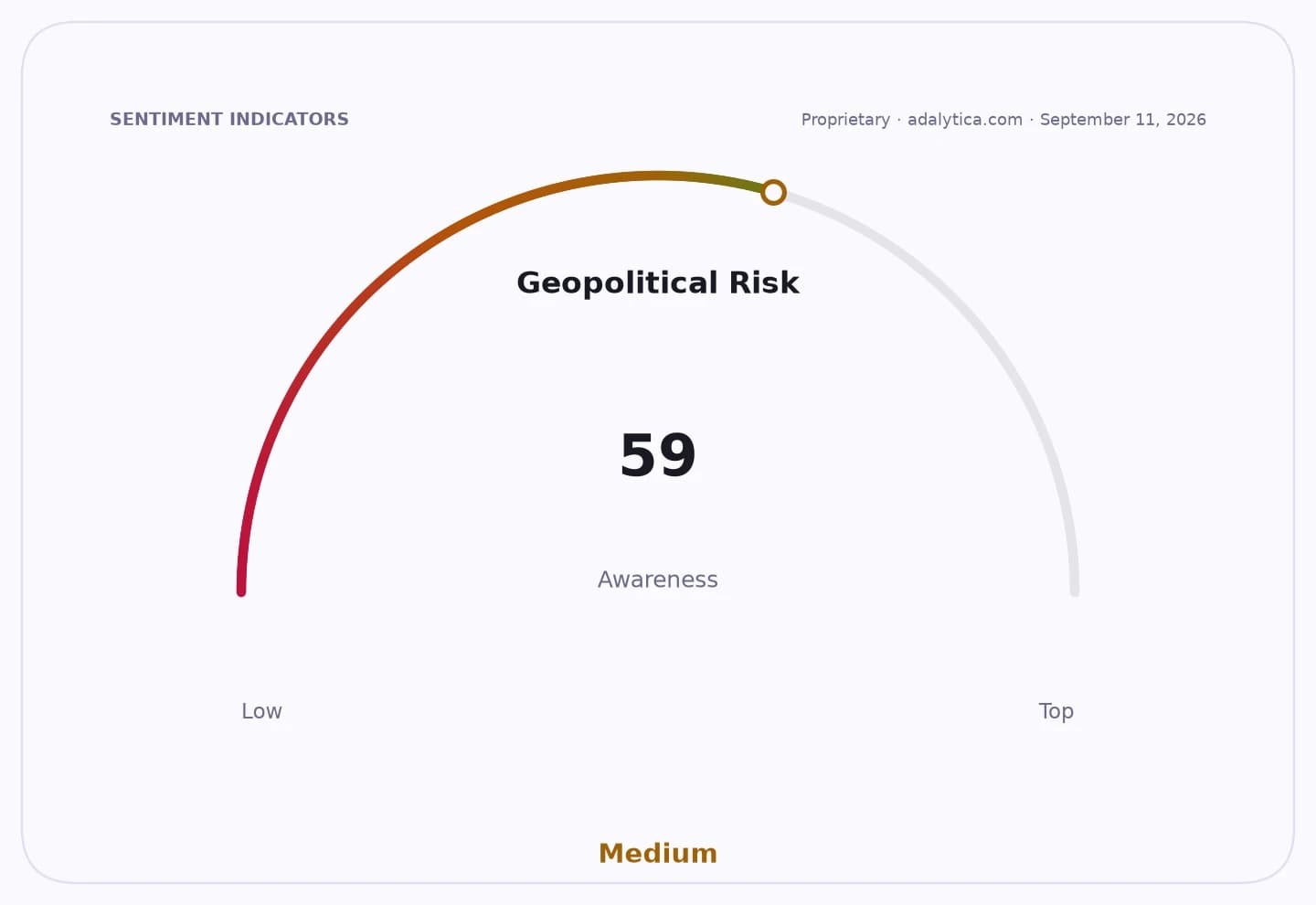
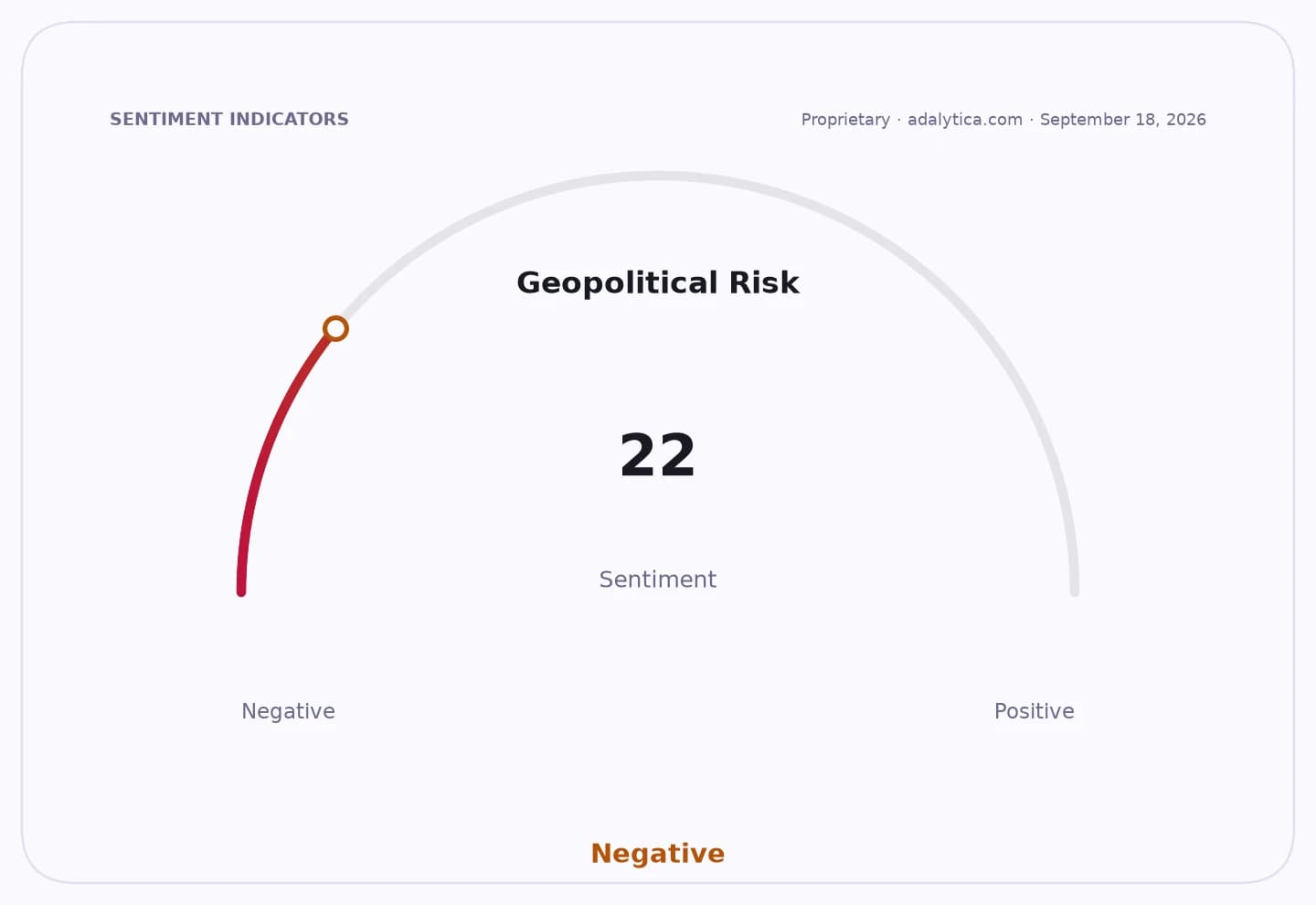
Geopolitical Risk — 30-day sentimentadalytica.com
Explore this data interactively — full history, time series and cross-market comparisons.Open AlphaPulse
Markets are already reflecting that stress. The United States natural gas ETF UNG was broadly stable around $10.56 after recent volatility, while the Energy Select Sector SPDR XLE has risen to about $64.06, showing how energy equities can hold up when commodity risk rises. By contrast, the signal from European gas itself is more direct: a move back toward 74 euros/MWh keeps pressure on utilities, chemicals groups, fertilizers and other heavy users that are most exposed to spot market swings.
Technical positioning also suggests the market remains bid. US natural gas futures were trading above both their 50-day and 200-day moving averages, with an RSI reading in the low 70s, a pattern that typically indicates strength but also leaves the contract vulnerable to sharp pullbacks if geopolitical headlines ease. Adalytica’s natural gas trade-signal snapshot also pointed to improving short-term sentiment, underscoring how quickly risk appetite can shift when conflict risk dominates.
The key question for investors is whether this is another temporary spike or the start of a more durable risk premium. If the fighting remains contained, prices could retrace as supply fears fade. But if the confrontation threatens shipping through the Gulf or keeps traders focused on winter scarcity, European gas may stay elevated long enough to hit industrial output, keep utility earnings volatile and complicate Europe’s already fragile growth outlook.
| Entity | Gains | Losses |
|---|---|---|
| European gas bulls | ▲Higher pricing power | ▼More expensive hedging if volatility spikes |
| Energy producers/utilities | ▲Better realized prices | ▼Higher margin pressure from volatility |
| Energy-intensive industries | ▲Some pass-through protection if hedged | ▼Higher input costs and weaker margins |
| European consumers/importers | ▲— | ▼Higher heating and power bills |