Eurozone inflation easing to 2.8% in June is enough to take some immediate pressure off the European Central Bank, but not enough to end the policy debate.
Eurozone Inflation Eases, ECB Likely to Pause

The first decline in prices this year suggests the ECB can afford to pause after its aggressive tightening cycle, especially with growth still fragile and bond markets already pricing in a slower pace of action. But inflation remains above the ECB’s 2% target, and the stickiness in services and wages means policymakers are unlikely to declare victory.

That matters for Europe’s economy because the central bank is trying to cool demand without tipping the bloc into a deeper slowdown. A softer inflation reading reduces the urgency for another rate hike and gives households and companies some breathing room on borrowing costs, but it does not erase the damage already done by higher rates to credit-sensitive sectors such as housing, construction and small business lending. The policy trade-off is becoming more delicate: tighten further and risk overkill, or pause and risk inflation settling above target for longer.
For investors, the confirmation of 2.8% inflation supports the case for a near-term ECB hold, which in turn has implications for euro rates, sovereign spreads and the currency. FXE, the euro trust, has been trading around $105-$106, below its 50-day average and just under its 200-day average, showing that the euro remains technically vulnerable even as policy expectations shift. In conventional technical terms, its RSI has recovered from oversold levels but the broader trend still reflects a market that is not yet convinced the euro has a durable catalyst beyond a less hawkish ECB.
The macro narrative is increasingly about sequencing. June’s softer CPI reading gives Christine Lagarde and her colleagues room to wait, assess the lagged impact of previous hikes and watch whether energy and imported price pressures keep fading. That is the bullish case for euro assets: the inflation peak is behind the bloc, rate expectations are easing and recession risk may be less severe than feared. The bear case is that 2.8% is still too hot to justify rapid easing, while weak growth and sticky core prices leave the ECB trapped between credibility and caution.
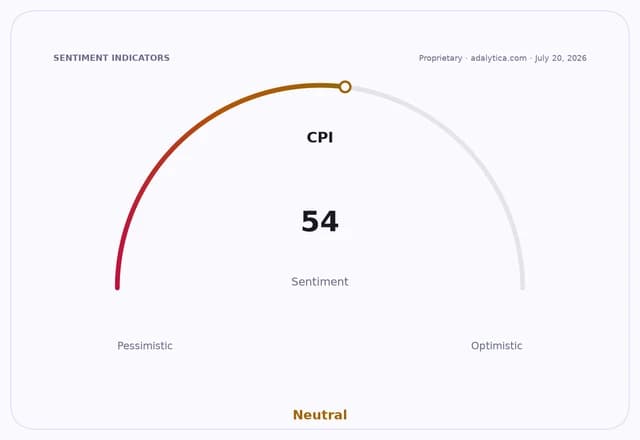
Adalytica’s CPI sentiment gauge has turned neutral, while long-term inflation expectations are also neutral, suggesting the market is not pricing a fresh inflation shock but is not yet comfortable calling the problem solved. That balance is exactly why the ECB can pause now, but may find itself forced to keep policy restrictive for longer than investors want.
The next key catalyst is whether incoming data confirm that June was the start of a sustained disinflation trend, or just a temporary lull. If inflation continues to drift lower, the ECB gains flexibility to pivot. If it stabilizes above target, markets may have to reprice the idea that Europe’s rate-cut cycle will be shallow and delayed.
| Entity | Gains | Losses |
|---|---|---|
| ECB doves | ▲Pause room | ▼Pressure to cut soon |
| ECB hawks | ▲Credibility preserved | ▼More rate hikes debated |
| Eurozone borrowers | ▲Relief from borrowing costs | ▼No rapid easing |
| Euro bulls | ▲Lower hike risk | ▼Weak technical backdrop |