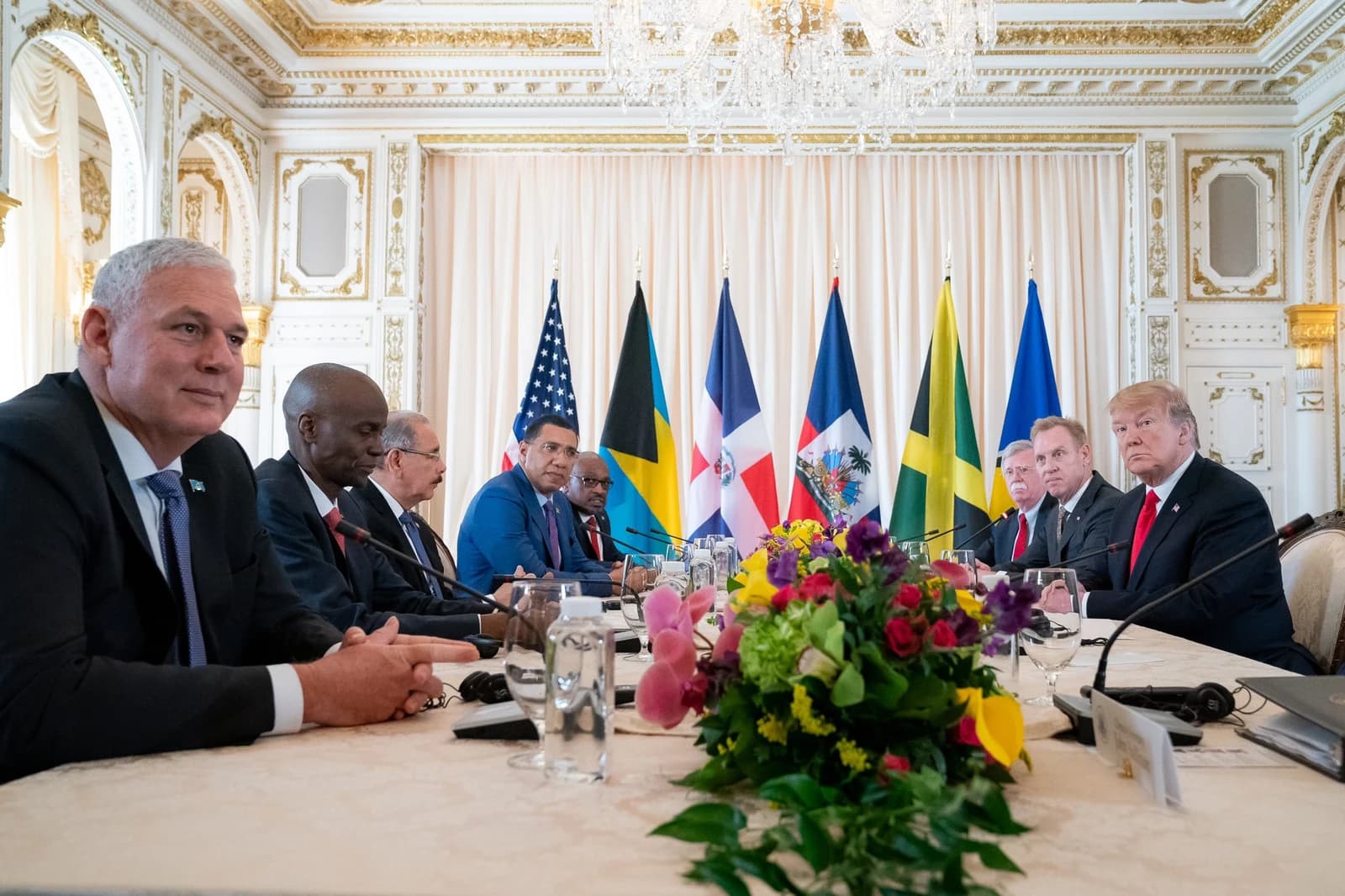
Country risk tied to Venezuela appears to be falling after Delcy’s meeting with Trump on Sept. 25, and that matters because even a modest de-escalation can reprice Latin American assets quickly, particularly exchange-traded funds with heavy regional exposure.
Brazil ETF EWZ Rises After Venezuela Meeting

The clearest market read-through is in Brazil-focused EWZ, which finished Sept. 30 at 37.25, up from 36.21 on Sept. 28, while broader emerging-markets ETF EEM rose to 66.79 from 67.20 over the same stretch after briefly holding near recent highs. The movements are not dramatic in isolation, but they come after a sharp run-up and pullback pattern that suggests investors have been trading the region on changing perceptions of geopolitical and policy risk rather than on fundamentals alone.
Sentiment IndicatorsⓘProprietary · adalytica.com · October 1, 2026
This is a snapshot — live sentiment, awareness and momentum for 130+ markets update continuously in the dashboard.Open AlphaPulse

For investors, the key issue is whether the meeting marks a durable reduction in the Venezuela discount or only a temporary relief rally. Country-risk compression can support local-currency assets, sovereign and corporate credit, and equity valuations by lowering the return premium demanded by foreign capital. It also helps sectors most exposed to political normalization, sanctions relief or regional trade stability, including financials, energy and consumer-linked names. If diplomatic engagement translates into fewer sanctions-related headlines and lower regional volatility, capital could continue to rotate back into Latin American equities and away from defensive dollar exposure.
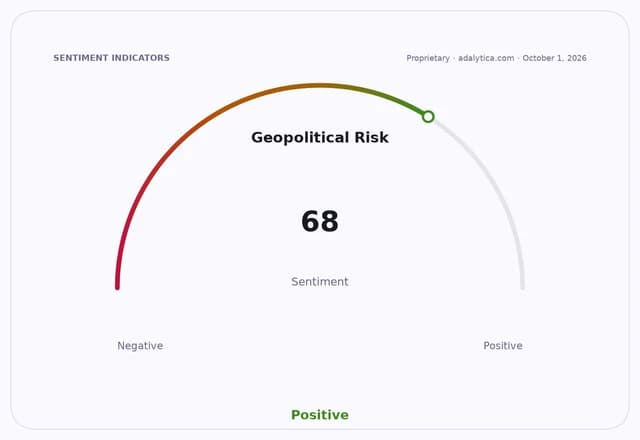
That is consistent with the tone of the market gauges. Adalytica’s Global Stability Sentiment stood at 68, labeled neutral, after spiking to 93 on Sept. 28 and then fading over the next two sessions, showing investors still see the situation as fluid rather than resolved. By contrast, Adalytica’s US Dollar Trade Signals remained in extreme fear, a sign that risk-sensitive capital may be more willing to move into non-dollar assets if geopolitical tension in the hemisphere continues to ease.
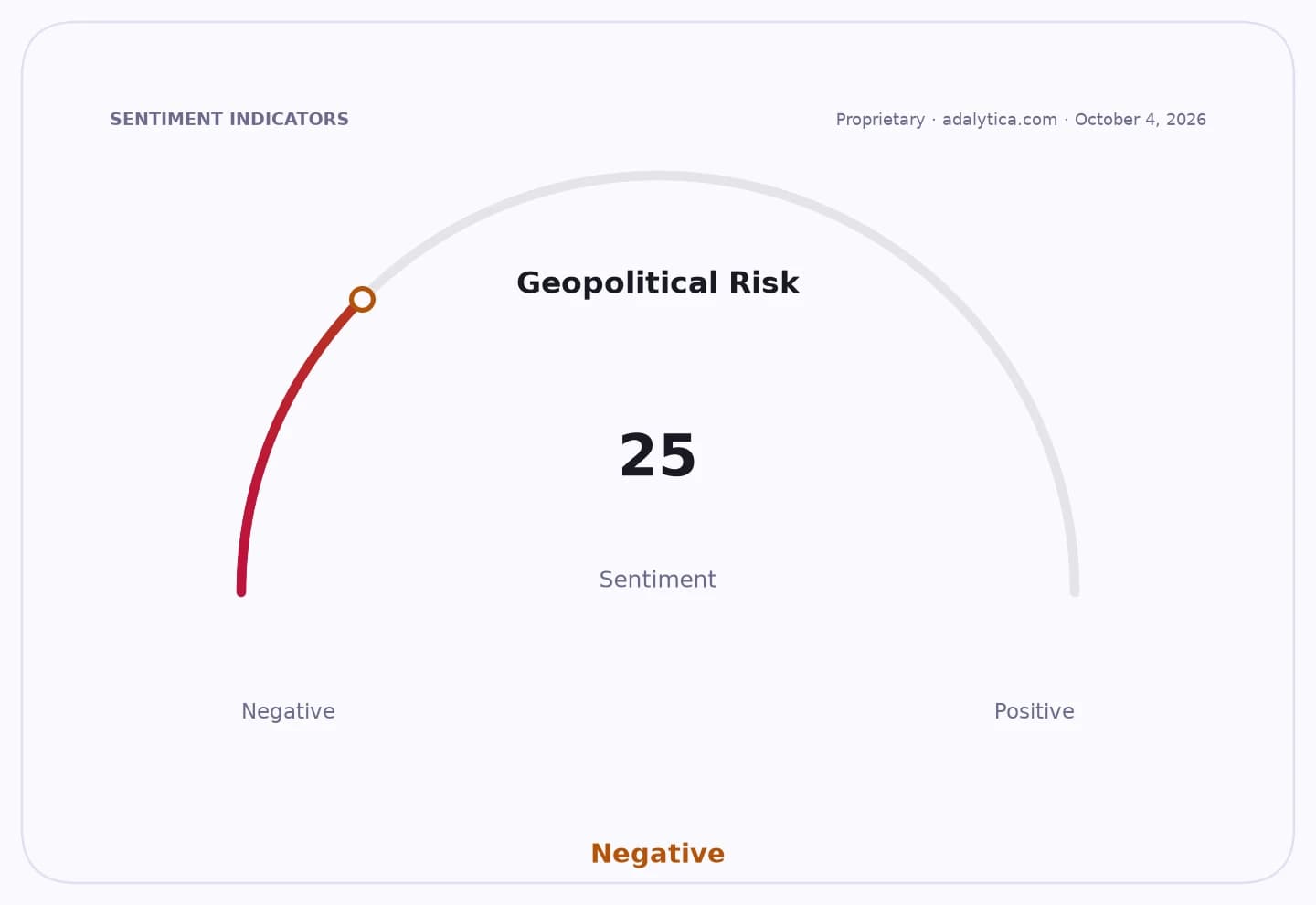
Geopolitical Risk vs EWZadalytica.com
Explore this data interactively — full history, time series and cross-market comparisons.Open AlphaPulse
Technically, the funds still sit above their 50-day and 200-day moving averages, which suggests the broader uptrend has not broken even after the recent volatility. EWZ closed just above its 50-day average of 36.29 and 200-day average of 36.10 on Sept. 30, while ILF ended at 34.50 versus 34.91 and 34.36, respectively. EEM remained above both its 50-day and 200-day averages at 66.79, a reminder that the asset class is still being supported by structural demand despite bouts of risk aversion.
The bull case is straightforward: if the Trump-Delcy meeting lowers the odds of a renewed geopolitical shock, Latin American markets should benefit from better flows, tighter spreads and a modest rerating of region-sensitive equities. The bear case is that the move is only tactical, with investors too accustomed to headlines around Venezuela, shipping security and broader geopolitical instability to assume the risk premium has permanently reset.
What matters now is follow-through. Any sign of formal diplomatic steps, sanctions easing or improved maritime security would reinforce the move in EWZ, ILF and EEM. If talks stall, the recent bounce could quickly unwind, especially given how crowded and sentiment-driven the regional trade has become.
| Entity | Gains | Losses |
|---|---|---|
| EWZ / Brazil equities | ▲Lower country risk premium | ▼Hedgers and short-term shorts |
| ILF / Latin America equities | ▲Improved regional flows | ▼Risk-averse bond proxies |
| EEM / Emerging markets | ▲Better EM sentiment | ▼Safe-haven dollar bulls |
| Venezuela risk premium | ▲Eases on diplomacy | ▼Investors pricing crisis upside |