Global food prices have climbed to their highest level in more than three years, and that matters because staples are once again pushing against household budgets and central banks’ inflation fight at the same time.
FAO Food Prices Hit Three-Year High

The Food and Agriculture Organization said its food-price gauge reached a fresh high as wheat and sugar led the advance, underscoring how quickly shocks in crop markets can ripple through the broader economy. For investors, this is not just a story about farms and futures. Higher food costs can keep inflation stickier, squeeze consumer spending, and lift the earnings risk for companies that rely on agricultural inputs, from packaged-food makers to restaurant chains.
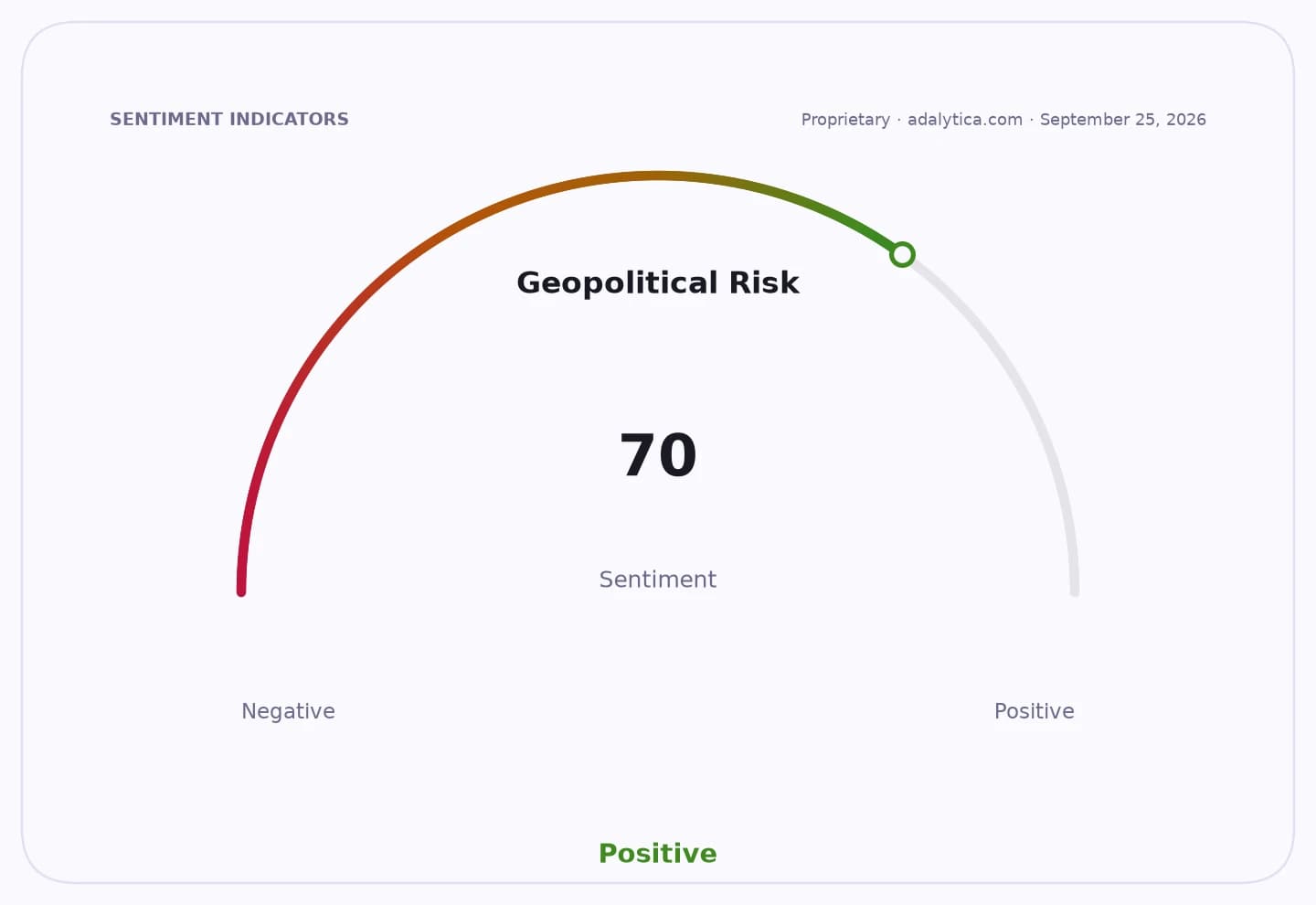
Sentiment IndicatorsⓘProprietary · adalytica.com · August 11, 2026
This is a snapshot — live sentiment, awareness and momentum for 130+ markets update continuously in the dashboard.Open AlphaPulse

That tension is already visible in commodity markets. Wheat ETF WEAT has surged into the mid-$20s, with the fund recently trading at $23.71 and briefly touching $26.00, while corn ETF CORN remains elevated even after a pullback, closing at $17.58. The technical backdrop reflects momentum that is still intact in the longer term: both funds are trading above their 200-day moving averages, a standard market indicator that suggests the trend has not broken even after recent volatility.
The reasons behind the move are the kind investors should keep an eye on for years, not weeks. The news flow points to a damaging mix of weather stress and geopolitical disruption, including conflict-related risks around Black Sea shipping routes, a region that remains crucial to global grain exports. Add severe heatwaves and drought pressure, and you get the classic recipe for tighter supply, more price volatility and a larger inflation footprint across food-importing economies.
WPU024 vs PPIACO — macro contextadalytica.com
Explore this data interactively — full history, time series and cross-market comparisons.Open AlphaPulse
For consumers, that usually shows up first at the grocery store. For companies, it shows up in margins. Food manufacturers and retailers may be forced to absorb some of the increase, pass it on to shoppers or hedge harder, all of which can affect earnings power. Firms such as Archer-Daniels-Midland and other agricultural processors can benefit from wider trading and merchandising opportunities, but their customers face higher costs and more unstable demand.
There is also a policy angle. If food inflation stays hot, central banks may find it harder to justify rapid easing, especially in countries where food carries a heavy weight in the consumer basket. That can keep interest rates higher for longer, which matters for everything from mortgage costs to equity valuations.
The long-term takeaway for investors is simple: food inflation is a reminder that supply chains are still fragile, and agricultural commodities remain one of the market’s most important inflation wild cards. If you own broad market funds, that is part of the price of diversification. If you are looking at commodity ETFs or consumer-staples stocks, this is a development worth watching rather than chasing. In volatile markets, patience usually beats prediction.
| Entity | Gains | Losses |
|---|---|---|
| Grain producers | ▲Higher selling prices | ▼Input-cost pressure |
| Food manufacturers | ▲Pricing power if demand holds | ▼Margin squeeze |
| Consumers | ▲None | ▼Higher grocery bills |
| Commodity investors | ▲Inflation hedge potential | ▼Sharp reversals |