A repayment holiday may ease immediate cash strain for farmers battered by foot-and-mouth disease and weather shocks, but it also risks loading more interest onto balance sheets just as borrowing costs remain elevated.
Farm Debt Holiday Raises Credit Risk
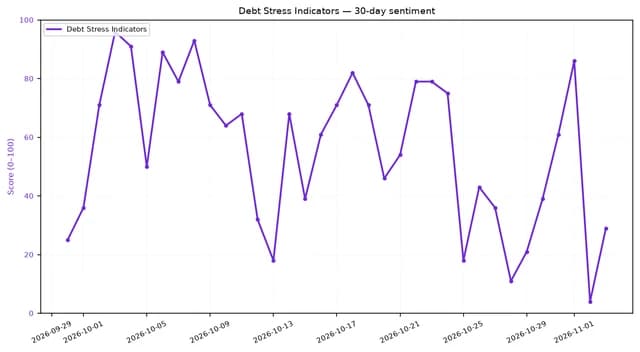
Debt Stress Indicators
That matters because the pause does not erase the debt — it merely postpones the bill. For farms already coping with lost output, higher input costs and tighter credit, unpaid interest can compound quickly, turning short-term relief into a longer-term solvency problem. The issue is especially sensitive in a rate environment where the Fed funds rate is still around 3.9% and the U.S. 10-year Treasury yield is near 4.9%, levels that keep funding expensive for borrowers and financiers alike.
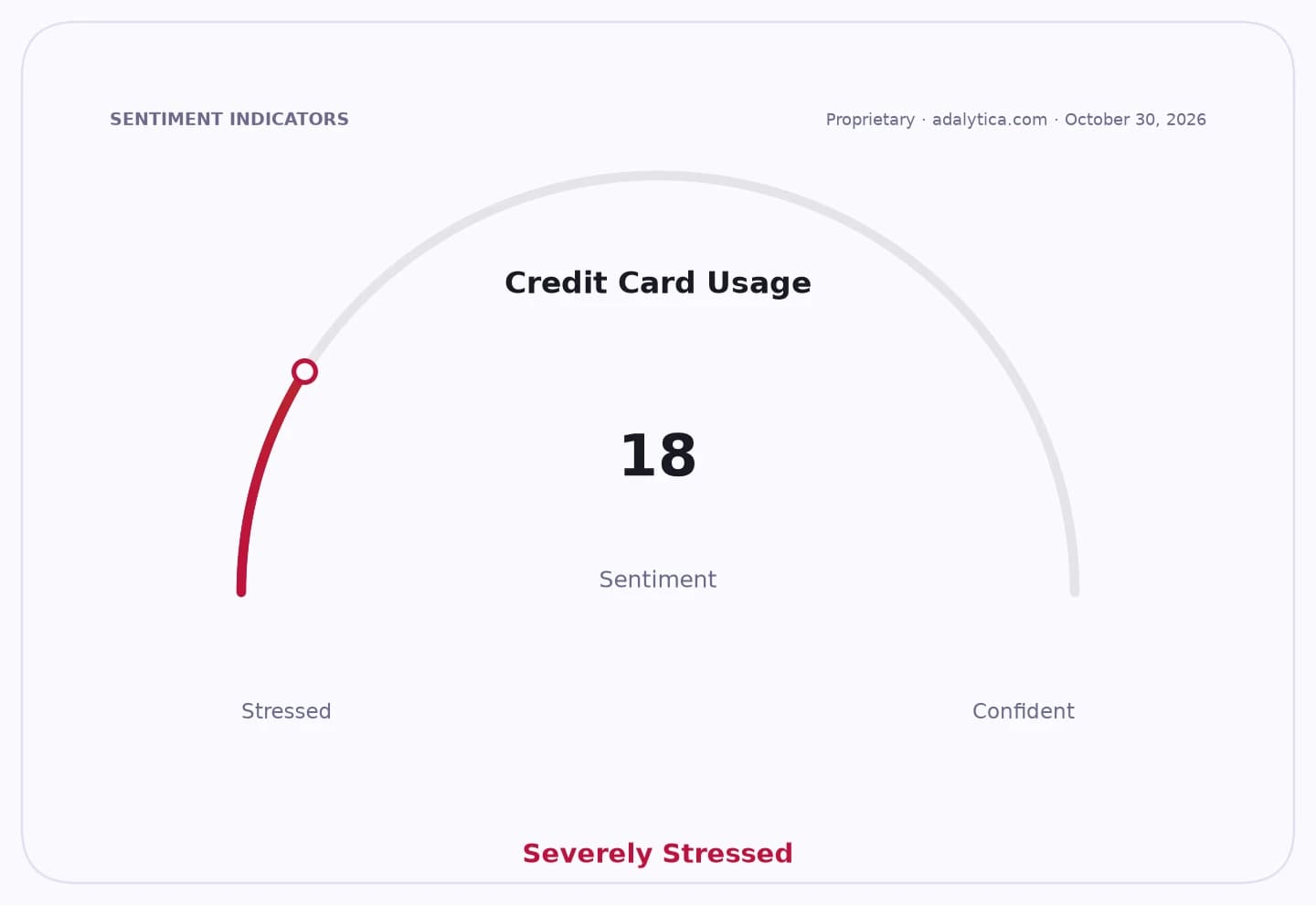
Sentiment Indicators
The market implication is straightforward: lenders and agriculture-linked investors have to think less about near-term delinquency relief and more about the eventual reset in debt service. A holiday can reduce default risk today, but it can also leave producers with larger principal-and-interest obligations once payments resume. That is why the story matters beyond the farm gate. It feeds into rural credit quality, equipment demand and the earnings outlook for companies exposed to farm economics.
That second-order pressure is already visible in agricultural hardware stocks. Deere and Caterpillar have both pulled back sharply from earlier highs, with Deere sliding to about $667 from a February peak above $600 and Caterpillar falling to around $614 after trading above $1,050 in June. Those moves reflect a market increasingly wary that farm borrowers will delay machinery purchases if debt service stays heavy. When cash flow is squeezed, the first thing farmers usually defer is capex.
Farmer Mac, the government-sponsored lender tied to agriculture credit, sits closer to the center of that risk. Its preferred shares have weakened, with AGM-PF recently around $16.66, below both its 50-day and 200-day moving averages. That kind of price action suggests investors are pricing in strain across farm credit rather than assuming a clean recovery.
The broader narrative is not just about one repayment holiday. It is about a sector being offered temporary relief while the underlying economics remain hostile: disease disruption, climate volatility and persistently expensive capital. If policymakers want to avoid turning a bridge into a trap, they will need to pair payment pauses with deeper restructuring, lower-cost refinancing or targeted support that prevents interest from snowballing.
For investors, the takeaway is that relief programs can be a warning sign as much as a rescue. The best-positioned names are not the ones exposed to delayed payments, but the ones supplying the balance sheets, equipment and financing solutions that survive the next round of farm stress.
| Entity | Gains | Losses |
|---|---|---|
| Farmers | ▲Short-term cash relief | ▼Bigger debt load later |
| Lenders/Farmer Mac | ▲Near-term default deferral | ▼Higher credit risk later |
| Deere & Caterpillar | ▲None from delayed capex | ▼Softer machinery demand |
| Policymakers | ▲Time to respond | ▼Pressure if relief proves insufficient |