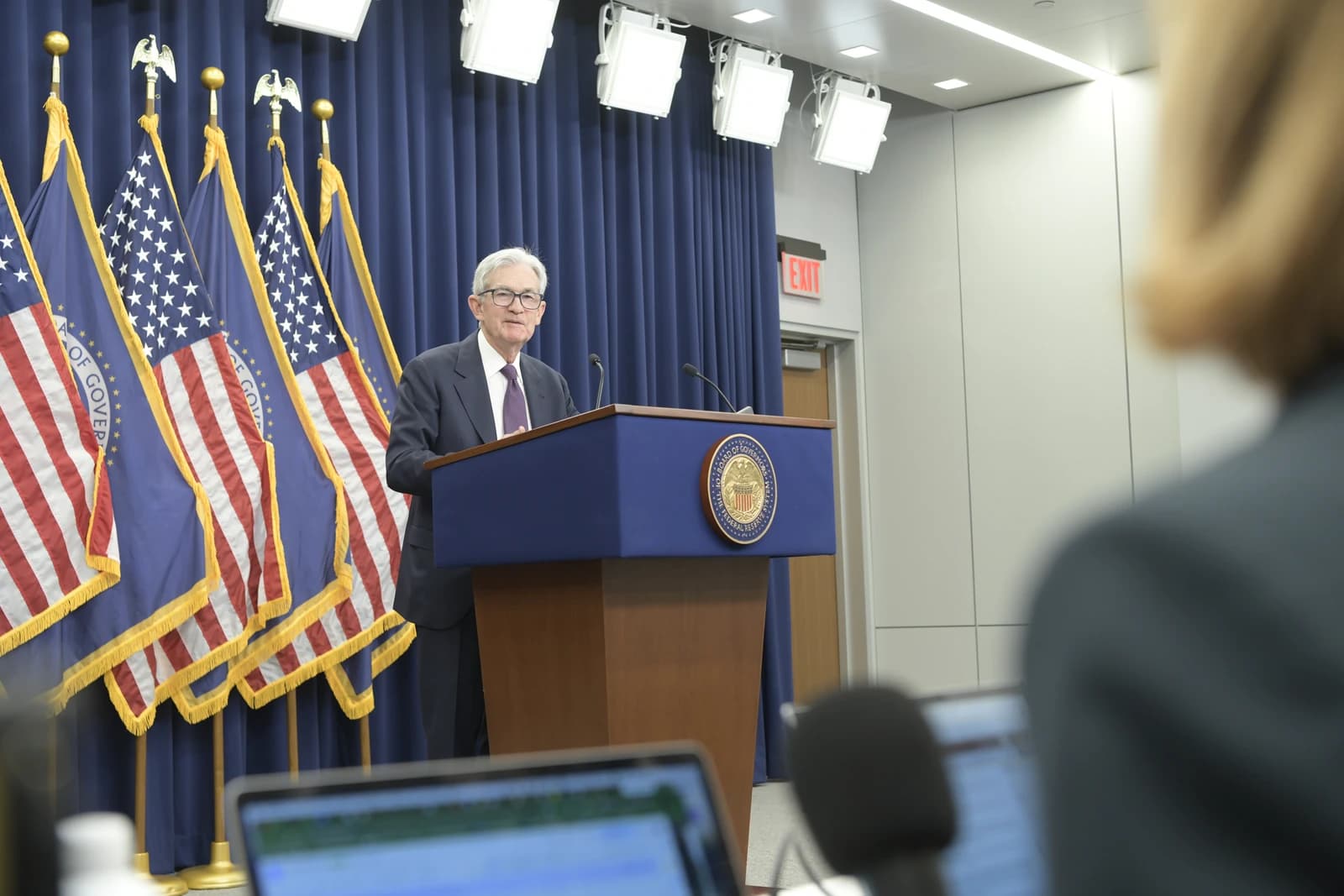
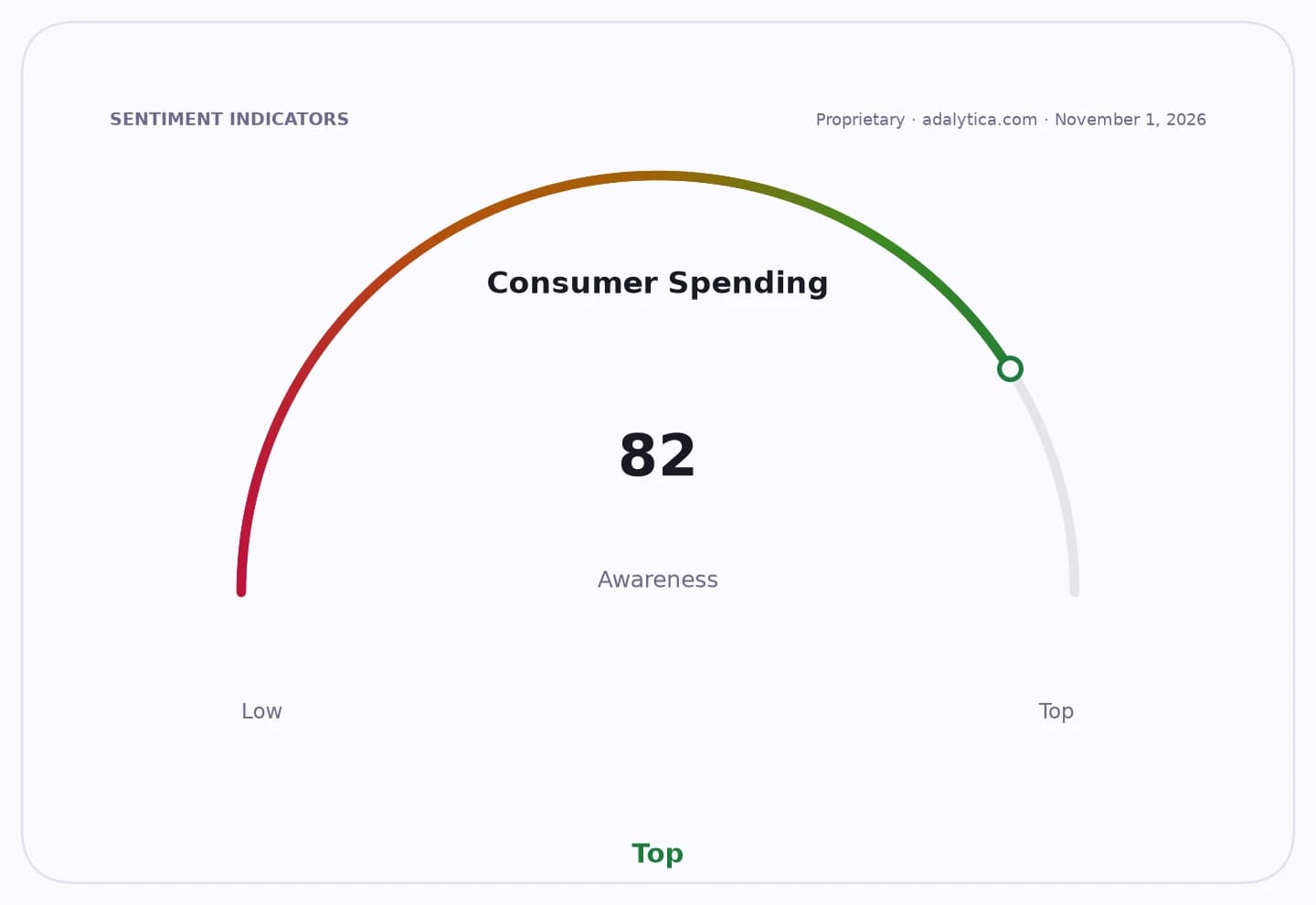
The Federal Reserve can likely skip another rate hike this week, but that won’t translate into meaningful relief for households already squeezed by still-elevated prices, stubborn borrowing costs and a labor market that has stopped offering easy escape hatches.
Fed Pause May Not Ease Housing, Bond Pressure
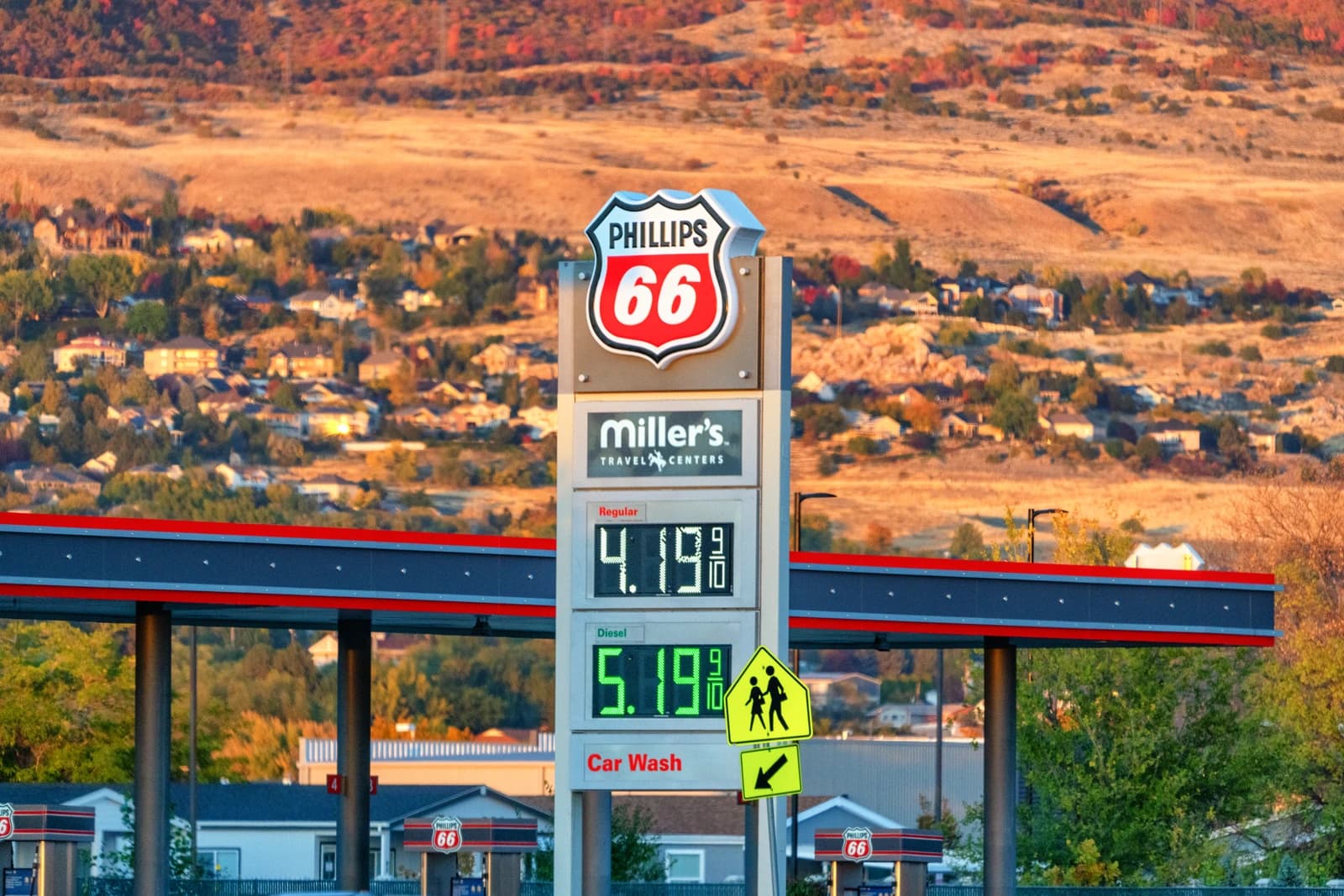
That is the key market message now: monetary policy may have shifted from tightening to waiting, yet the economy is still carrying the lagged cost of the fastest rate cycle in decades. Inflation is not gone, inflation expectations are creeping higher again, and the consumer is beginning to feel the cumulative strain. Even if the Fed pauses in October, the burden on mortgages, credit cards, auto loans and business borrowing will remain heavy enough to slow spending and keep pressure on rate-sensitive sectors.
Sentiment Indicators

The bigger economic problem is that the Fed’s pause would not mean the inflation fight is over. A September nowcast points to headline personal consumption expenditures rising 0.48% month over month, which would lift the annual rate to about 3.6% from 3.4% in August. Core PCE is seen rising 0.27%, leaving the annual pace near 3%. That is still well above the Fed’s 2% target, and it leaves policymakers with little room to declare victory.
Inflation expectations are also moving the wrong way. The Cleveland Fed’s estimate of one-year inflation rose to 2.98% in October from 2.66% in September and 2.40% in August. Expectations are not the same as realized inflation, but they matter because they shape wage demands, pricing behavior and the willingness of consumers and businesses to absorb higher costs. That is exactly how temporary inflation can become sticky.
Hawkish vs Dovish Sentiment — 30-day sentimentadalytica.com
Explore this data interactively — full history, time series and cross-market comparisons.
Hawkish vs Dovish
For investors, the message is not just that rates may stay high longer. It is that the market’s hoped-for relief rally may be premature. The ten-year Treasury yield remains near 5%, the kind of level that keeps discount rates elevated across equities and mortgages, while long-duration bond funds such as TLT are still trading in a nervous, volatile range even after recent gains. The 50-day moving average on TLT is barely above current prices, while the RSI has pushed into overbought territory, underscoring how quickly bond optimism can fade if the Fed sounds less dovish than expected.
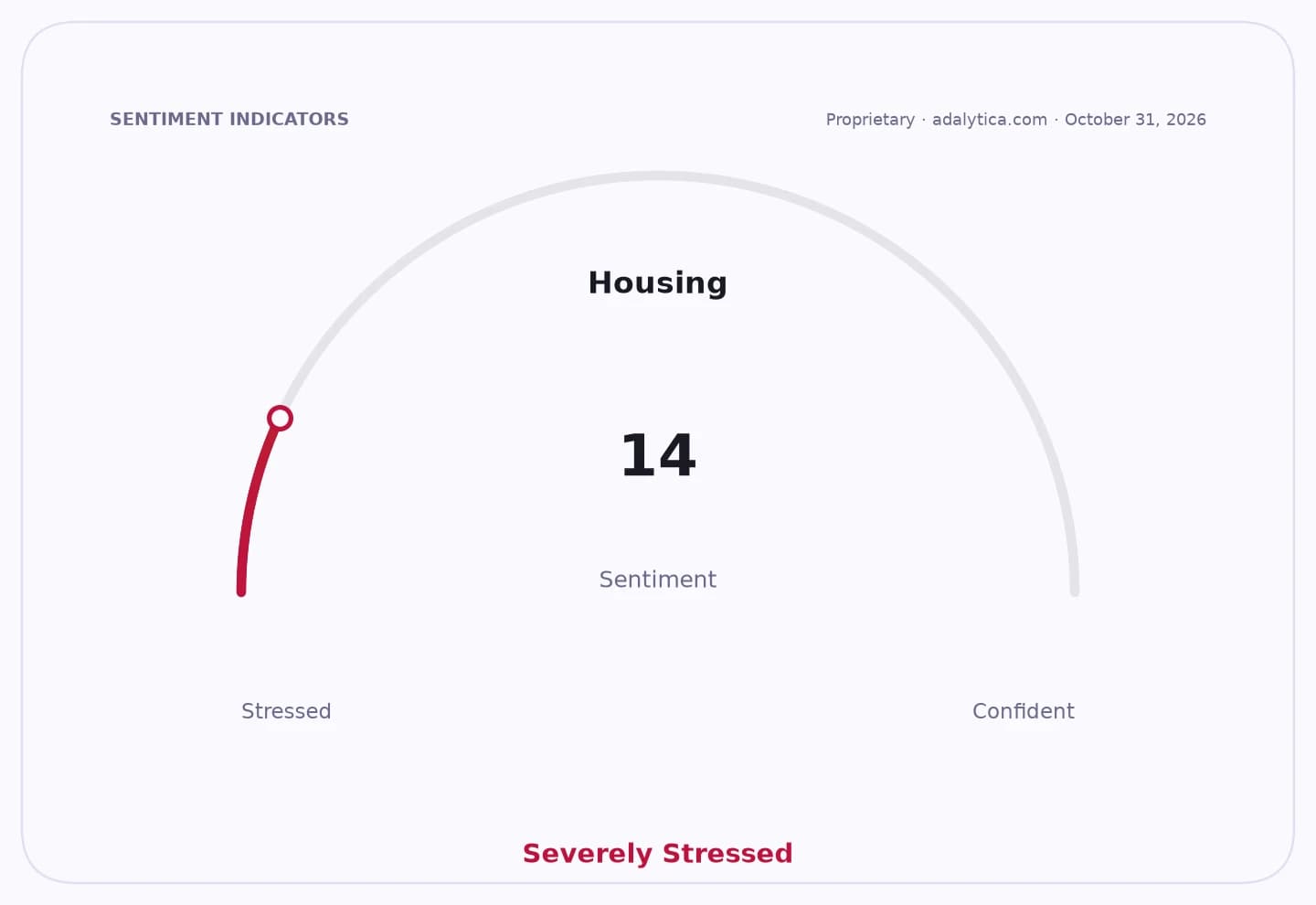
The real-world transmission channel is housing. Mortgage rates above 7% are already freezing demand, and that hits far more than builders. New-home sales are likely to remain weak, even after August’s modest rebound, because monthly payments have become prohibitively expensive for many buyers. Builders are leaning on incentives, rate buydowns and lower-priced homes — more than half of August’s new-home sales were below $400,000 versus 46% a year earlier — but that support comes at the cost of margins. A prolonged housing slump also reverberates through appliances, furnishings, building materials, real estate services and remodeling, which means fewer jobs and weaker consumption downstream.
That is why a pause is not a relief event. It is a holding pattern. The Fed may be able to wait, but households cannot wait for prices to roll over on their own, and they are still paying for the lagged impact of higher rates every month. In practice, that argues for a slower consumer economy, a cautious stance on rate-sensitive equities and continued selectivity in housing-adjacent names, while bond investors should treat any rally as conditional on softer inflation data, not on the mere absence of another hike.
| Entity | Gains | Losses |
|---|---|---|
| Treasury bonds / TLT | ▲Rate-pause hopes | ▼Any hotter inflation data |
| Homebuilders | ▲Rate buydown volume | ▼Margin pressure, weak demand |
| Consumers | ▲No immediate hike shock | ▼High prices and borrowing costs |
| Rate-sensitive equities | ▲Dovish Fed expectations | ▼Higher-for-longer yields |