Votes inside the Federal Reserve are tilting more hawkish ahead of the next policy meeting, raising the odds that officials keep a rate hike on the table even after recent inflation cooling tempted markets to lean dovish.
Fed Turns More Hawkish Ahead of Meeting
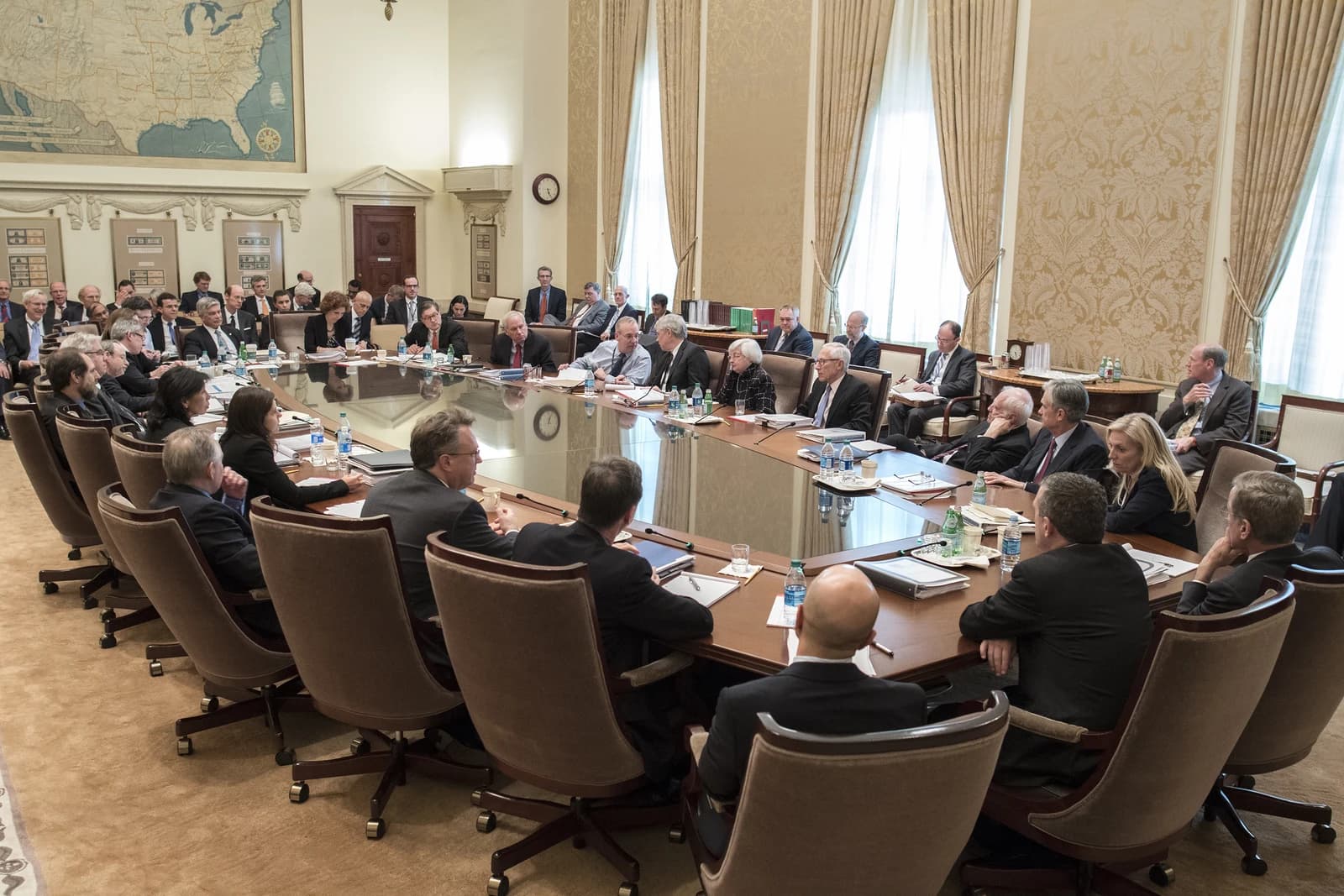
That shift matters because it tells investors the Fed is not prepared to declare victory on inflation from one soft reading. Dallas Fed President Lorie Logan has backed a modest increase, while Vice Chair Philip Jefferson and Governor Lisa Cook have also signalled that policy is merely well positioned, not locked in. The message is that the central bank still sees upside risk to prices and wants to preserve room to act if inflation stops easing sustainably.
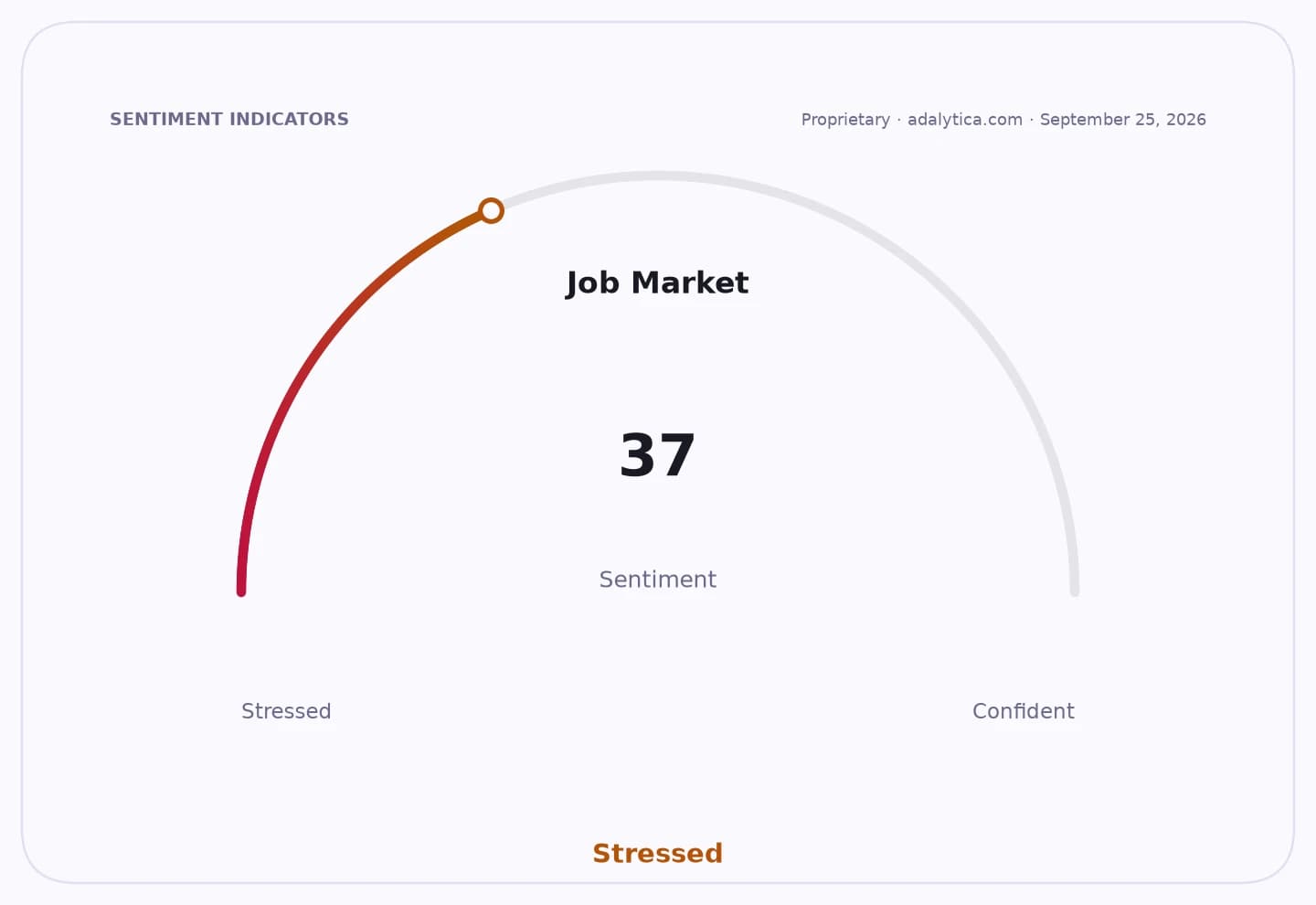
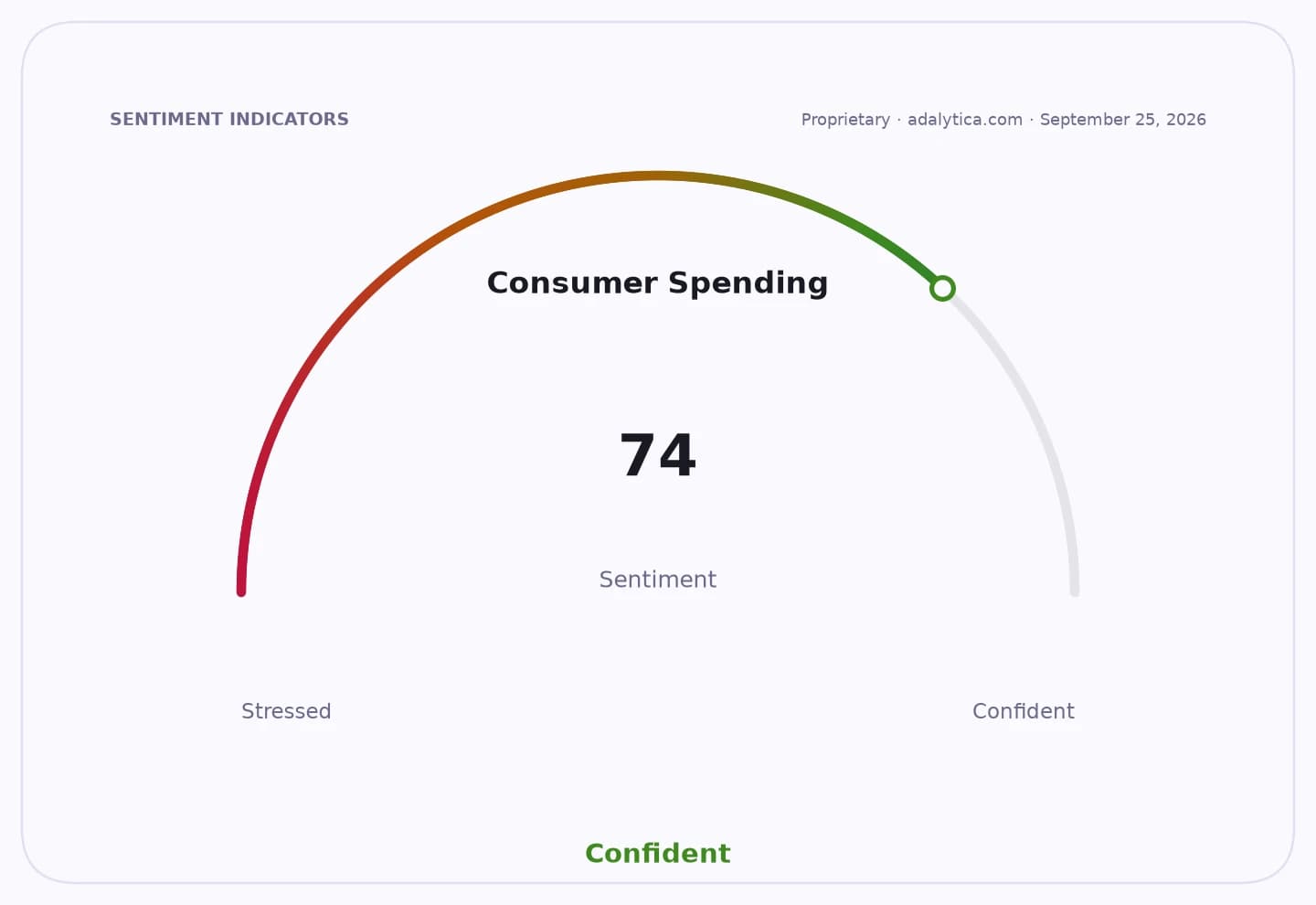
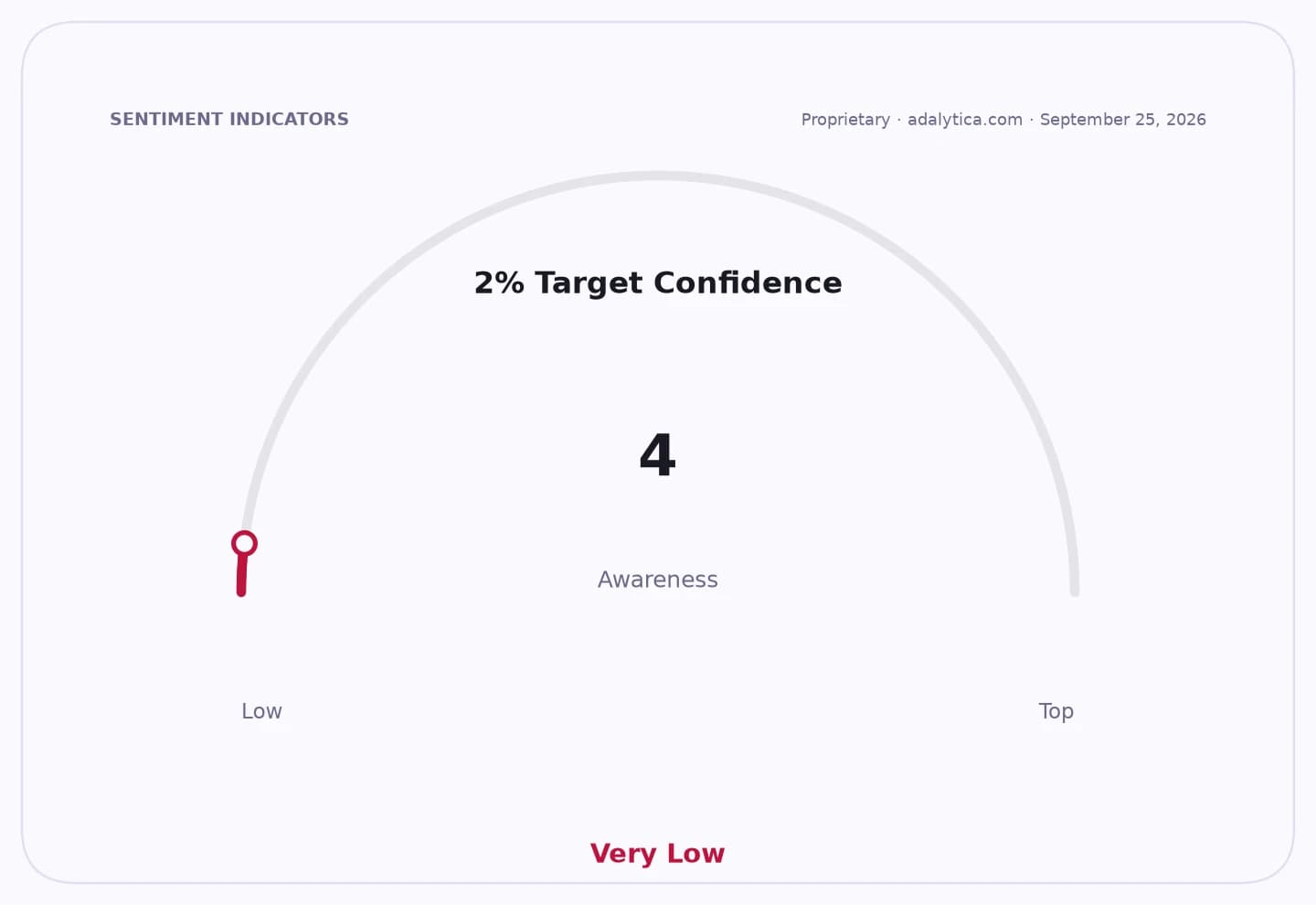
Sentiment IndicatorsⓘProprietary · adalytica.com · July 18, 2026
This is a snapshot — live sentiment, awareness and momentum for 130+ markets update continuously in the dashboard.Open AlphaPulse
Economically, the debate is about the balance between price stability and the risk of overtightening. The Fed funds rate is projected around 3.627% for July, only slightly below the current 3.63%, implying no immediate move in the base case. But the tone has changed: officials are increasingly treating the recent disinflation as incomplete rather than decisive. That raises the odds of a more restrictive stance if upcoming data, wages or external shocks such as geopolitical disruptions and AI-driven cost pressures reaccelerate inflation.
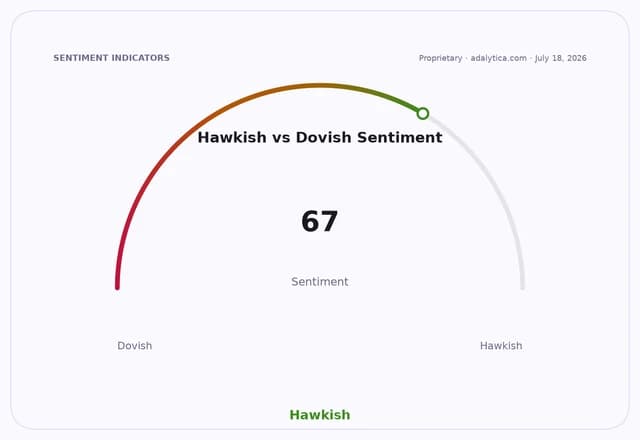
Markets have been reluctant to fully price that risk. Treasury yields have been firmer, with the 10-year note around 4.56% and the two-year near 4.12%, reflecting a policy path that is still meaningfully restrictive. The market backdrop suggests traders are hedging against the possibility that the Fed keeps rates elevated longer, or even resumes tightening if inflation proves sticky. That is consistent with Adalytica’s Hawkish vs Dovish Fed Policy Sentiment gauge, which has jumped sharply over the past day and week, even as its label remains neutral, and with a Forward Guidance sentiment reading still in extreme fear territory, underscoring how unsettled the outlook is.
Hawkish vs Dovish Sentiment — 30-day sentimentadalytica.com
Explore this data interactively — full history, time series and cross-market comparisons.Open AlphaPulse
For investors, the stakes are straightforward. A more hawkish Fed would tend to pressure duration-sensitive assets, support the dollar and keep borrowing costs elevated for rate-sensitive sectors such as housing, small caps and leveraged companies. The Treasury ETF TLT remains weak relative to its 50-day and 200-day moving averages, and its very low RSI points to fragile bond-market momentum. By contrast, banks and other lenders could benefit if higher-for-longer rates sustain net interest income, though that same outcome also raises credit-risk and refinancing concerns later in the cycle.
Equities are taking the signal in stride for now. The S&P 500 has held up near record levels, but the latest pullback from its highs shows the market is still sensitive to policy language. A hawkish surprise would likely widen the gap between winners with pricing power and balance-sheet strength, and losers exposed to funding costs and valuation compression. If the incoming inflation data keep cooling, the Fed may ultimately stand pat. But if price pressures plateau, the rising internal support for a hike suggests the next move in policy may still be upward, not downward.
| Entity | Gains | Losses |
|---|---|---|
| Banks | ▲Wider net interest income | ▼Credit stress if tighter policy persists |
| Treasuries / TLT holders | ▲Rally on dovish surprise | ▼Price pressure from higher yields |
| Growth stocks / SPY | ▲Relief from lower rates | ▼Valuation compression from hawkish Fed |
| Borrowers | ▲Cheaper funding if Fed pauses | ▼Higher debt service if hikes resume |