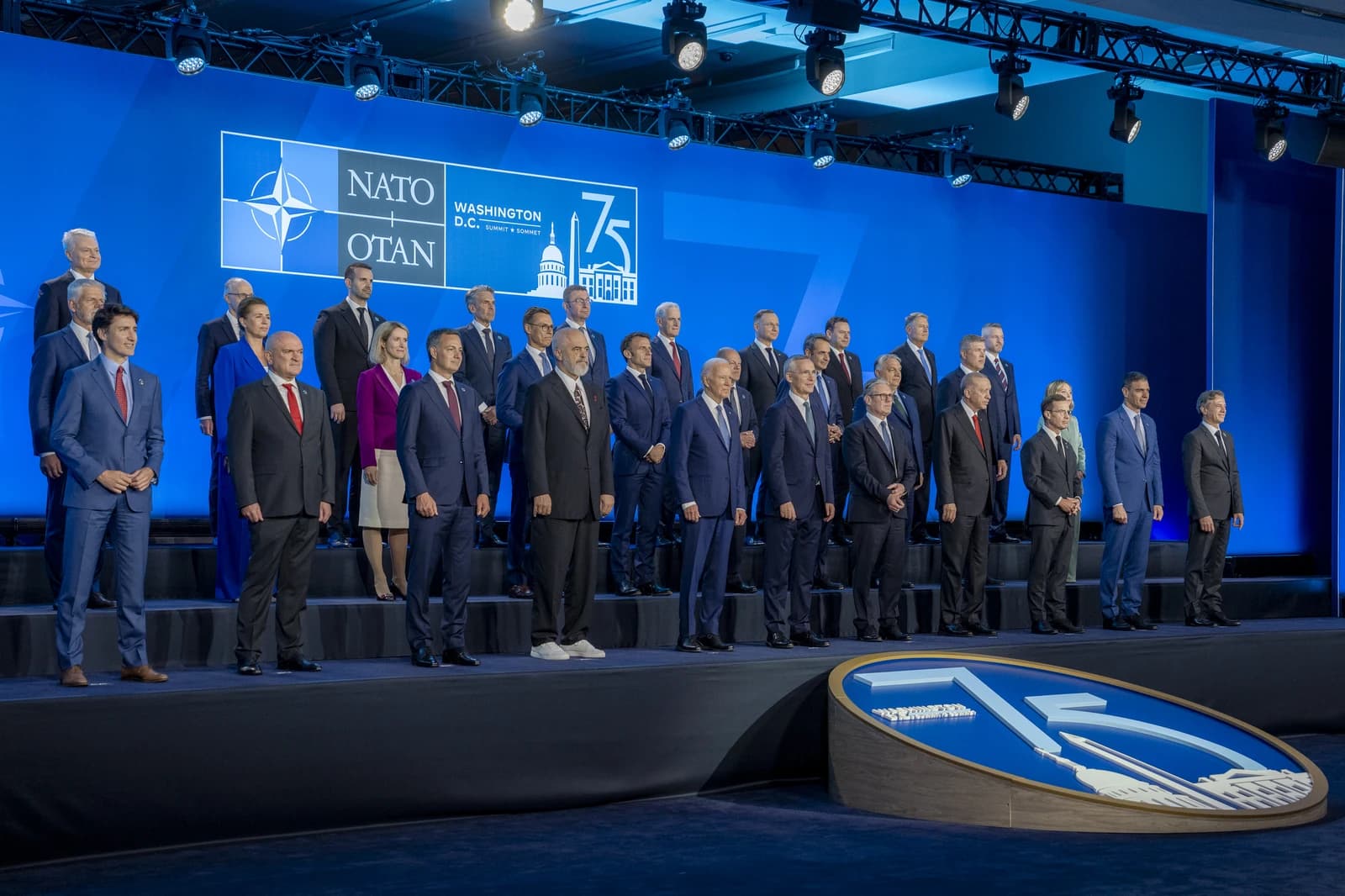
Finnish President Alexander Stubb’s warning that intelligence services are reacting too aggressively to Russia underscores a more delicate security calculation in northern Europe: deterrence has to stay credible without tipping into panic that could distort policy, defense spending and market pricing across the region.
Finland Security Stance and Defense Spending
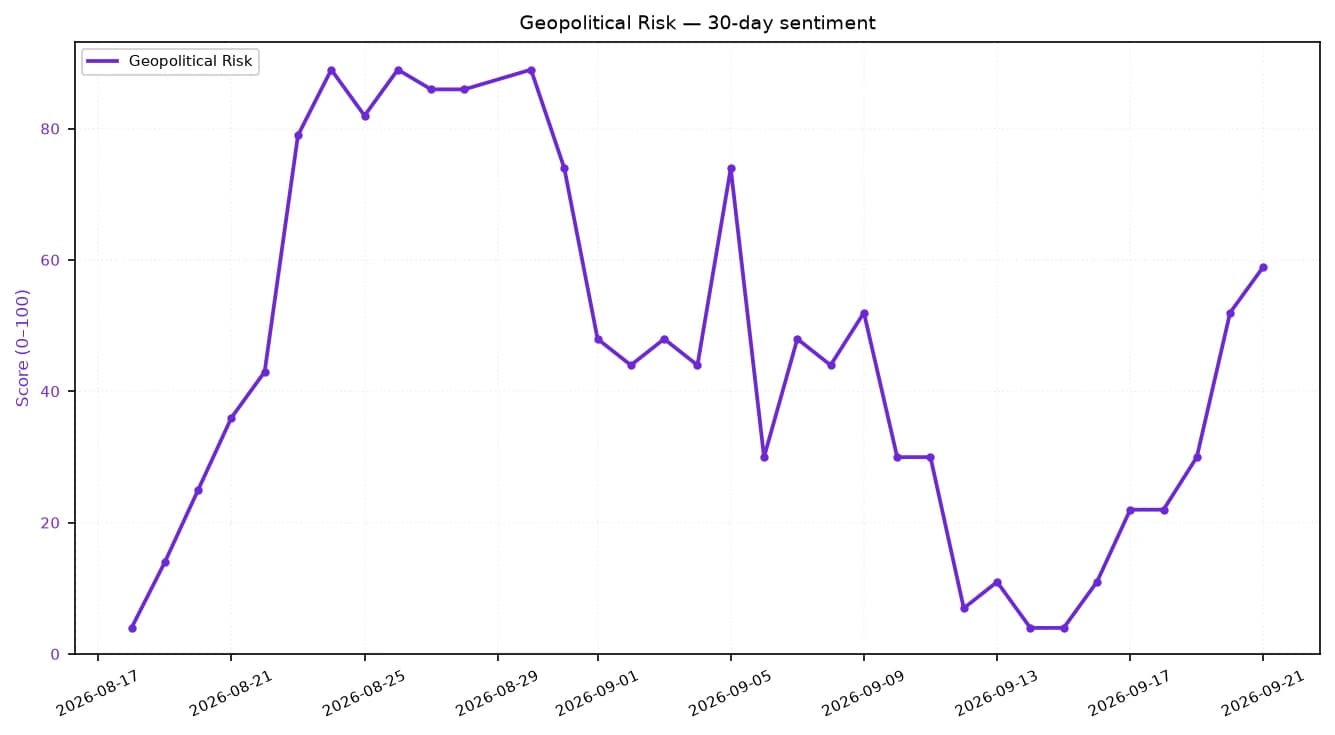
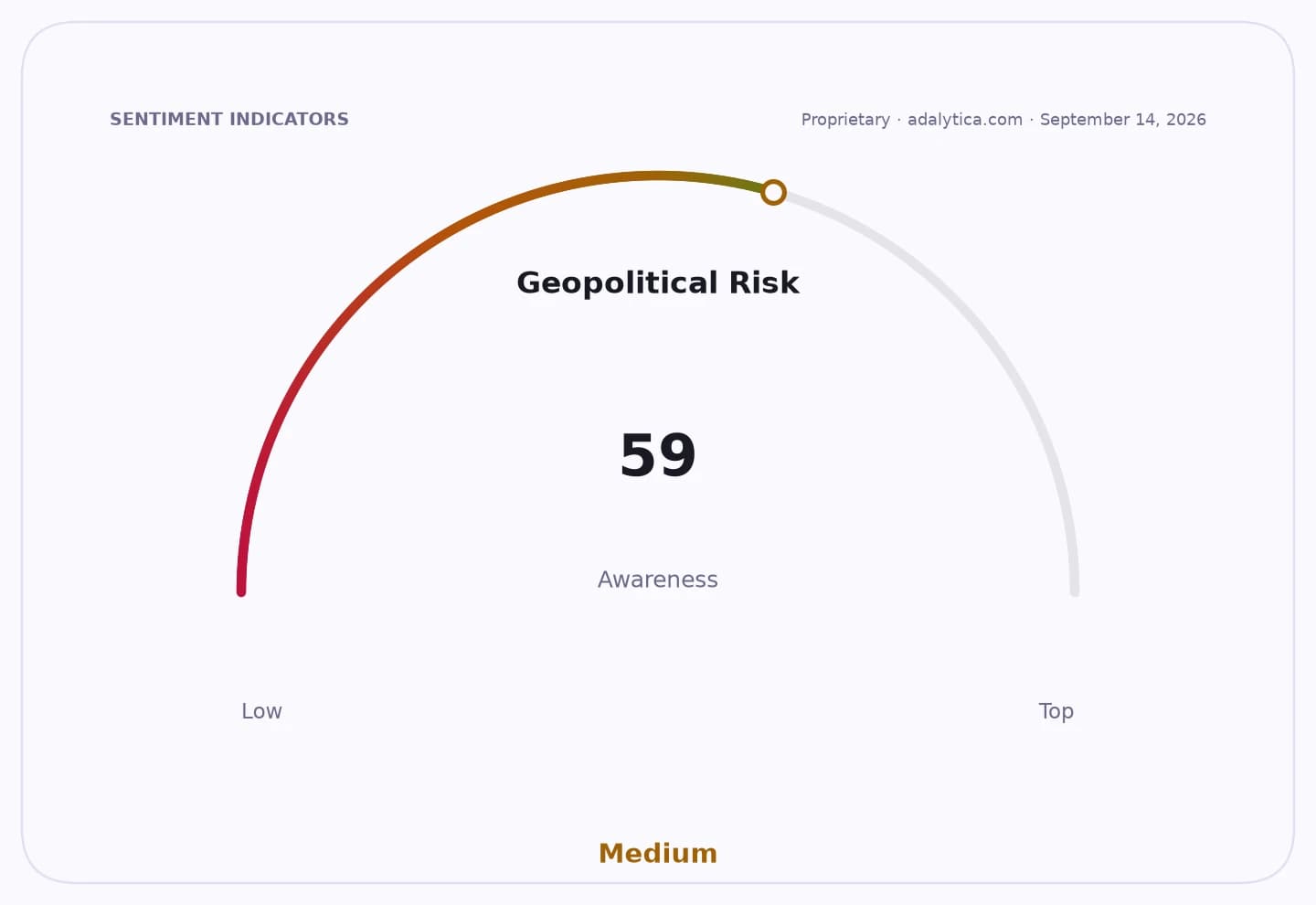
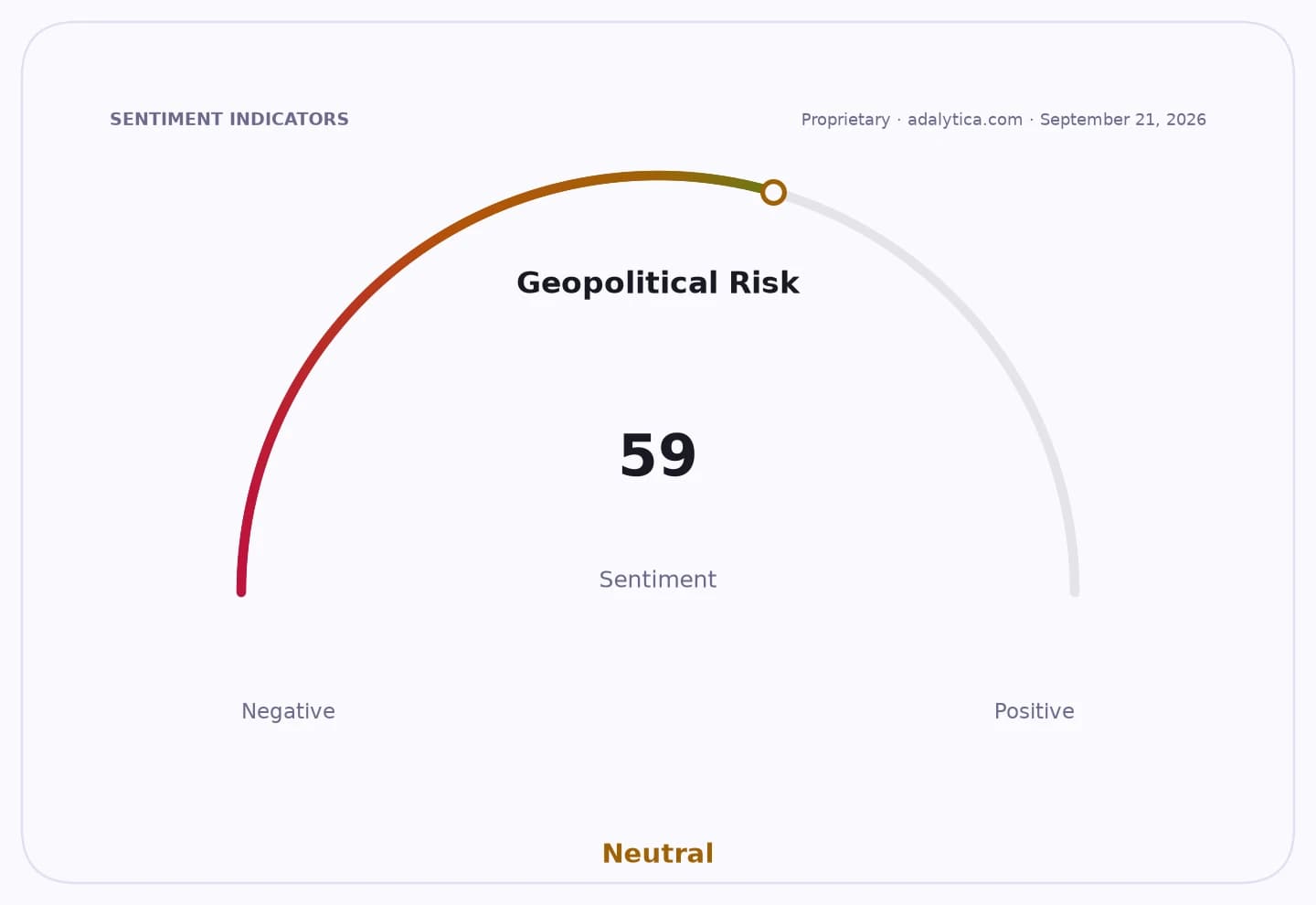
The comment comes as Finland, now a NATO member, is hardening its eastern frontier with a border fence and widening its military support for Ukraine, while Russia continues to test European defenses with hybrid tactics. That combination keeps geopolitical risk elevated even as leaders try to avoid turning every provocation into a strategic alarm. For investors, the distinction matters because it shapes the pace and durability of defense procurement, infrastructure spending and risk premia in European assets.
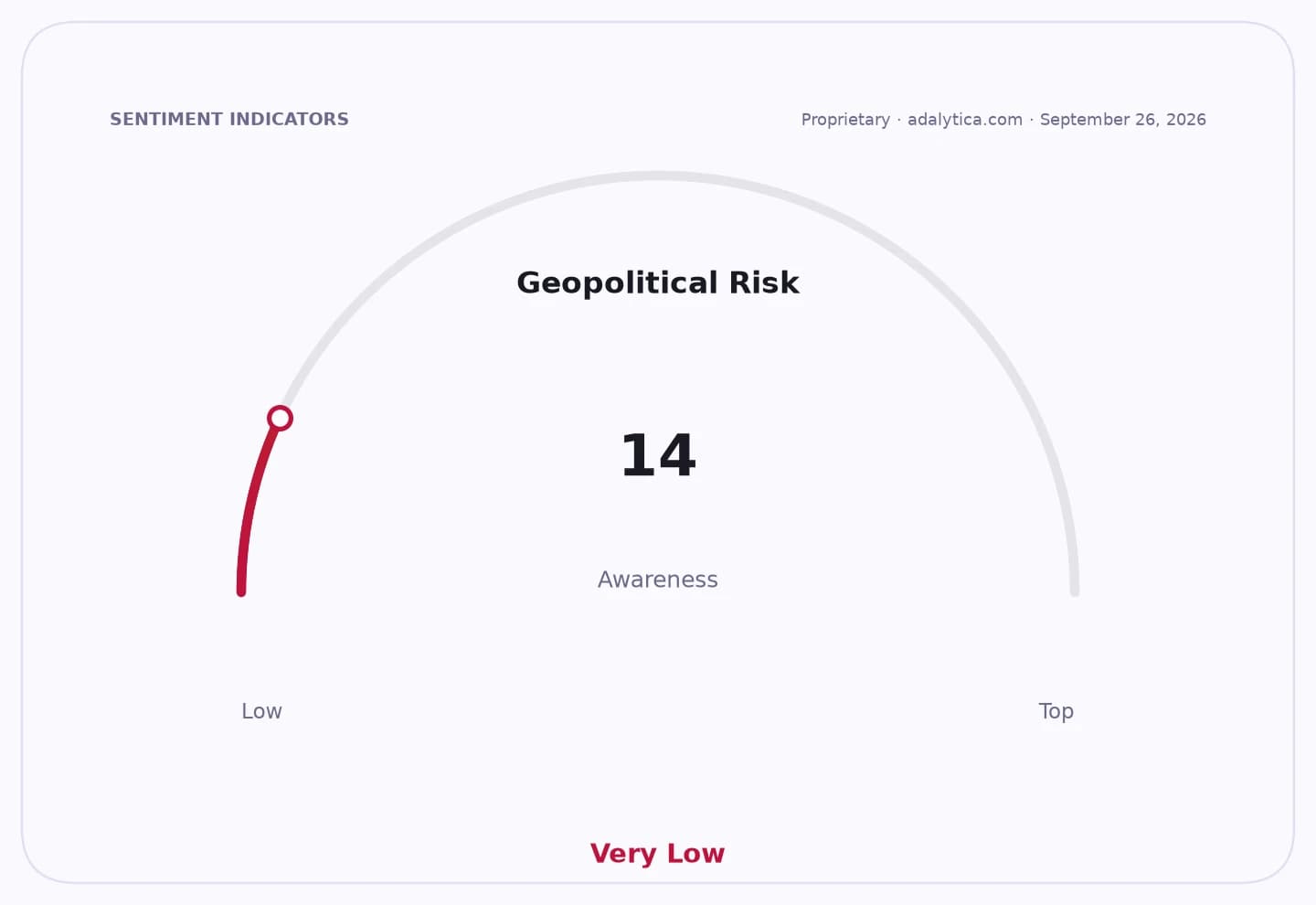
Sentiment IndicatorsⓘProprietary · adalytica.com · September 26, 2026
This is a snapshot — live sentiment, awareness and momentum for 130+ markets update continuously in the dashboard.Open AlphaPulse
The market backdrop reflects that tension. Adalytica’s Global Stability Sentiment is at 86, labeled “Extreme Greed,” while awareness sits at 14, or “Extreme Fear,” suggesting investors are pricing resilience but remain alert to a sudden deterioration. At the same time, the US 10-year Treasury yield has climbed to about 5.19%, a level that keeps financial conditions tight and raises the cost of funding any sustained European security buildout.
Defense shares have already moved with the theme. Lockheed Martin is trading around $519.56, below its 50-day and 200-day moving averages, while its RSI has fallen to 46.2, indicating the stock has cooled after earlier strength. Northrop Grumman, by contrast, has held up better at about $510.52, though it remains under both the 50-day and 200-day averages after a sharp pullback from earlier highs. Boeing, which has less direct geopolitical exposure but remains sensitive to defense demand and program execution, closed at $198.07, also below its 50-day and 200-day averages, with RSI at 32.6, a sign of oversold conditions.
The broader investment case is that Europe’s security rearmament is not a one-off trade but a multi-year reallocation of capital, yet it is vulnerable to political overreaction. A more measured response from Helsinki could support steady procurement and border security spending without forcing policymakers into emergency measures that strain budgets or unsettle markets. A more aggressive threat posture, by contrast, would likely benefit defense contractors and infrastructure suppliers but would also keep European sovereigns under pressure at a time when higher benchmark yields have already raised borrowing costs.
For defense investors, the bull case remains that Russia’s hybrid tactics and NATO’s response will keep orders flowing for surveillance, border protection, drones and munitions. The bear case is that repeated warnings without a major escalation could slow political urgency, leaving valuations dependent on future budget execution rather than immediate threat headlines. Finland’s message suggests that the next phase of the story may be less about panic buying and more about disciplined, prolonged spending.
| Entity | Gains | Losses |
|---|---|---|
| Defense contractors | ▲Steady procurement demand | ▼Short-term hype trade |
| Finnish government | ▲Measured security posture | ▼Panic-driven policy |
| European taxpayers | ▲Fewer crisis costs | ▼Noneconomic fear premium |
| Russia | ▲Strategic ambiguity | ▼Greater NATO vigilance |