First-pass yield is emerging as one of the most important levers in industrial productivity as manufacturers face pressure to make more goods with fewer mistakes, less downtime and tighter capital discipline.
First-pass yield emerges as industrial margin lever
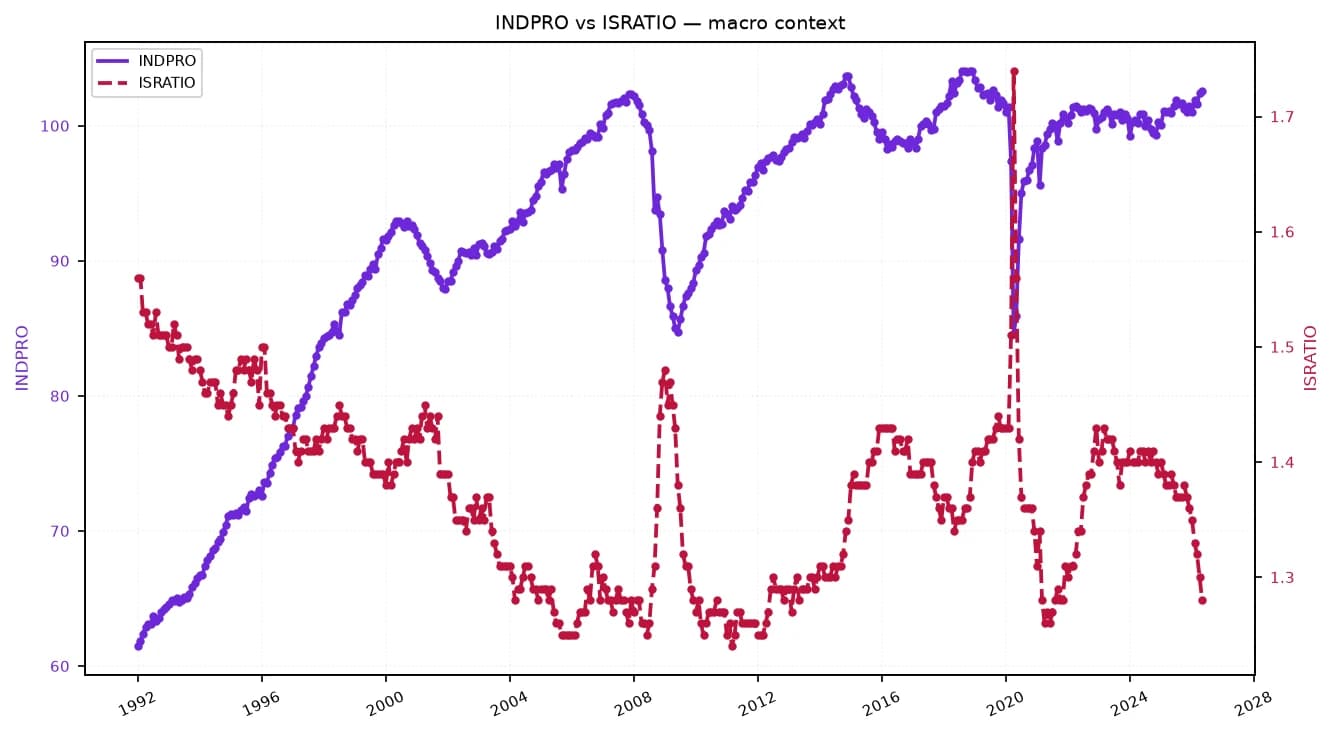
That matters because even small gains in FPY — the share of output that passes inspection without rework — can ripple through plant economics, lowering scrap, easing bottlenecks and improving margins at a time when industrial firms are trying to protect cash flow and deliver on backlogs. In sectors from aerospace to heavy equipment, a cleaner production line can be worth as much as a new order book.
Sentiment IndicatorsⓘProprietary · adalytica.com · July 28, 2026
This is a snapshot — live sentiment, awareness and momentum for 130+ markets update continuously in the dashboard.Open AlphaPulse
The macro backdrop is improving, but only gradually. U.S. industrial production is projected to edge up to 102.94 in July from 102.64 in June, after recovering from the pandemic-era slump and a brief soft patch in early 2024. At the same time, an industrial production sentiment gauge tracked by Adalytica.com sits at an “Extreme Greed” reading of 89, suggesting confidence in the sector’s near-term momentum. A separate PMI recession-trend gauge also points higher, with sentiment at 71.
But the real story for investors is not just that output is rising. It is that the market is rewarding companies that can translate demand into throughput without the hidden tax of rework. The strongest shares in the industrial complex have come from names that can demonstrate pricing power, capacity utilization and operational execution — all of which depend on disciplined production systems.
That is visible in recent moves across large-cap industrials. Honeywell has climbed to $245.75 from $202.85 in mid-October, with its 50-day moving average above the 200-day and its RSI reading at 71.9, a sign of strong momentum but also a stock that may be stretched. GE has risen to $361.61 from $290.37 in October and remains well above both its 50-day and 200-day averages, while Caterpillar has surged to $873.28 from $544.25 in November before cooling from a recent peak above $1,060. The stock action reflects investor willingness to pay for operational leverage in industrial franchises where every additional point of yield can flow straight into profit.
The company filings tell the same story in more concrete terms. GE said it is investing in manufacturing and overhaul facilities and its supply chain to “increase production and strengthen yield,” language that shows yield improvement is no longer a shop-floor slogan but a capital allocation priority. Honeywell told investors it is focused on maximizing facilities’ production capacity and minimizing downtime. Caterpillar highlighted manufacturing costs and tariff pressure, underscoring why reducing defects and avoiding rework matters even more when input costs remain elevated.
For manufacturers, better FPY is effectively a margin expansion tool. Higher first-pass rates reduce direct labor per unit, cut energy and material waste, and shorten cycle times, which in turn can improve on-time delivery and inventory turns. That matters for customers as well, especially when industrial supply chains are still working through uneven demand and intermittent bottlenecks.
The bull case is straightforward: if production systems continue to improve, manufacturers can grow earnings faster than revenue, and the market will keep rewarding those gains with premium multiples. The bear case is equally clear: if demand softens or tariff and labor costs rise faster than productivity, the gains from better FPY could be offset by weaker volumes or price pressure.
For investors, the key is that FPY is becoming a proxy for industrial quality — not just in the factory, but in the stock market. The next phase of the trade will likely favor companies that can prove they are reducing errors, maximizing output and turning capital spending into repeatable throughput rather than one-off production spikes.
| Entity | Gains | Losses |
|---|---|---|
| High-FPY manufacturers | ▲Lower rework costs | ▼Less operational waste |
| Industrial investors | ▲Better margin leverage | ▼Fewer execution surprises |
| GE, Honeywell | ▲Higher production efficiency | ▼Downtime risk |
| Caterpillar, peers with cost pressure | ▲Faster throughput gains | ▼Tariff and scrap costs |