Ford is not just adding five new models in Valencia from 2027 — it is effectively admitting that the next phase of automotive competition will be won by whoever can combine global design, cheaper industrial execution and faster product cycles.
Ford- Geely Valencia plan signals efficiency shift
That matters because the auto business is becoming less about legacy geography and more about who can scale good-enough hardware profitably in a world of tightening margins, volatile demand and relentless Chinese competition. Ford’s strategic alliance with Geely is a signal that Western automakers are no longer trying to outmuscle Chinese rivals on cost alone; they are increasingly borrowing the operating model.
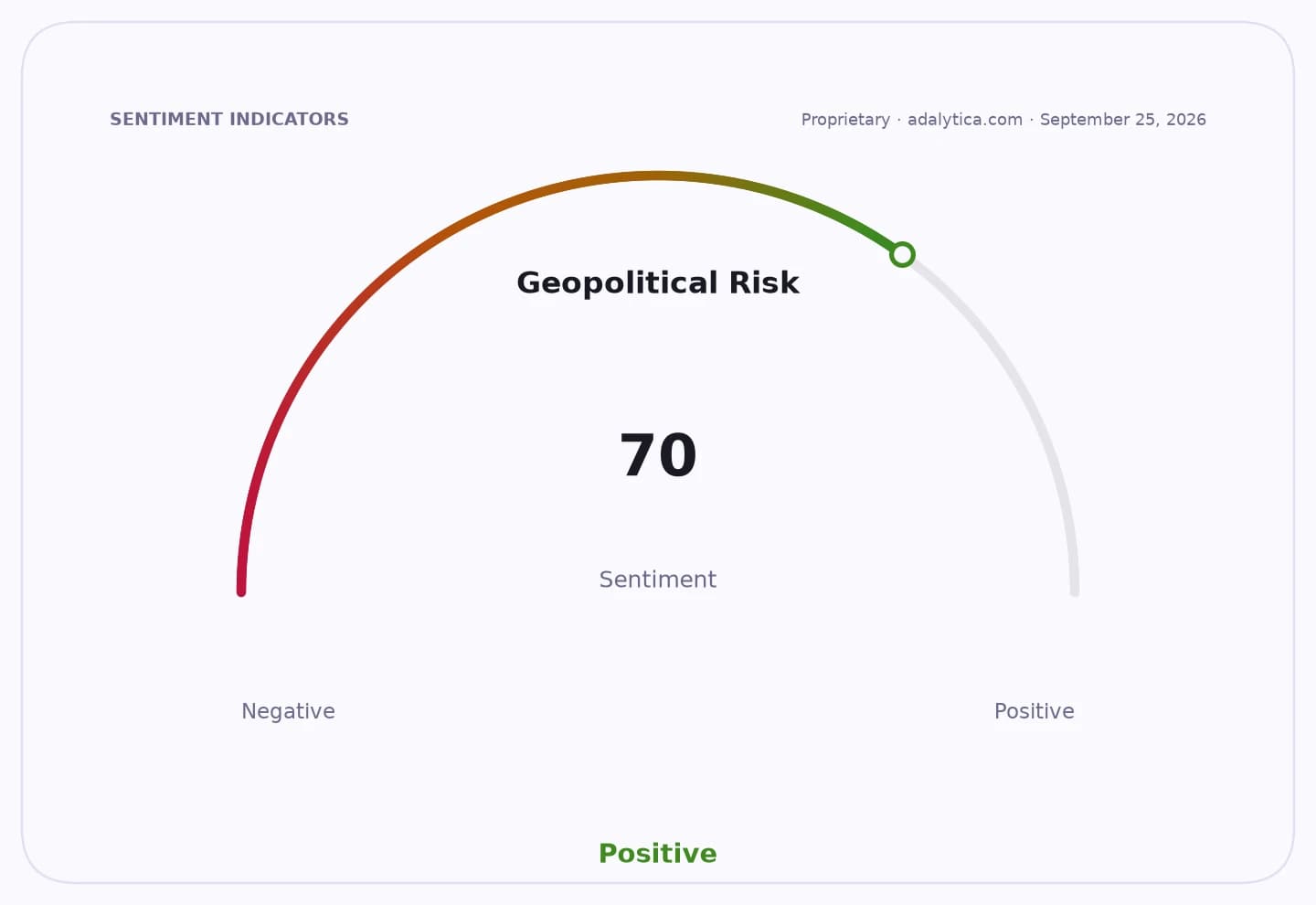
Sentiment IndicatorsⓘProprietary · adalytica.com · July 23, 2026
This is a snapshot — live sentiment, awareness and momentum for 130+ markets update continuously in the dashboard.Open AlphaPulse
For investors, that is a major clue. The market tends to treat auto alliances as incremental. I think that misses the real message: Ford is trying to protect relevance in Europe by using an industrial partner with deep experience in efficient platforms, supply chains and model cadence. If the Valencia program lands, it could improve factory utilization, spread development costs across more vehicles and give Ford a cleaner route to defend share without brute-force capex.
The timing is important. Ford shares have been rebuilding after a volatile stretch, and the stock’s recent move back above its 50-day and 200-day moving averages suggests traders are starting to price in a better execution story. The rally has also pushed the shares into overbought territory on RSI readings, which tells me sentiment is improving faster than fundamentals have been fully proven. In other words, the market is warming to the turnaround, but the real upside still depends on whether Ford can convert alliances like this into durable margin support.
That is where Geely matters. The Chinese auto industry has become the benchmark for speed, software integration and cost discipline. A collaboration with Ford in Spain is not a cosmetic partnership; it is a recognition that Chinese manufacturing know-how is becoming an exportable advantage. Europe’s auto sector is already under pressure from EV price competition, sluggish consumer demand and the need to retool plants without destroying economics. A five-model program from 2027 gives Ford a way to keep Valencia relevant and to avoid falling into the trap of underused capacity.
The broader market implication is that the winners in autos may not be the companies with the biggest brands, but the ones with the strongest partnerships. That favors firms tied to platform-sharing, battery supply, software and flexible manufacturing. It also raises the stakes for European suppliers and logistics players that can sit inside the value chain without bearing the full product risk.
For Ford, this is a strategic hedge and an offensive move at the same time. It is hedging against slower legacy-product economics in Europe while opening a path to a more competitive portfolio. For Geely, the alliance extends its industrial influence deeper into Western markets, even as geopolitical friction keeps direct Chinese vehicle expansion politically sensitive.
My takeaway: this is the kind of alliance that can look small on announcement day and huge two or three years later if it changes the cost structure. Investors should watch Ford not as a simple cyclical automaker, but as a restructuring story with optionality from global partnerships. If Valencia becomes a template, Ford could be early in a broader re-rating of Western auto manufacturing built on Chinese-style efficiency.
| Entity | Gains | Losses |
|---|---|---|
| Ford | ▲Lower-cost model expansion | ▼Standalone execution risk |
| Geely | ▲Western manufacturing reach | ▼Direct brand visibility |
| Valencia plant | ▲Higher utilization | ▼Legacy suppliers |
| Rival automakers | ▲Pressure to match efficiency | ▼Market share in Europe |