The Hungarian forint is sliding back into the market’s crosshairs, and that matters because it is no longer just a local currency story — it is a warning signal for carry trades, foreign capital and Hungary’s growth outlook.
Forint Weakness Signals Hungary Risk Aversion
The euro-forint pair has climbed to 362.66 on July 17 from 348.46 barely a month earlier, a sharp move that has pushed the currency back below its 200-day average and lifted the relative strength index to 79.9, a level that typically signals an overextended move. The dollar-forint rate has also rebounded to 317.21 from 310.66 in May, showing the forint is getting hit from both sides as global capital prefers safer havens and local risk premia widen.
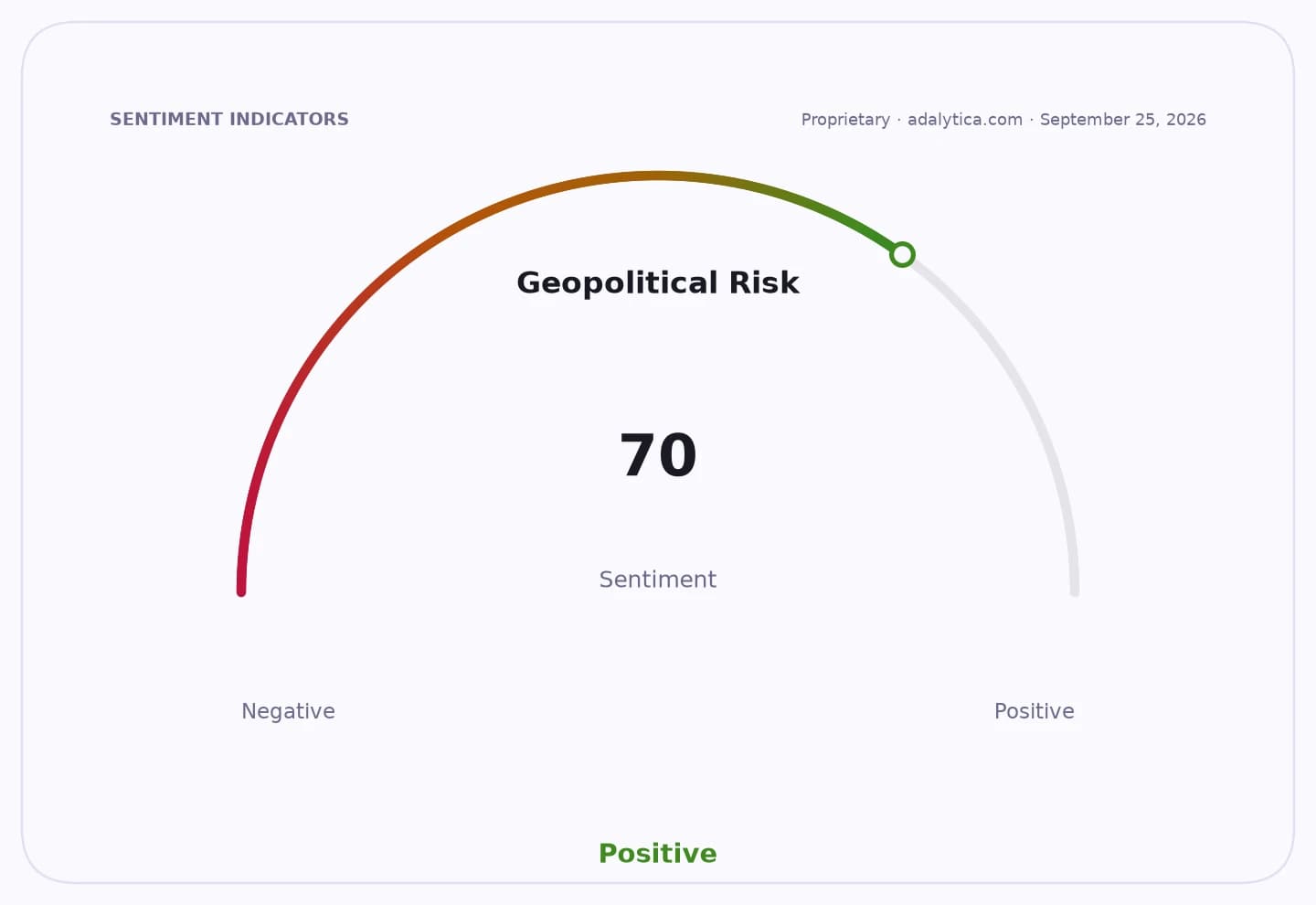
Sentiment IndicatorsⓘProprietary · adalytica.com · July 17, 2026
This is a snapshot — live sentiment, awareness and momentum for 130+ markets update continuously in the dashboard.Open AlphaPulse
That weakness matters economically because Hungary is a small, open economy that still relies heavily on imported energy, capital goods and foreign financing. A weaker forint feeds straight into imported inflation, squeezes household purchasing power and forces the central bank to keep policy tighter for longer than growth would like. It also raises the cost of servicing foreign-currency liabilities and makes life harder for businesses that earn in forints but buy equipment, software or inputs in euros and dollars.
The macro backdrop is not helping. The U.S. 10-year Treasury yield is sitting around 4.58% and the federal funds rate is still near 3.63%, keeping dollar assets attractive even as markets debate the next leg of the global easing cycle. At the same time, Adalytica’s China growth-target sentiment sits at an extreme-fear reading of 7, underscoring how fragile the broader emerging-market backdrop remains. In that kind of environment, the market punishes currencies with any hint of political noise or policy uncertainty — and the forint has become the black sheep.
Investors should care because this is exactly the sort of move that can turn into a self-reinforcing trade. Once a currency breaks key technical levels, hedging demand rises, foreign holders trim exposure and local policymakers are forced onto the defensive. The forint’s bounce from its June lows has stalled just under the upper Bollinger Band on USD/HUF, while the euro pair is pressing above its own upper band, a sign that momentum traders are still in control. If the move persists, Hungarian assets tied to domestic demand will face a valuation headwind, while exporters with euro revenues should remain comparatively insulated.
The market is also underestimating how quickly political and geopolitical friction can feed into FX weakness. Even when the underlying economy is not in crisis, leadership churn and policy unpredictability are enough to make foreign investors demand a larger discount. For a currency that had benefited from a period of relative stability, the reversal is especially damaging: the higher the starting valuation, the more violent the adjustment when sentiment turns.
My view is that the forint is now less a standalone currency and more a proxy for risk appetite toward Hungary itself. That creates an asymmetric setup: importers, domestic banks and rate-sensitive equities are vulnerable if the selloff deepens, while exporters with hard-currency earnings and hedged balance sheets are the safer end of the trade. For investors looking to position early, the lesson is simple — treat forint weakness as a macro signal, not a noise trade, and prefer Hungary’s foreign-currency earners over its domestically exposed names until the currency stops making new lows.
| Entity | Gains | Losses |
|---|---|---|
| Hungarian exporters | ▲FX translation tailwind | ▼Limited |
| Importers and consumers | ▲— | ▼Higher import costs |
| Domestic banks and rate-sensitive assets | ▲— | ▼Rising volatility |
| FX hedgers / hard-currency earners | ▲Relative safety | ▼Forint exposure |