China’s threat of “necessary” measures after France passed a law targeting Shein, Temu and AliExpress turns a consumer-policy fight into a broader trade and market risk for Chinese cross-border e-commerce.
France-China E-Commerce Fight Pressures Alibaba, PDD
That matters because the new French law goes after the fastest-growing, lowest-cost channels in China’s export machine at a time when Beijing is already battling fresh tariffs, tougher enforcement and a worsening geopolitical backdrop. What looks like a narrow retail regulation in Paris could become another pressure point in the EU’s effort to rein in Chinese imports, especially the flood of ultra-cheap goods that has widened trade deficits and rattled manufacturers across Europe.
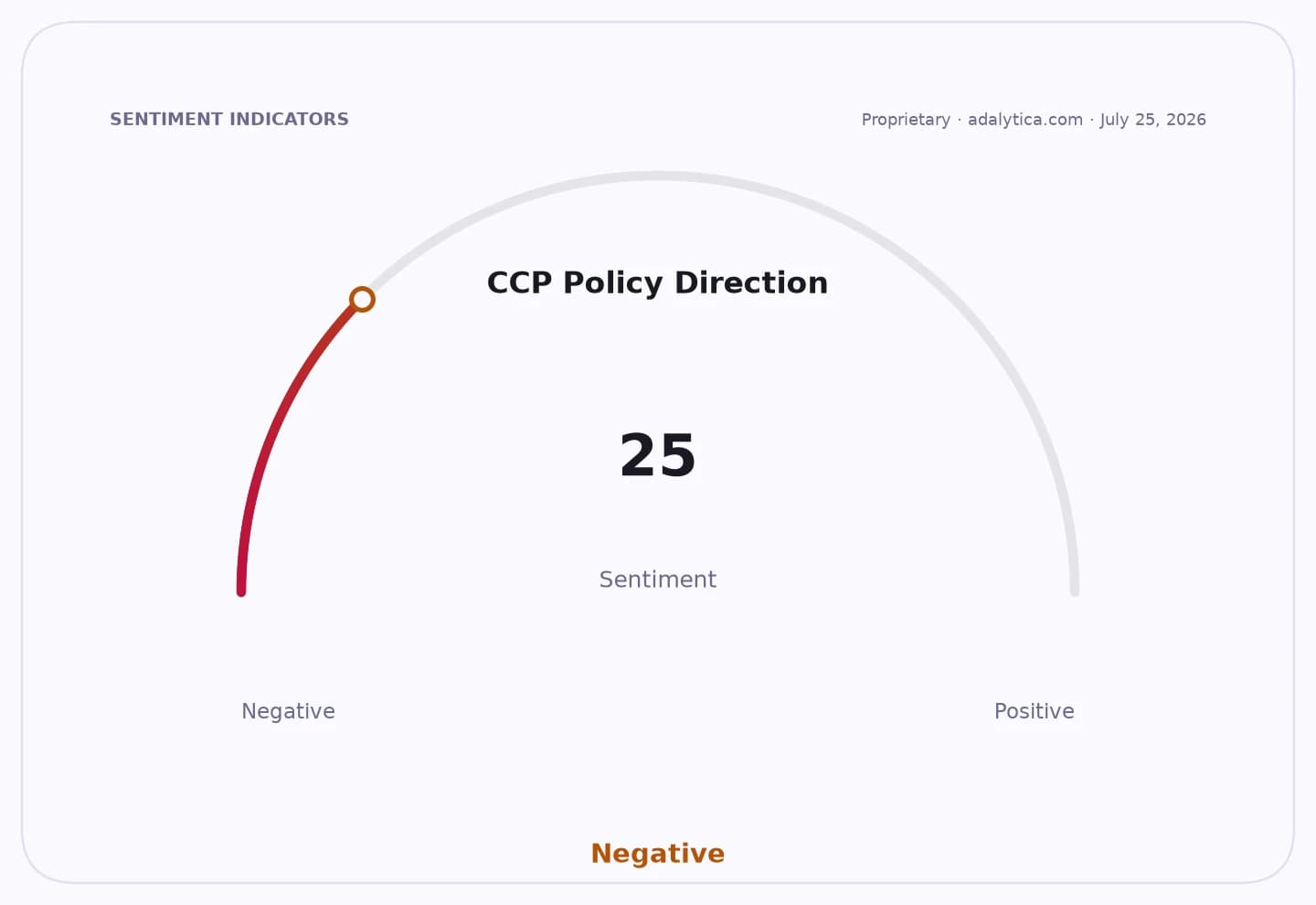
Sentiment IndicatorsⓘProprietary · adalytica.com · July 25, 2026
This is a snapshot — live sentiment, awareness and momentum for 130+ markets update continuously in the dashboard.Open AlphaPulse
The market is treating that risk as real. Alibaba’s U.S.-listed shares have slid to 112.14 from 144.48 in mid-May, while PDD has fallen to 82.66 from 99.60 over the same stretch, even after a sharp earlier-year rebound. Both names now sit close to their 50-day moving averages, but far below their 200-day trends, a reminder that investors are still discounting policy overhangs and margin risk rather than paying for growth.
For Alibaba, the issue is not just direct exposure through AliExpress; it is the wider message that Chinese platforms face a more hostile regulatory and political environment in Europe. For PDD, the concern is more existential: Temu’s international expansion depends on frictionless access to Western consumers, aggressive shipping economics and a tolerance for low-price market share grabs. If France’s move spreads, the market may need to reprice Temu’s growth runway and the capital intensity required to defend it.
The underlying story is a second-order one. Europe is not only reacting to a trade imbalance; it is moving against a business model that uses scale, subsidies and logistics arbitrage to undercut local merchants. That puts pressure on the whole ecosystem: Chinese sellers, cross-border fulfillment providers, and platforms that have leaned on international growth to offset softer domestic demand.
The bigger macro implication is that China’s export-led rebalancing is colliding with political resistance just as global trade becomes more fragmented. Adalytica’s U.S.–China Relations sentiment sits in extreme fear, underscoring how quickly this could feed into a broader risk-off move across Chinese internet and consumer-discretionary names. China’s own policy response will matter, but any retaliation would likely deepen rather than resolve the clash.
Investors should watch for a wider European precedent, especially if other governments move to tax, restrict or disclose more aggressively around ultra-low-cost imports. That would favor logistics firms, domestic retailers and established marketplaces with local compliance strength, while pressuring the Chinese platforms built on cross-border disruption. The opportunity is in assuming this remains a one-country issue; I believe the market is underestimating how quickly it can become a regional template.
| Entity | Gains | Losses |
|---|---|---|
| French retailers | ▲Less price undercutting | ▼Slower cheap-import competition |
| Shein, Temu, AliExpress | ▲Possible rally from retaliation hopes | ▼Higher compliance and policy risk |
| Alibaba, PDD | ▲Potential sympathy bounce if tensions ease | ▼EU growth and valuation pressure |
| European regulators | ▲Political cover on imports | ▼Risk of Chinese countermeasures |