France’s 2027 presidential race just got a sharper left-wing fault line: the majority of communist deputies in the National Assembly are backing Jean-Luc Mélenchon over their own party leader Fabien Roussel, underscoring how quickly the anti-RN bloc is consolidating around the far-left standard-bearer.
France Communist Deputies Back Mélenchon for 2027

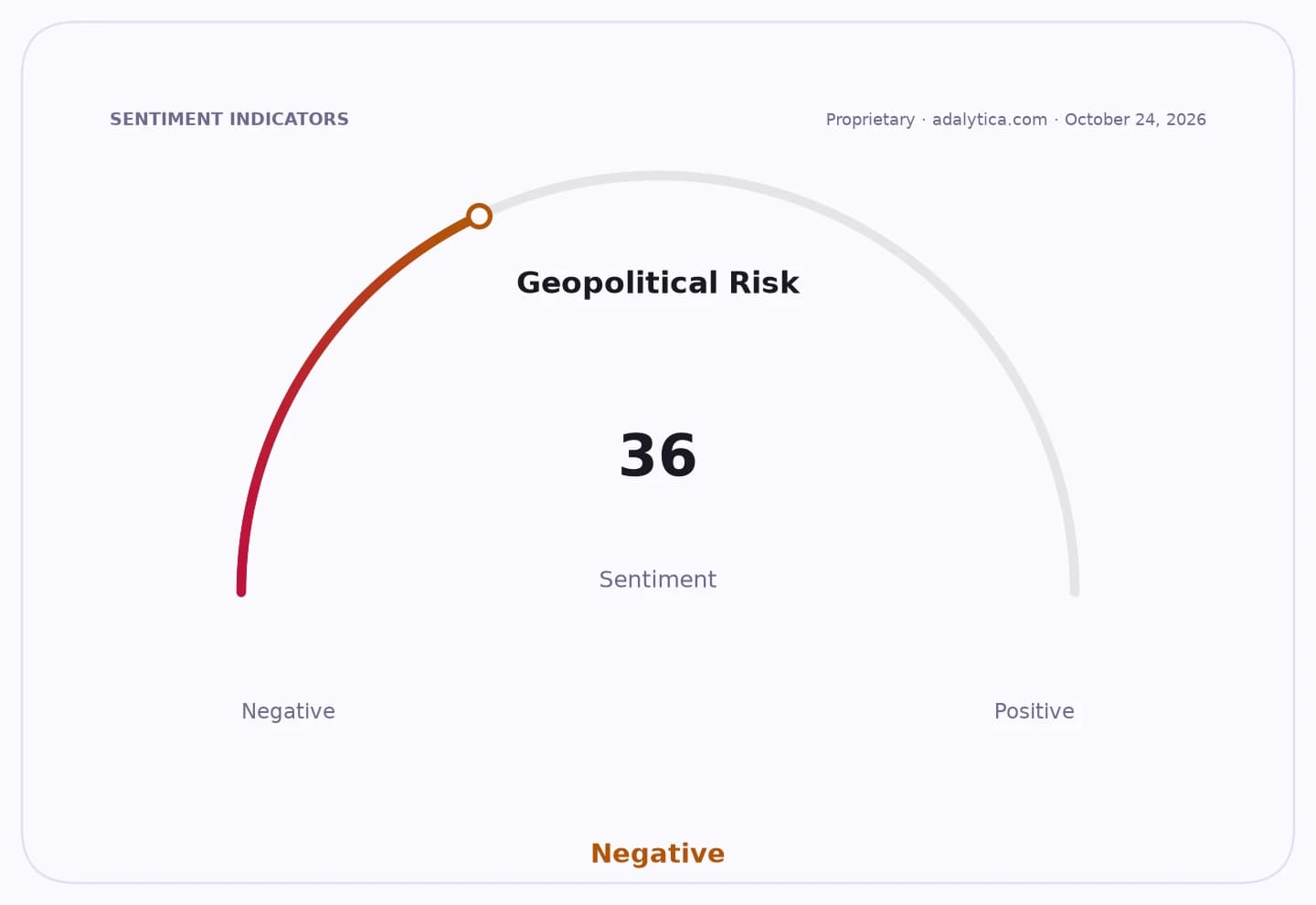
That matters because the left’s best path to relevance in 2027 may no longer run through party discipline, but through tactical alliance-building against Marine Le Pen, who remains the frontrunner in early polling. For investors, that keeps French political risk elevated and reinforces the case for owning defensive exposure to France and Europe rather than betting on a clean, pro-business policy pivot from Paris.
Sentiment Indicators

Nine of the 17 deputies in the communist and overseas group are switching their support to Mélenchon, including group president Stéphane Peu. That is not a symbolic gesture. It means four of the eight Communist deputies, plus five overseas lawmakers, are openly prioritizing unity on the left over the PCF’s own presidential line. Peu called it an act of “civil disobedience,” while Elsa Faucillon said the group has “more convergences than divergences” with La France insoumise.
The political logic is brutally simple: the anti-RN camp believes fragmentation is a bigger threat than ideological drift. With Le Pen still viewed as the favorite, left-wing lawmakers are moving to reduce the number of wasted votes and build a single insurgent pole. Fabien Roussel, meanwhile, is stuck near 2% in the polls — a level that looks less like a launchpad than a warning that the PCF’s standalone presidential strategy may be collapsing before it starts.
For markets, this is not yet a policy shock, but it is a signal that France is heading into another cycle of high-stakes polarization rather than centrist stabilization. That tends to support the trade in European risk hedges: investors are unlikely to pay up for a cleaner French reform story until the political field clarifies. The larger implication is that any 2027 outcome may still hinge on whether the right, left and center can assemble viable second-round coalitions — a structure that keeps volatility alive in French assets, banks and domestically sensitive sectors.
The investable read-through is to stay disciplined: France remains a market where politics can override fundamentals in the near term, even as the broader European equity opportunity remains intact. If the left cannot rally around a credible alternative outside Mélenchon, and the center continues to fragment, the market will keep pricing election risk as a persistent discount rather than a one-off event. That is why investors should watch coalition math as closely as opinion polls — because in France, the real trade is often made before the first ballot is cast.
| Entity | Gains | Losses |
|---|---|---|
| Jean-Luc Mélenchon | ▲Left-wing legitimacy | ▼Fabien Roussel |
| Marine Le Pen / RN | ▲Split opposition | ▼Unified anti-RN bloc |
| French left alliance | ▲Short-term unity | ▼Party discipline |
| French equities / domestic assets | ▲Little near-term relief | ▼Political risk premium |