France’s Finance Commission has approved a banking “right to be forgotten” that could make it easier for some borrowers to move past past financial problems, but the move is also likely to push lenders toward tighter credit standards as they price in less visibility on borrower history.
France Credit Rule Could Tighten Lender Standards

The change matters because credit scoring is one of the key levers behind consumer lending, mortgage approvals and unsecured loan pricing. If banks are required to disregard certain historical events after a set period, the immediate beneficiary is household access to credit for borrowers who have recovered from financial distress. The likely cost is more conservative underwriting, especially in segments where lenders already rely heavily on automated risk models and bureau data.
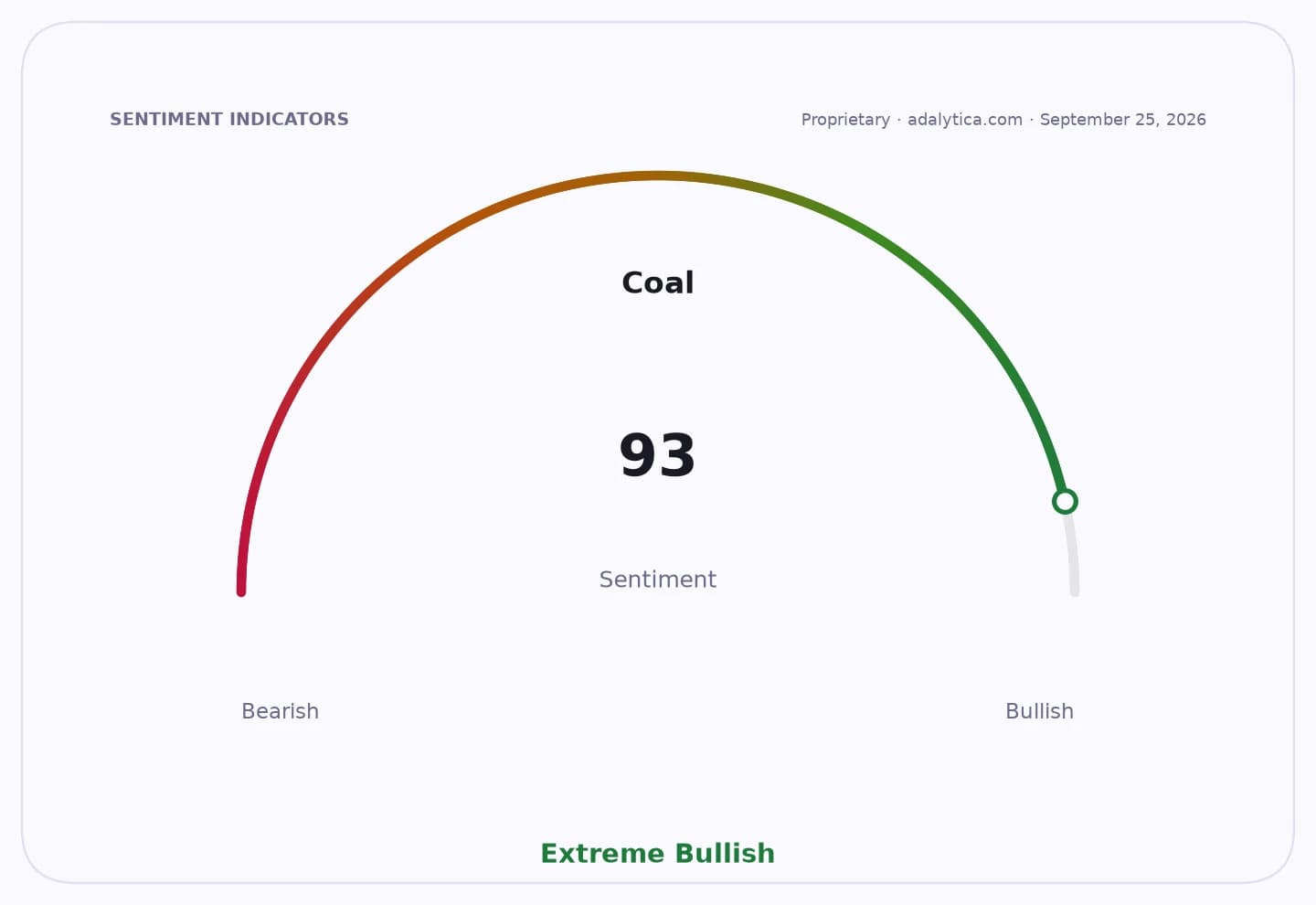
Sentiment IndicatorsⓘProprietary · adalytica.com · July 15, 2026
This is a snapshot — live sentiment, awareness and momentum for 130+ markets update continuously in the dashboard.Open AlphaPulse
The union’s warning that the rule may lead to “more restrictive credits” captures the central trade-off. Lending institutions generally accept regulatory limits on how long negative events remain on file, but they typically respond by raising margins, tightening documentation requirements or shifting toward higher-quality borrowers. That is especially relevant in consumer finance, where the difference between prime and non-prime book growth can meaningfully affect charge-offs and funding costs.
Investors should view the decision through the lens of credit-cycle discipline rather than social policy alone. A more borrower-friendly regime can support loan demand and help rehabilitation, but it can also reduce the quality of risk discrimination in the system. That would matter for lenders with large consumer portfolios, including companies such as Capital One, Synchrony Financial and Ally Financial, which have exposure to revolving credit, auto lending and subprime-adjacent borrowers. These businesses tend to benefit when credit bureaus are rich in data and risk is easy to price; they suffer when regulators compress the information lenders can use.
The broader backdrop is one of still-manageable credit conditions, not stress. U.S. unemployment is forecast at 4.18% for July, close to recent levels, while the 10-year Treasury yield is around 4.61% and high-yield credit spreads sit near 2.70 percentage points, a combination that suggests financing conditions are not yet dislocated. But banks are already operating with more caution after a period of volatile rates and patchy consumer balance sheets, and any policy that weakens the visibility of past delinquencies could reinforce that prudence.
There is also a valuation angle. Shares of lenders that depend on steady credit growth have recovered in recent weeks, with Synchrony and Ally both rebounding from earlier-year weakness, while Capital One has held up better as investors favored scale and balance-sheet strength. A tougher underwriting response in France would not directly hit these U.S. names, but it fits a global pattern investors track closely: any reform that increases borrower protections can improve credit inclusion, yet it often trims near-term profitability for lenders and service providers tied to underwriting, collections and bureau data.
The key question now is how far the rule goes and how lenders adapt. If the commission’s approval is turned into law with narrow carve-outs, the policy may have limited economic impact beyond easing rehabilitation for former defaulters. If it is broad enough to materially reduce the information banks can use, the market should expect a slower pace of credit expansion, tighter approval criteria and a modest shift of risk toward higher-priced lenders and alternative finance providers.
| Entity | Gains | Losses |
|---|---|---|
| Borrowers with past credit issues | ▲Easier credit rehabilitation | ▼Less transparency on terms |
| Banks and lenders | ▲Broader customer pool | ▼Harder risk pricing |
| Consumer-finance stocks | ▲Loan growth upside | ▼Higher underwriting caution |
| Credit bureaus / data providers | ▲None | ▼Reduced data utility |