China said differences among G20 members, sharpened by U.S. tariffs, prevented ministers from reaching agreement on industrial overcapacity and forced labor, underscoring how trade frictions are now blocking even basic coordination among the world’s biggest economies.
G20 split on China overcapacity, forced labor
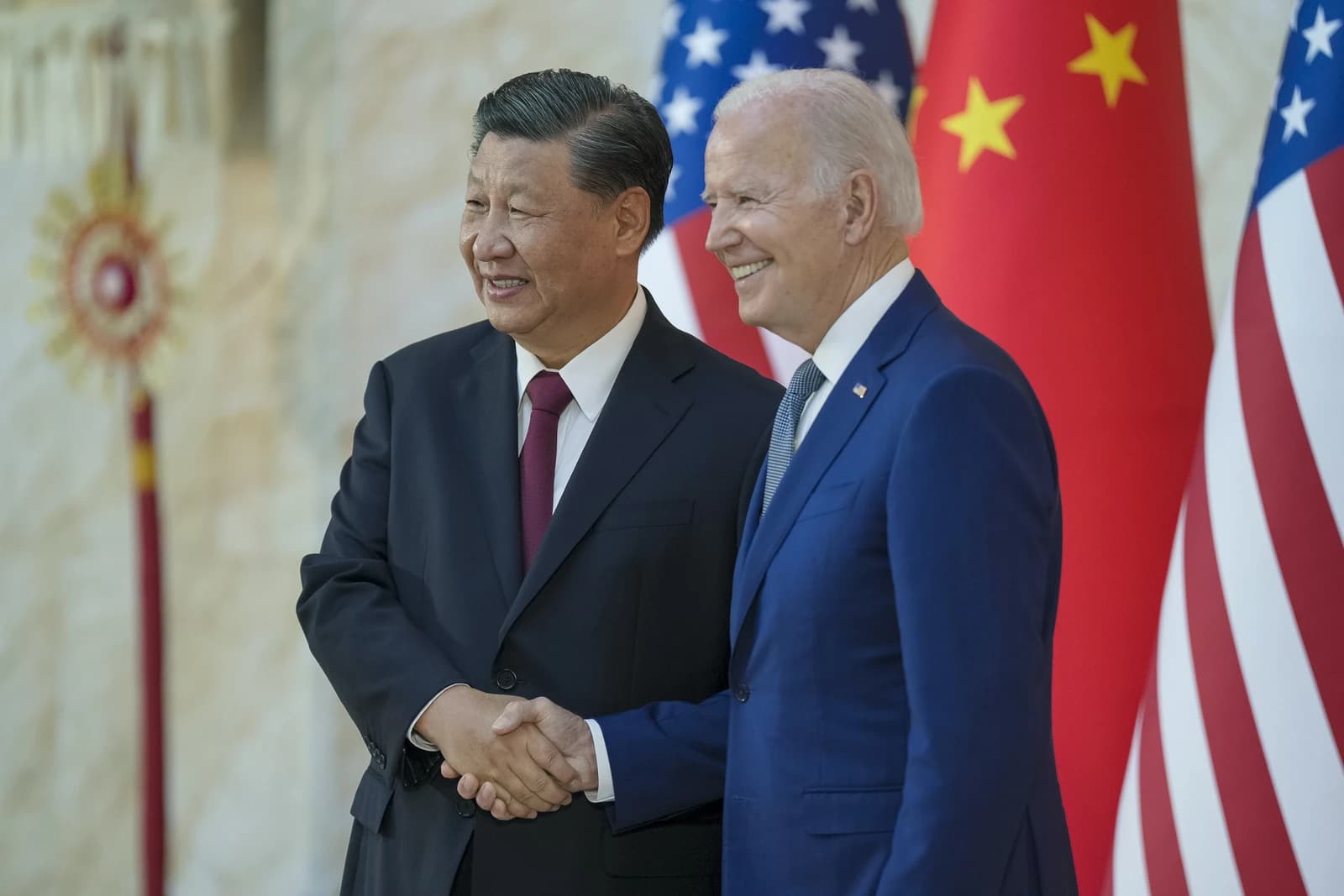
The failure matters because overcapacity has become a central fault line in global trade, with Washington and several partners accusing China of flooding markets with low-cost industrial goods and distorting competition. When the G20 cannot even agree on language around the issue, it signals that the politics of trade are running ahead of multilateral diplomacy, leaving businesses and policymakers with fewer venues to manage spillovers from excess supply, tariff escalation and subsidy disputes.
At talks in Milwaukee this week, the U.S., which holds the rotating G20 presidency this year, pushed for a ministerial draft rejecting excess capacity that it says drives down prices unfairly. U.S. Trade Representative Jamieson Greer said the draft had support from all members except a few. China’s commerce ministry responded that overcapacity and forced labor had long been contentious topics and said many members were themselves subject to forced-labor-linked tariffs or were often targeted by overcapacity probes.
Beijing framed the deadlock as a product of divergent views across the group, saying the presidency’s effort to force through a joint statement and set up cooperation mechanisms ran into resistance from the majority of members. It also noted that the U.S., together with two other G20 countries, issued a separate statement outside the bloc on forced labor, a sign of how fractured the group has become on trade enforcement.
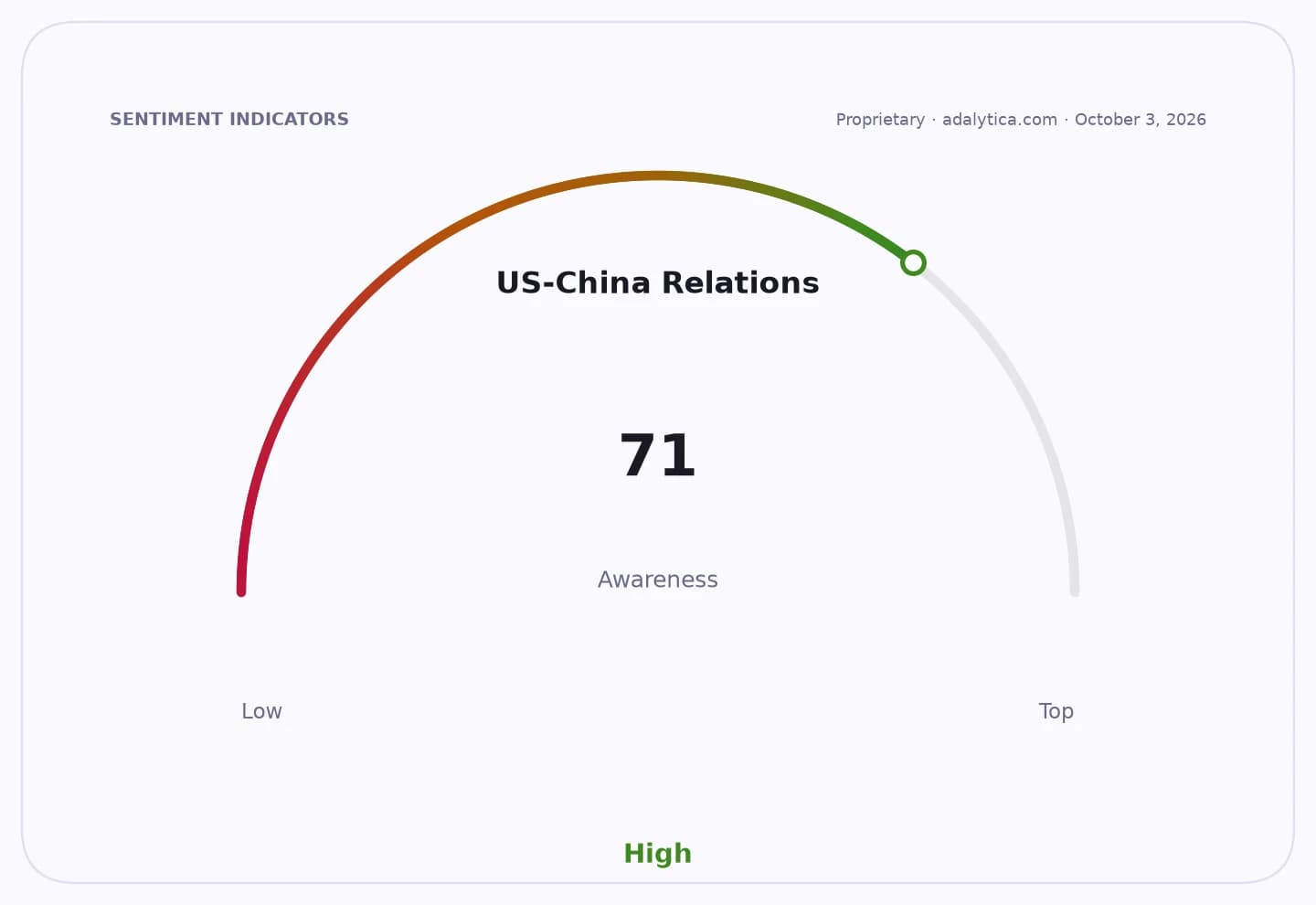
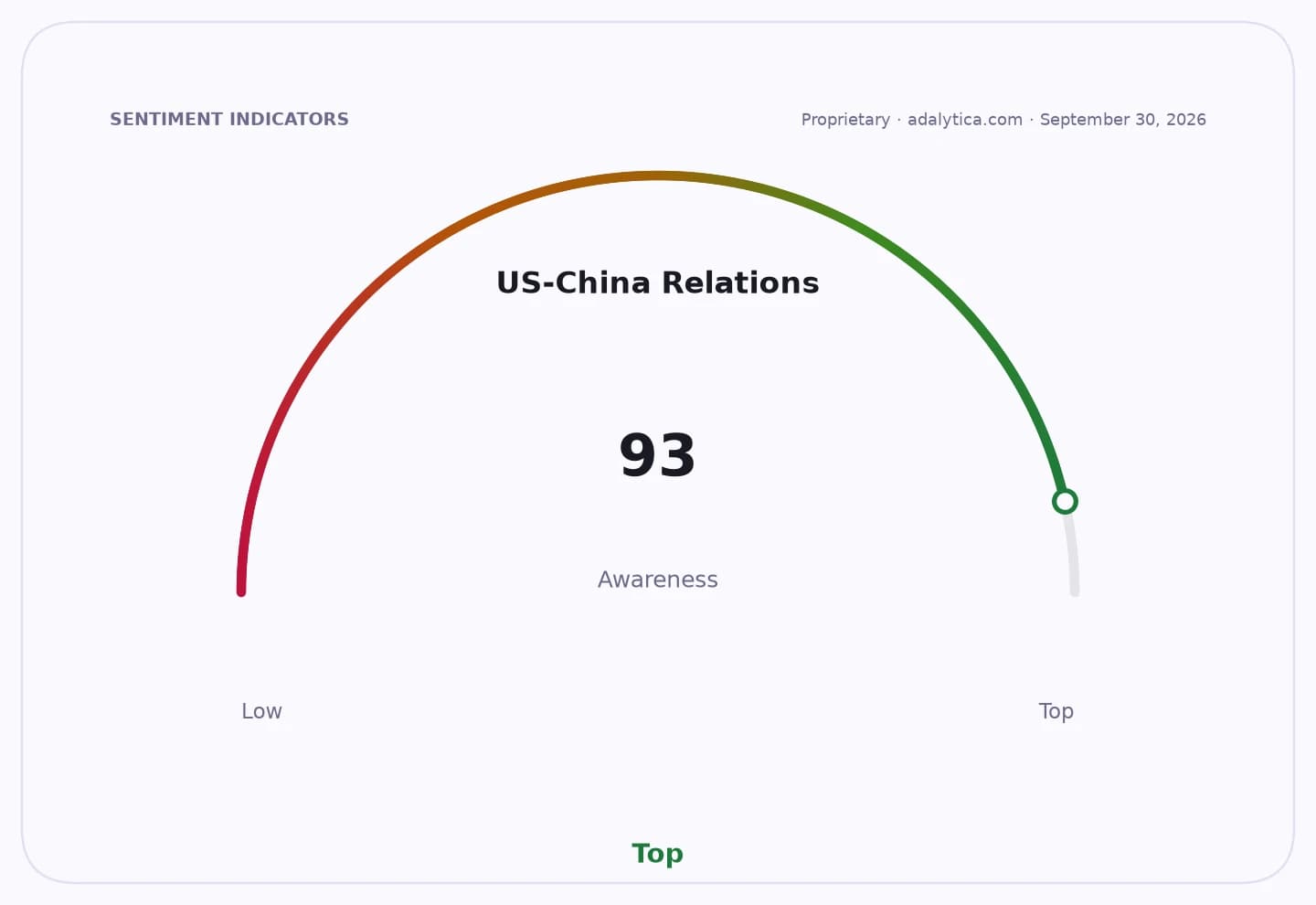
US-China Relations — 30-day sentimentadalytica.com
Explore this data interactively — full history, time series and cross-market comparisons.Open AlphaPulse
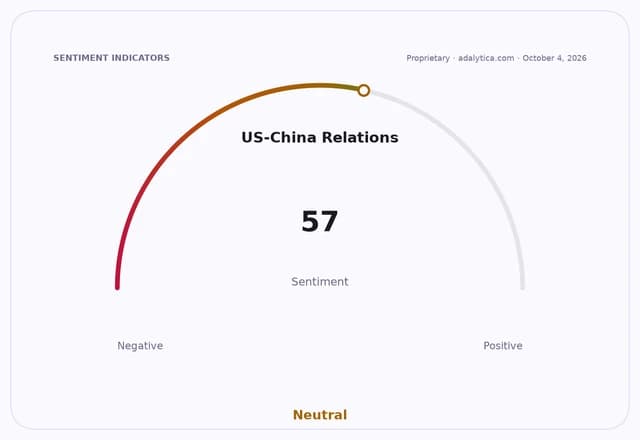
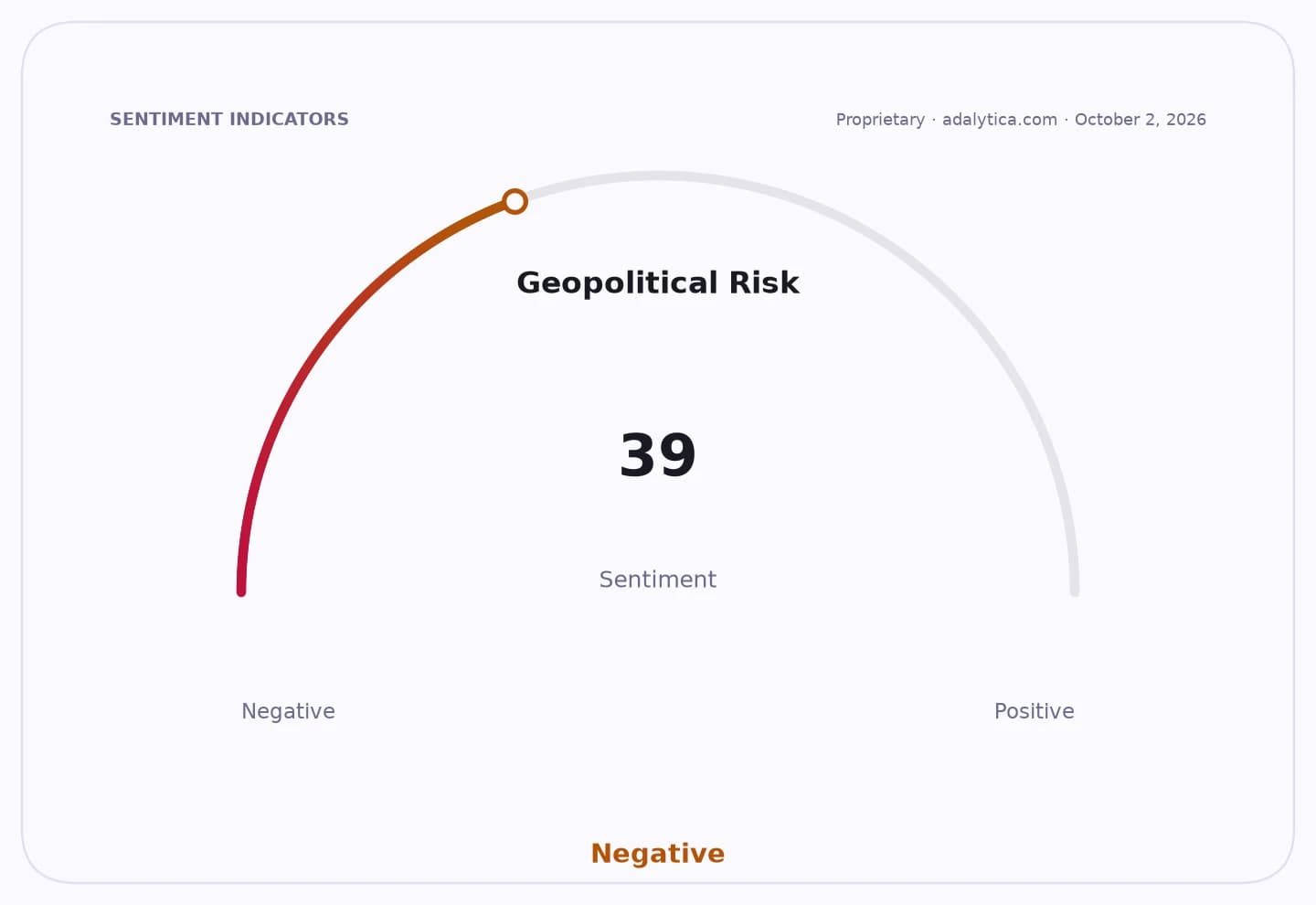
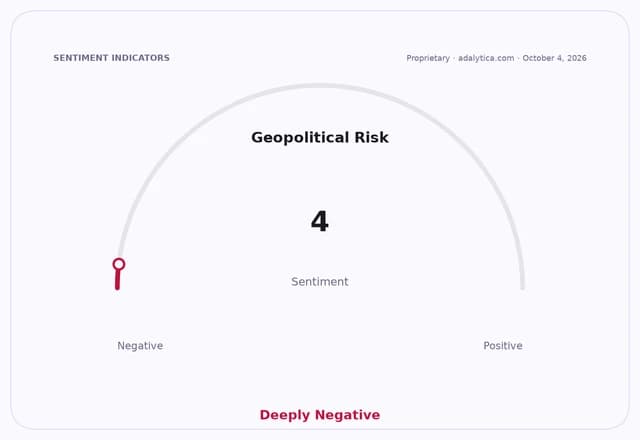
For investors, the immediate implication is that the risk premium around U.S.-China trade tensions remains elevated and may be becoming more structural. Global manufacturers, commodity exporters and industrial firms face a higher chance that overcapacity disputes will be handled through unilateral tariffs, investigations and ad hoc coalitions rather than coordinated G20 or WTO frameworks. That is bearish for supply-chain visibility and could prolong pressure on pricing across sectors from steel and solar to chemicals and machinery.
The broader backdrop is one of weakening confidence in multilateral trade management just as governments are trying to rebuild industrial capacity at home. If the G20 cannot agree on a common approach to excess production, the next phase is likely to feature more fragmented policy responses, more retaliatory measures and more uncertainty for cross-border investment. The planned G20 leaders’ summit in Trump’s Miami golf resort in December now looms as the next test of whether the group can produce anything more durable than another statement of disagreement.
| Entity | Gains | Losses |
|---|---|---|
| U.S. | ▲Pressure on China over capacity | ▼Consensus on trade rules |
| China | ▲Avoids binding G20 language | ▼Faces renewed scrutiny |
| Global exporters | ▲Can benefit from less coordinated action | ▼Higher trade-policy uncertainty |
| Multilateral institutions | ▲More relevance if talks resume | ▼Credibility from another deadlock |