Gabon and Equatorial Guinea have agreed on the disputed Mbanié island and nearby waters, a breakthrough that could ease one of the Gulf of Guinea’s longest-running sovereignty flashpoints and reduce a geopolitical risk that has hung over offshore energy, shipping and regional investment for years.
Gabon, Equatorial Guinea agree on Mbanié island dispute
The accord matters economically because the border dispute has extended beyond a small island into the surrounding maritime zone, an area linked to offshore hydrocarbons and control of sea lanes in a region still important to global energy supply. Any clearer legal framework is positive for producers, service companies and insurers that price in the risk of contested waters, piracy and contract uncertainty.
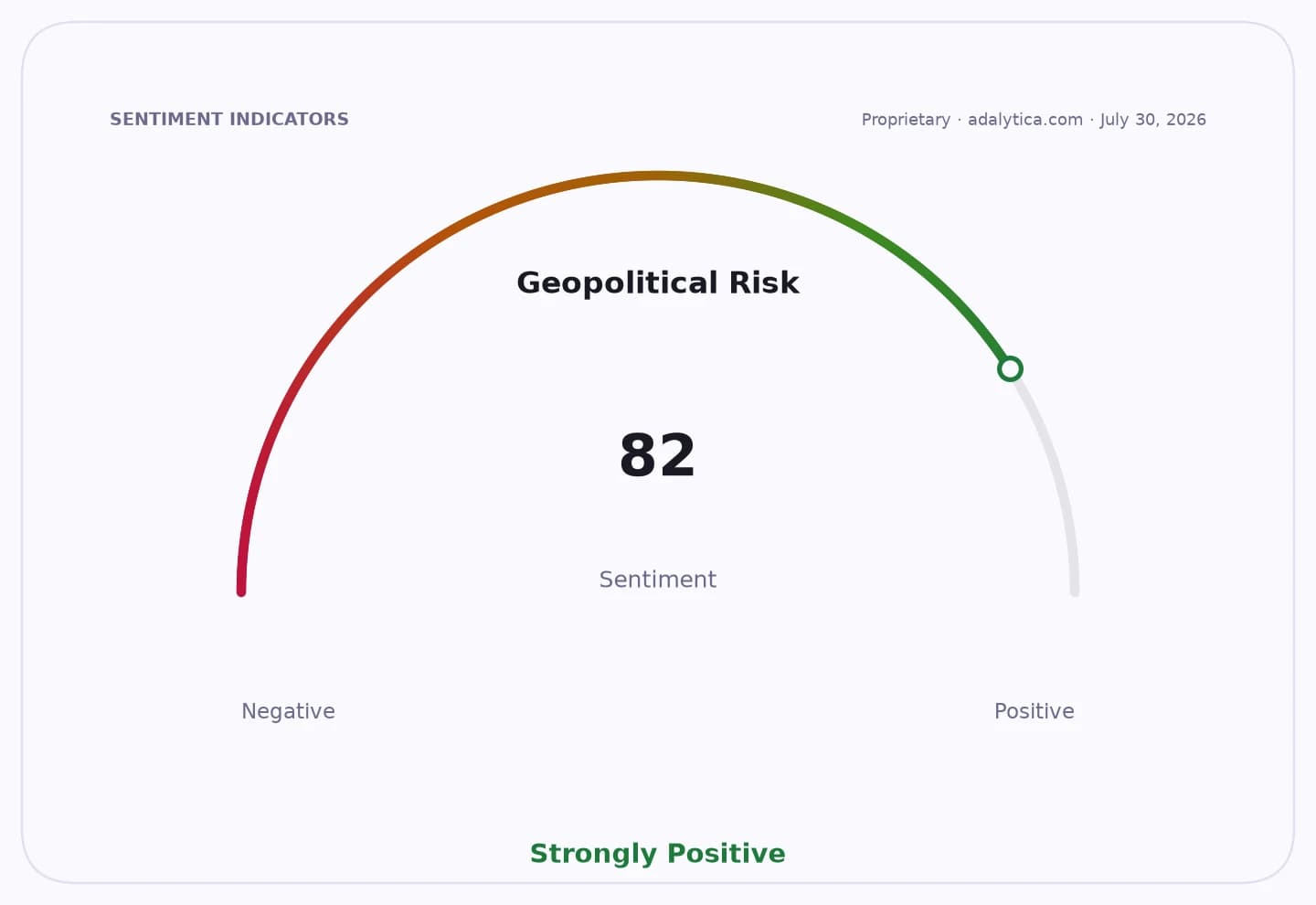
Sentiment IndicatorsⓘProprietary · adalytica.com · July 30, 2026
This is a snapshot — live sentiment, awareness and momentum for 130+ markets update continuously in the dashboard.Open AlphaPulse
For investors, the deal lowers one source of country risk in Central Africa at a time when capital remains selective across African upstream basins. Chevron, TotalEnergies, Shell and ExxonMobil have all been active in Atlantic basin oil plays in recent years, and a more predictable operating environment can support licensing, exploration budgets and port and logistics flows even if production gains take time to materialize.
Oil markets are not pricing this as a major supply shock, but the backdrop is sensitive. WTI trade signals tracked by Adalytica.com show extreme fear even as awareness of oil-linked geopolitical risk remains elevated, while broader global stability sentiment has swung sharply higher in the past 24 hours. That mix suggests investors are still discounting disruption risk rather than celebrating a structural easing of it.
The agreement also fits a wider pattern across the Gulf of Guinea, where governments are trying to improve maritime security and protect trade routes after years of piracy, intermittent militant activity and jurisdictional disputes. For companies operating offshore West Africa, that means the value of a political settlement is not just in territory, but in lower insurance, security and financing costs.
Shares of major oil groups have been firm into late July, with ExxonMobil and Shell both trading above their 50-day and 200-day moving averages, underscoring how investors are balancing geopolitical calm with tight supply expectations. The next test is whether Gabon and Equatorial Guinea turn the Mbanié understanding into a durable delimitation process that can unlock licensing, reduce legal friction and support investment across the Gulf of Guinea.
| Entity | Gains | Losses |
|---|---|---|
| Gabon | ▲Border certainty | ▼Negotiating leverage |
| Equatorial Guinea | ▲Maritime access clarity | ▼Territorial ambiguity |
| Oil majors | ▲Lower operating risk | ▼Fewer dispute premiums |
| Insurers/shipping | ▲Safer sea lanes | ▼Less risk-based pricing |