Germany’s industrial lobby is warning that Chinese competition and trade friction are moving from a background concern to an immediate earnings risk for the country’s machinery makers, with the sector increasingly looking to Brussels for protection as exports face pressure from a stronger China and a more fractured global market.
German Industrials Face China Competition Risk

VDMA President’s call for the EU to “hold up a shield in front of the incoming arrows” captures the central economic problem: Europe’s largest industrial exporter is confronting not just weak domestic demand, but a structural challenge from China’s manufacturing expansion, which is squeezing margins, redirecting supply chains and raising the odds of more trade defense measures. For investors, that means the outlook for German capital goods, autos and industrial suppliers is now tied as much to policy responses in Brussels as to order books in Frankfurt or Shanghai.
The concern lands at a sensitive moment for European industry. China’s first-half trade growth has been strong, with its overall imports and exports rising sharply and high-tech sectors, especially AI-related industries, driving a larger share of external demand. That reinforces Beijing’s industrial scale advantage at a time when German manufacturers are already under pressure from elevated costs, slower European growth and softer global investment spending. The result is a more competitive Chinese export machine just as German firms are trying to defend market share in sectors where they once dominated.
Market signals reflect that strain. The DAX industrial complex has been volatile but recent price action suggests investors remain cautious about the durability of the rebound, while the U.S.-listed Germany ETF, EWG, has traded below its 50-day and 200-day moving averages for much of the period, a sign that global capital is still demanding a discount for German cyclicals. China’s FXI, meanwhile, has also weakened, underlining that investors are wrestling with whether stronger Chinese trade performance translates into sustained domestic demand or simply more aggressive export competition abroad.
That distinction matters for Europe. If China’s trade strength is being driven by a higher-value export mix, then German firms face competition not only in commodity goods but increasingly in advanced manufacturing and industrial technology, where margins are thicker and strategic importance is higher. That raises the risk of a policy response from the EU, including tariffs, anti-dumping actions or tighter investment screening, but such moves could also invite retaliation and further complicate German companies’ access to China, still one of their most important markets.
The bull case for Europe is that a tougher stance could slow the pace of market share loss and give domestic producers time to adjust their cost base and supply chains. The bear case is that protection may offer only temporary relief if Germany’s industrial model remains exposed to high energy costs, weak investment and a China that is moving up the value chain faster than Europe can respond. Either way, the trade backdrop argues that investors should treat German industrial equities less as a pure cyclical recovery trade and more as a policy-sensitive geopolitical asset class.
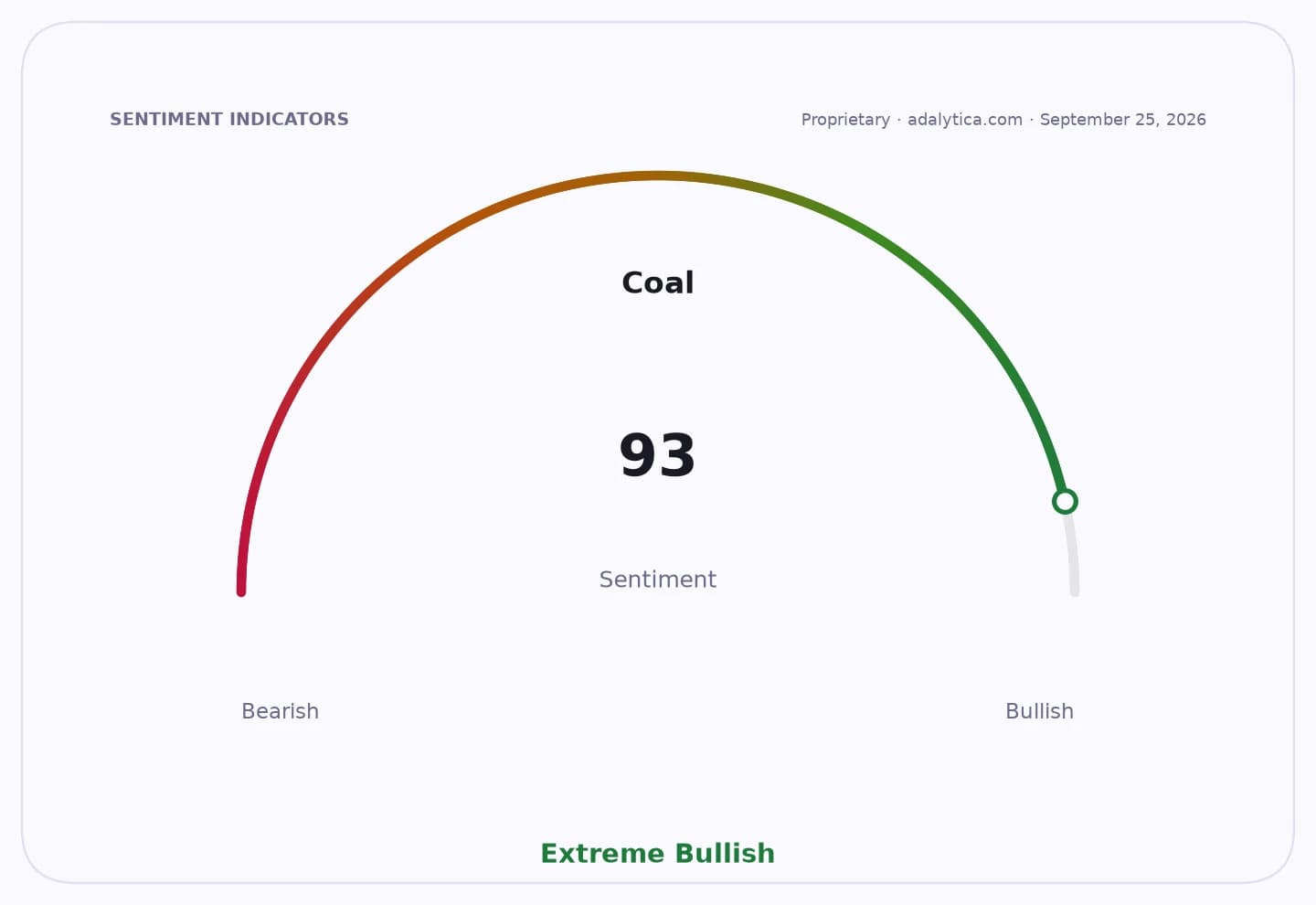
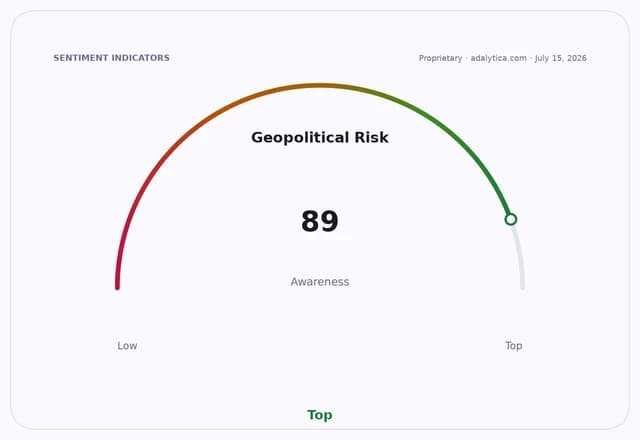
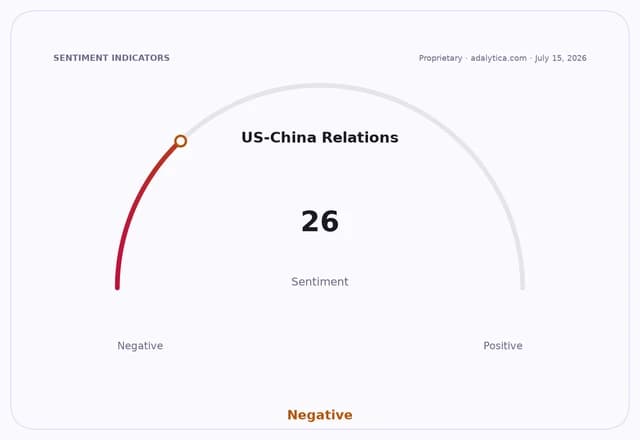
Adalytica’s global stability gauge is in extreme fear, while its U.S.-China relations sentiment remains depressed, a sign that markets are already pricing a more confrontational trade regime. For German industrials, the key catalyst now is whether the EU turns VDMA’s warning into coordinated action — or leaves manufacturers to absorb the next wave of Chinese competition on their own.
| Entity | Gains | Losses |
|---|---|---|
| Chinese exporters | ▲Higher market share | ▼EU trade barriers |
| German machinery makers | ▲Potential EU protection | ▼Price pressure, lost orders |
| EU policymakers | ▲Leverage on trade policy | ▼Risk of retaliation |
| Investors in protected industrial names | ▲Short-term support | ▼Policy and trade uncertainty |