Germany’s business mood improved in July even as companies kept a wary eye on inflation, trade tensions and geopolitics, a small but important sign that Europe’s biggest economy may be regaining its footing after a long stretch of caution.
German Business Sentiment Signals Stabilization
That matters because Germany sits at the center of the eurozone’s industrial engine. When executives in manufacturing, services and retail become less pessimistic, it usually points to firmer hiring, steadier investment plans and better order books ahead. For investors, it is the difference between an economy that keeps stumbling and one that can start compounding again.
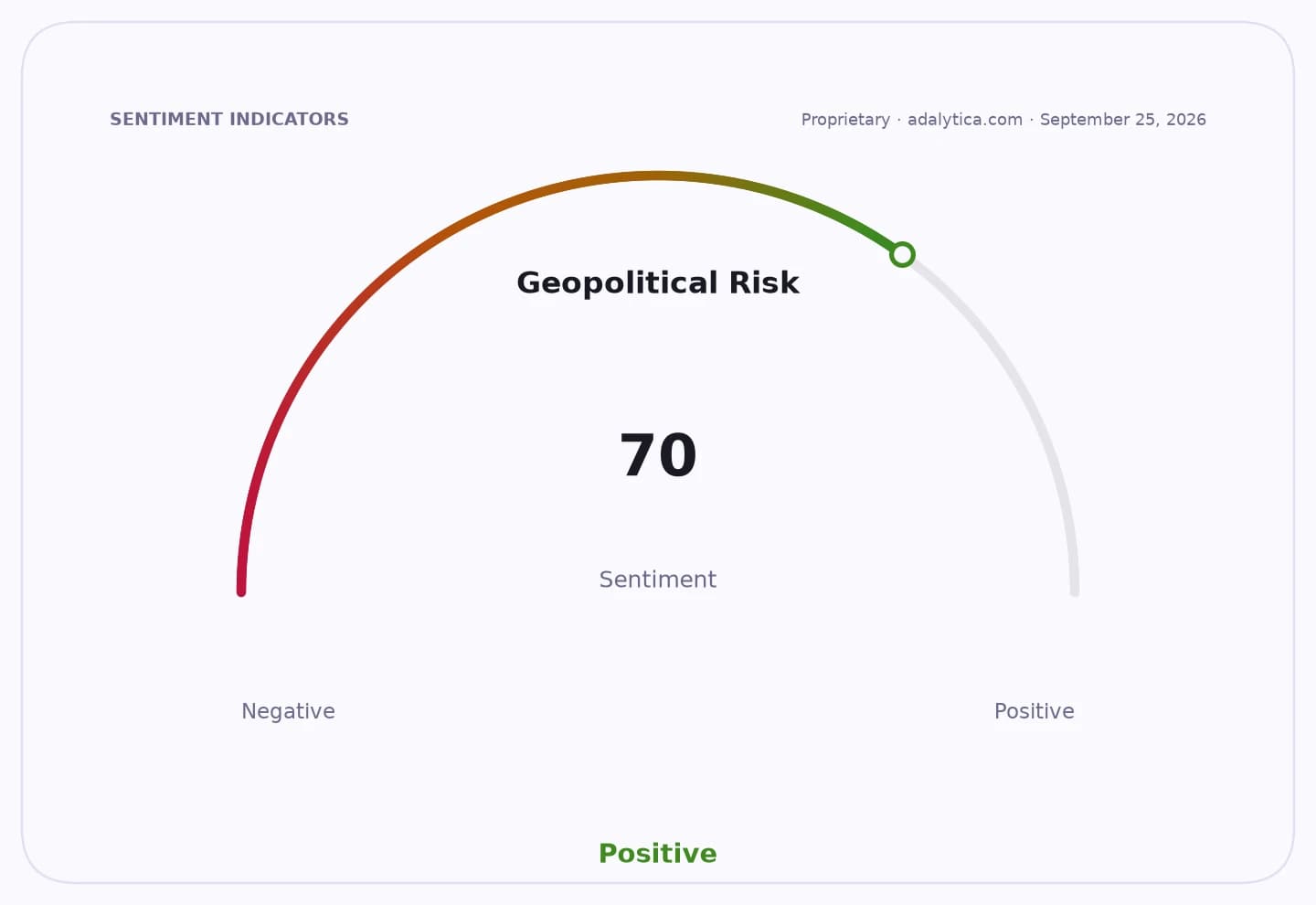
Sentiment IndicatorsⓘProprietary · adalytica.com · July 27, 2026
This is a snapshot — live sentiment, awareness and momentum for 130+ markets update continuously in the dashboard.Open AlphaPulse
The Ifo reading fits a broader pattern of resilience that is showing up in other hard data. German industrial production is still running above the levels seen a year ago, and unemployment has edged lower to around 4.2%, suggesting the labor market has held together even without a roaring recovery. That combination — better sentiment, stable jobs and positive output growth — is exactly what markets want to see before they assign a higher multiple to European assets.
The market response has been cautious rather than euphoric, which is understandable. Germany remains exposed to weak global manufacturing demand, expensive energy, and the ongoing uncertainty around tariffs and supply chains. But investors tend to reward inflection points more than perfection. If business confidence keeps improving, it can help support European cyclicals, banks and exporters, while also easing pressure on policymakers to rely on stimulus alone.
That is where the story becomes interesting for long-term investors. Germany does not need a boom to matter; it needs a credible bottoming process. A modest improvement in corporate sentiment can be enough to lift earnings expectations for industrials, autos, machinery and broader European equities. For U.S. investors using funds like EWG for Germany or VGK for Europe, a slow repair in confidence can be a useful sign that the region is not trapped in stagnation.
There are still plenty of risks. The eurozone is not out of the woods, and business surveys can turn quickly if energy prices jump or global demand softens again. The recent backdrop of geopolitical uncertainty and uneven trade policy means managers are still likely to delay big capital commitments until they see more proof.
Even so, the message from the Ifo index is constructive: companies are less pessimistic, not because all the problems are gone, but because conditions may be stabilizing enough for them to plan ahead. For patient investors, that is often how recoveries begin — quietly, unevenly, and long before the headlines sound upbeat. It’s worth watching, and for diversified portfolios, it may be a reason to keep Europe on the watchlist rather than writing it off.
| Entity | Gains | Losses |
|---|---|---|
| German companies | ▲Better confidence, steadier planning | ▼Continued cost and trade uncertainty |
| European equity investors | ▲Recovery optionality | ▼Missed upside if sentiment keeps improving |
| Exporters | ▲Firmer demand outlook | ▼Stronger euro could pinch margins |
| Pessimists/shorts | ▲— | ▼Risk of being caught in a bottoming cycle |