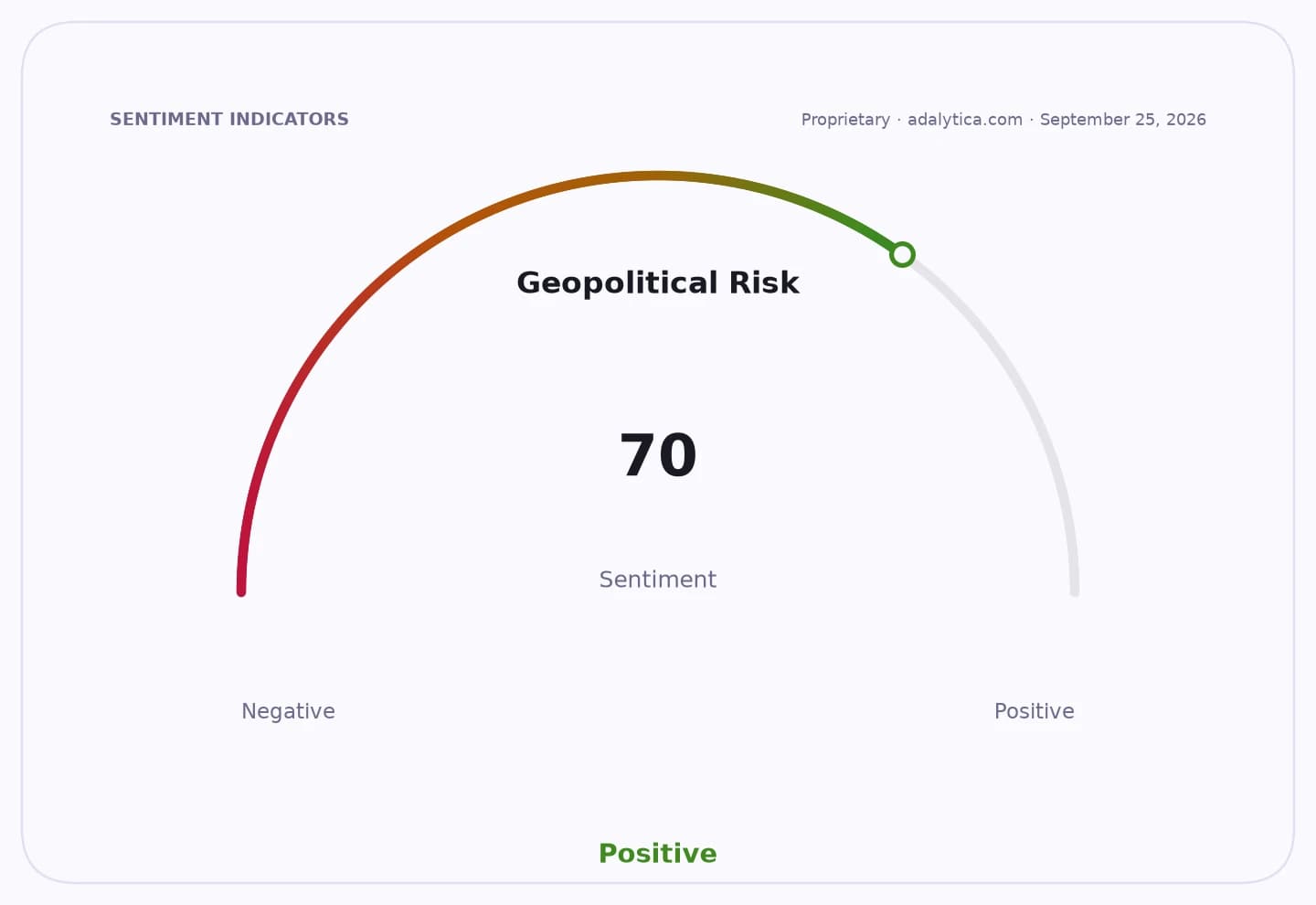
Europe’s gas market is entering winter with little room for error, and Germany could face physical shortages as soon as November if storage remains this low.
Germany Gas Storage Below 58% Ahead of Winter
That is the economically significant development behind a reserve level that has slipped to less than 58% across the EU, well below last year’s position and uncomfortably weak for the season ahead. Germany, Europe’s largest industrial economy and still one of the bloc’s most gas-dependent manufacturing hubs, is exposed first. If storage is not rebuilt fast enough, the risk is not just higher prices but rationing pressure on factories, power generators and households.
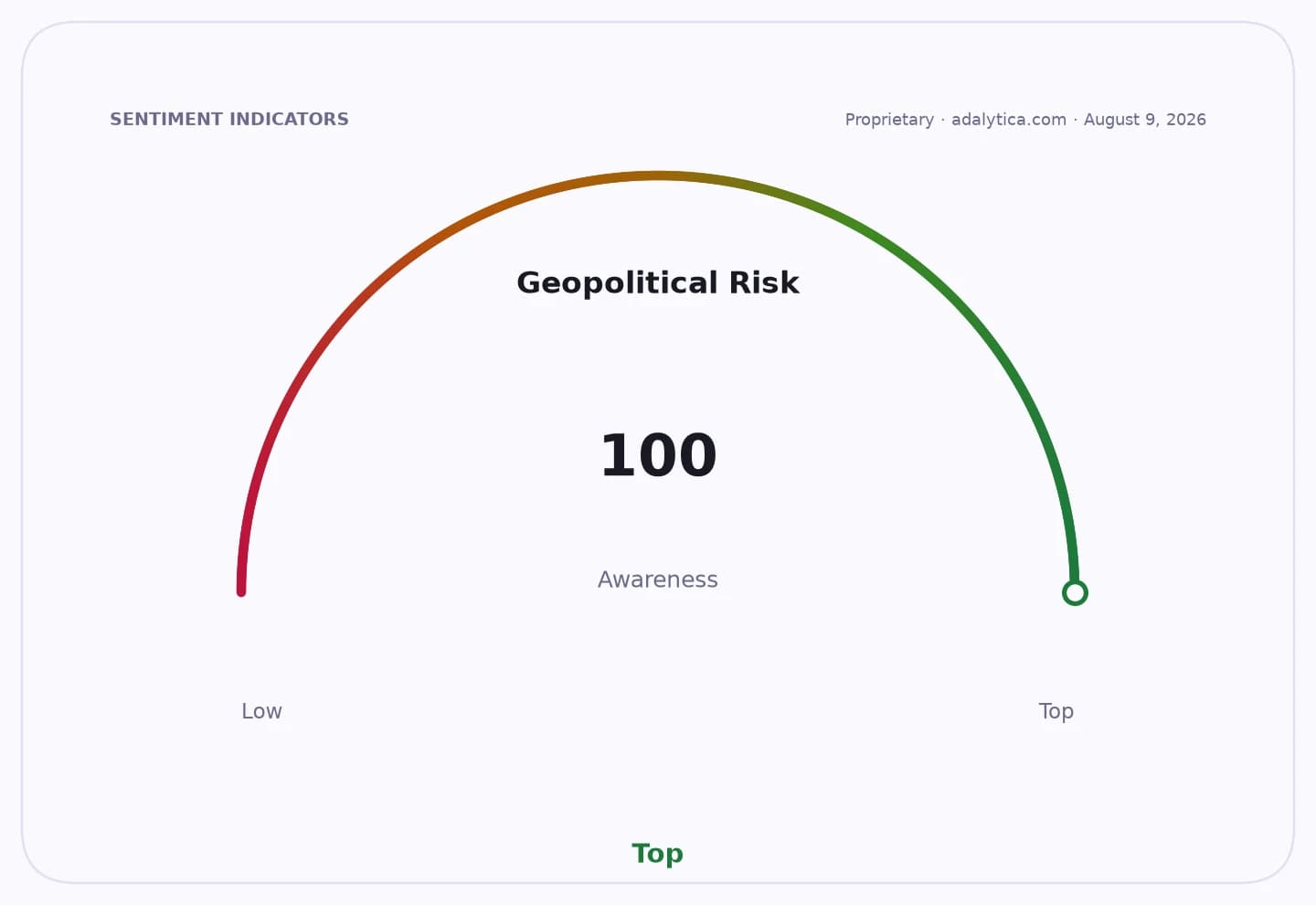
Sentiment IndicatorsⓘProprietary · adalytica.com · August 9, 2026
This is a snapshot — live sentiment, awareness and momentum for 130+ markets update continuously in the dashboard.Open AlphaPulse
The implications go beyond one country’s inventory problem. Low storage heading into the heating season tightens the balance sheet for the whole region, lifting the probability of another spike in gas costs just as Europe has been trying to recover from the energy shock that followed Russia’s invasion of Ukraine. For an economy that has already lost industrial competitiveness to energy-intensive rivals, a supply squeeze would hit output, margins and confidence at the same time.
Germany’s refusal to intervene directly in gas procurement adds another layer of risk. Berlin is sticking to market-based rules even as the storage picture worsens, leaving utilities and traders to secure supply without a state backstop. That may preserve price discipline, but it also means the burden of replenishment falls on a market that is already signalling stress.
The market is not pricing this as a normal seasonal adjustment. U.S. natural gas futures are trading at $2.66 per million British thermal units, down sharply from the extreme weather and geopolitical spikes seen over the past two years, while UNG, the U.S. natural gas ETF, has fallen to $9.74. European concern, however, is less about U.S. benchmarks and more about whether LNG cargoes and pipeline flows can be pulled into the continent fast enough before heating demand rises.
Oil and broader risk markets also suggest investors are still weighing the inflationary implications of energy insecurity. Brent and West Texas Intermediate remain elevated by historical standards, with WTI around $81.96 a barrel in the latest data, reinforcing the point that energy markets are still vulnerable to supply shocks even without a full-blown crisis. European gas scarcity would feed directly into power costs, industrial input prices and potentially consumer inflation if the situation deteriorates.
For investors, the key question is who absorbs the cost. European utilities, gas shippers and LNG-linked suppliers may benefit from tighter regional pricing, but heavy industry, chemicals, steel, glass and broader manufacturing are the obvious losers if supply conditions tighten. Germany’s exporters would face a double hit: higher energy bills and weaker production volumes. Any forced demand restraint would also raise questions for bank earnings, credit quality and fiscal support if governments are pushed back into emergency measures.
The bull case is that warmer weather, faster LNG arrivals or stronger conservation could prevent an outright shortage. The bear case is that storage remains inadequate, import competition intensifies, and November becomes the point at which the market moves from warning to crisis. Either way, the story for Europe is no longer just about prices. It is about whether the region can secure enough physical gas to keep its industrial core running through winter.
| Entity | Gains | Losses |
|---|---|---|
| LNG exporters | ▲Higher demand | ▼None |
| European gas traders | ▲Volatility opportunities | ▼Inventory risk |
| German industry | ▲None | ▼Supply shortages |
| Households and utilities | ▲None | ▼Higher heating costs |