Germany’s gas storage sites are about three-quarters full as Europe enters the heating season, underscoring how far the continent remains from the cushion it normally wants heading into winter and keeping energy costs, industrial output and market volatility in focus.
Germany Gas Storage Near 75% as Winter Starts
That matters because gas storage is one of the main buffers against cold-weather demand spikes, pipeline disruptions and price shocks. A weaker-than-normal inventory position leaves Germany more exposed than its neighbors if temperatures fall sharply or supply flows tighten, and that exposure feeds directly into power prices, factory margins and broader economic resilience across Europe’s largest economy.
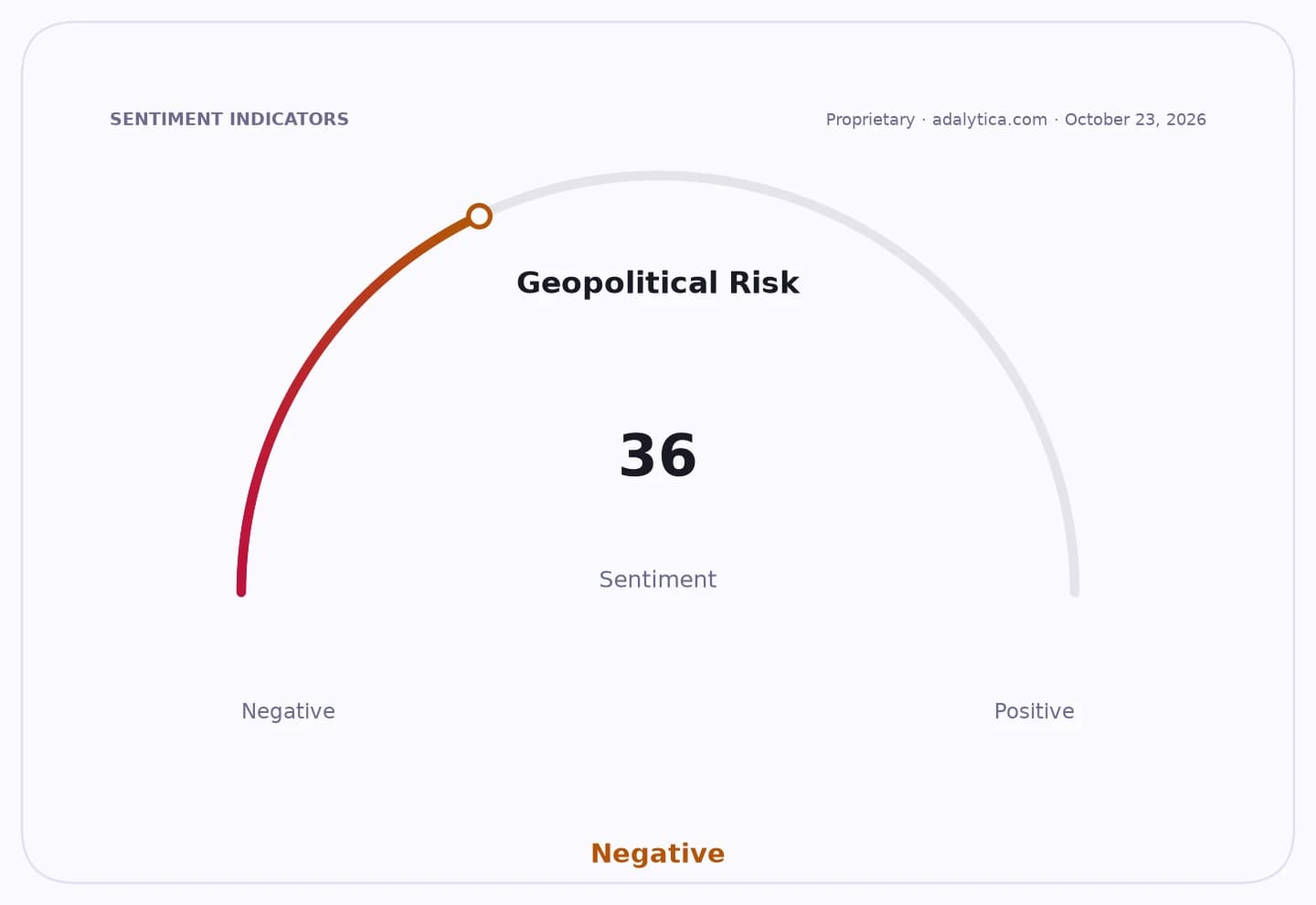
Sentiment IndicatorsⓘProprietary · adalytica.com · October 23, 2026
This is a snapshot — live sentiment, awareness and momentum for 130+ markets update continuously in the dashboard.Open AlphaPulse
The issue is not just Germany’s ability to keep homes warm. It is also about the cost of keeping heavy industry running. Chemicals, metals, glass and other gas-intensive sectors are still highly sensitive to winter fuel prices, and a thin storage cushion can force firms to pay up for spot gas, cut production or hedge more aggressively. For investors, that translates into a wider range of outcomes for European utilities, industrials and gas-linked assets, as well as renewed sensitivity to every weather model, pipeline headline and policy response.
The regional picture is mixed. The Netherlands has already reached its storage target, showing that some European systems have entered winter with a more comfortable margin. But Europe overall is still starting the season with only about 75% of the gas volumes it wants in storage, leaving Germany as one of the key pressure points in the bloc’s energy balance. That keeps attention on replenishment rates, import availability and demand discipline over the coming months.
Markets have already reflected the strain in energy-linked trading. U.S.-listed natural gas exposure through the UNG fund has been volatile, while energy equities have stayed firm, with the XLE ETF near record territory and independent producers such as EOG Resources outperforming. That divergence suggests investors are still pricing energy scarcity and supply discipline, even as gas-specific sentiment remains fragile.
The bull case is that Europe gets a mild winter, storage withdrawals stay manageable and prices ease without forcing rationing or industrial shutdowns. The bear case is a prolonged cold spell or another supply shock that exposes the limits of a 75% storage cushion and sends gas prices sharply higher. For Germany, and for investors tied to Europe’s energy and industrial cycle, the storage level is less a statistic than a live winter risk gauge.
| Entity | Gains | Losses |
|---|---|---|
| German households | ▲Lower chance of immediate shortages | ▼Higher winter bill risk |
| Energy suppliers | ▲Stronger pricing power | ▼Greater demand for contingency supply |
| German industry | ▲More policy focus on security | ▼Higher fuel and input costs |
| Gas bulls | ▲Scarcity premium | ▼If winter stays mild |