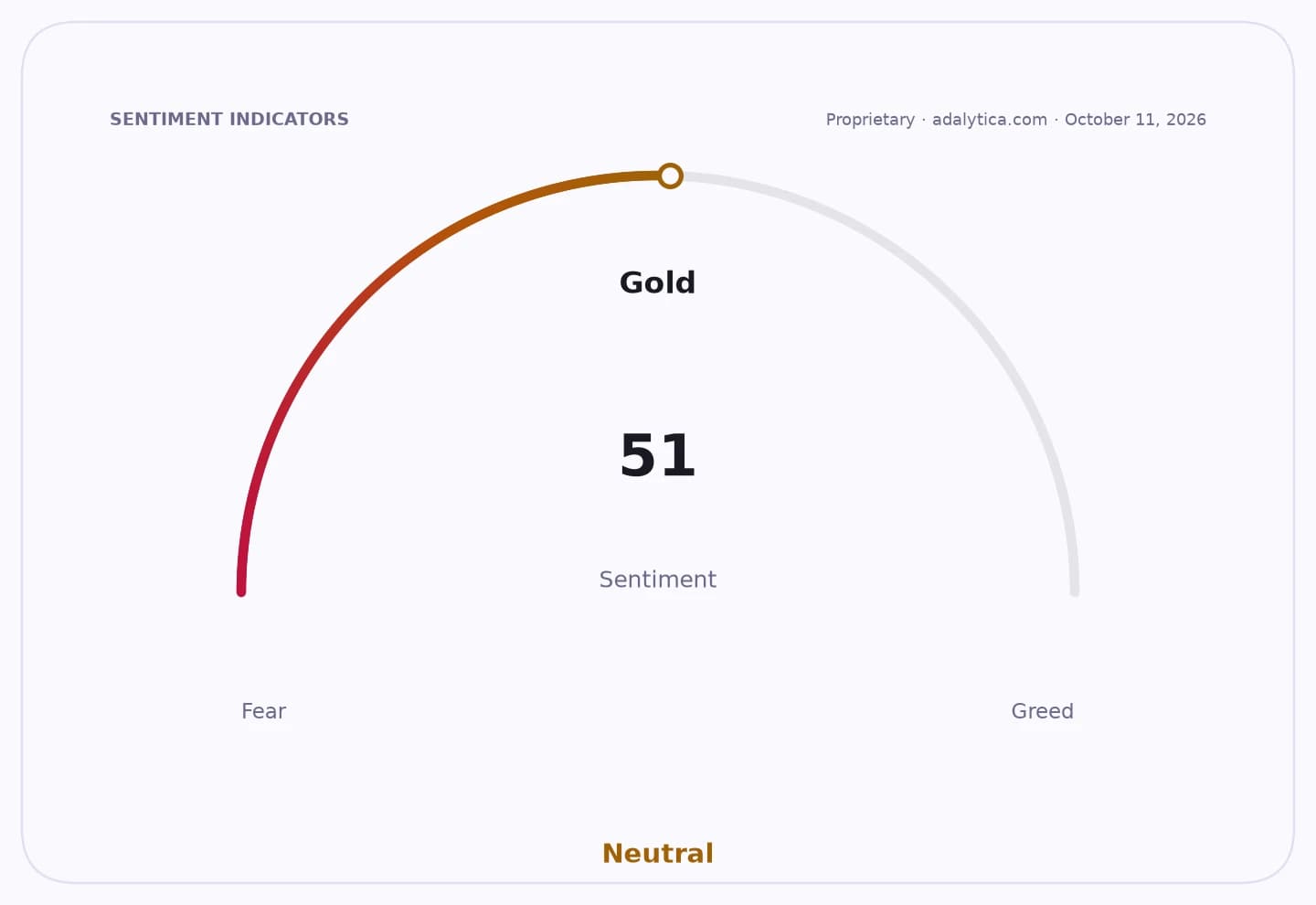
Germany’s police raided about 40 properties, mostly jewelry stores, in a sweeping money-laundering investigation into an alleged international gold-smuggling network that may have moved as much as four tonnes of gold worth up to €210 million to Turkey.
Germany gold-smuggling raid targets jewelry stores
The case matters because it points to a recurring weakness in the physical-gold trade: small, fragmented retail channels can be used to convert dirty cash into portable bullion and move value across borders outside the banking system. For regulators and law enforcement, that makes jewelers a potential choke point in the anti-money-laundering chain. For investors, it reinforces the premium that illicit flows, tighter scrutiny and customs enforcement can place on the logistics and compliance costs of the gold ecosystem, even when they do not change the metal’s underlying investment demand.
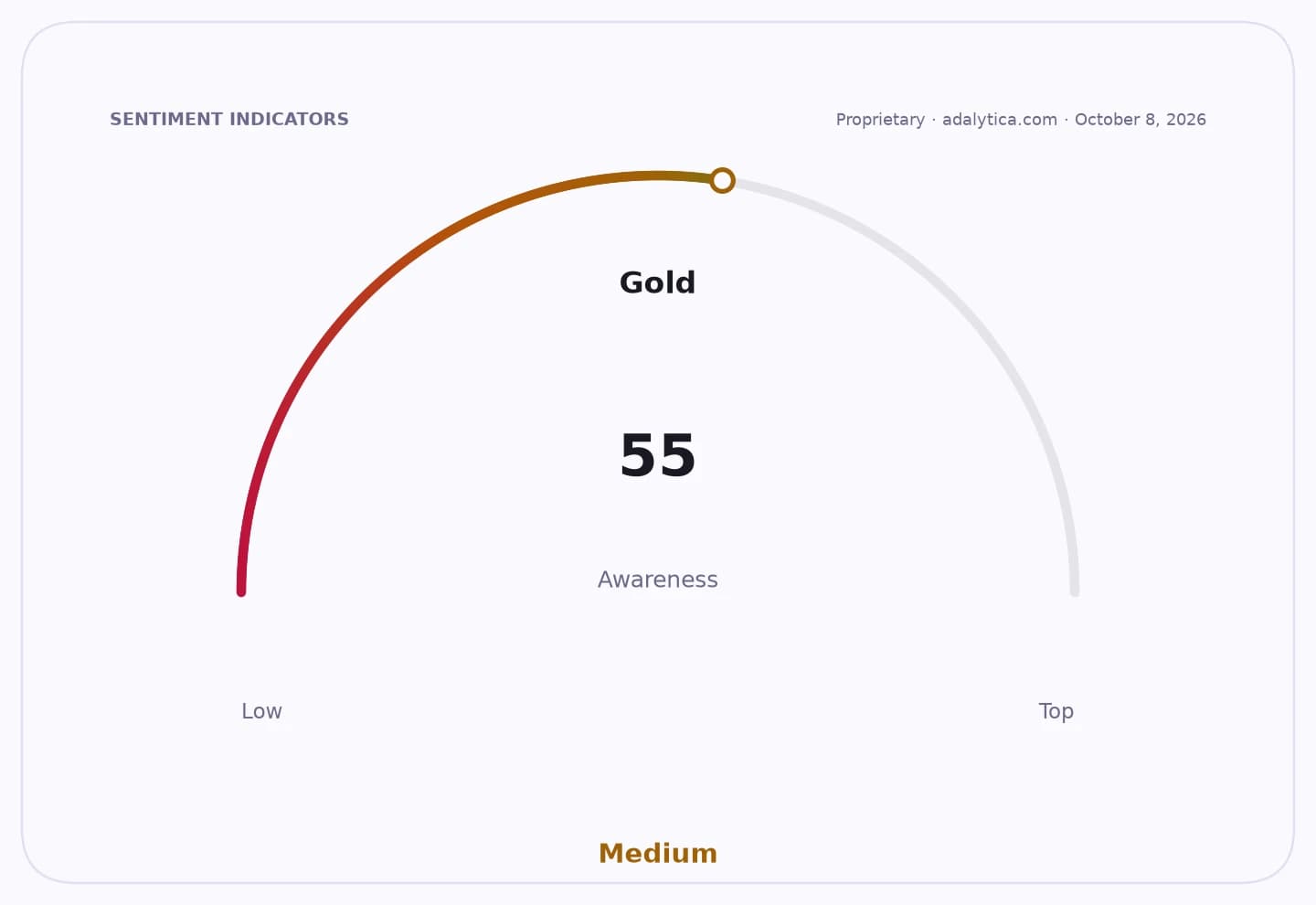
Sentiment IndicatorsⓘProprietary · adalytica.com · October 8, 2026
This is a snapshot — live sentiment, awareness and momentum for 130+ markets update continuously in the dashboard.Open AlphaPulse
According to Cologne police and prosecutors, three suspects were detained and several tens of thousands of euros in cash were seized alongside gold in raids across North Rhine-Westphalia, Berlin and the Netherlands. Investigators said the group is suspected of using proceeds from drug-related crime to buy scrap gold from participating jewelers, melt it down and recast it into bullion bars before shipping them to Turkey.
If confirmed, the alleged six-year scheme would have converted criminal cash into an asset that is liquid, globally accepted and difficult to trace once refined. That is economically important because gold’s role as a store of value extends beyond portfolios and central-bank reserves; it also makes the market attractive to criminal networks seeking a high-value, low-friction transfer mechanism. The reported scale — up to four tonnes — is large enough to matter for enforcement agencies, even if it is modest relative to global bullion flows.
For the gold market, the immediate price impact is likely to be limited. GLD, the SPDR Gold Shares ETF, was recently trading at $378.56, with its 50-day moving average near $396.88 and the 200-day average around $415.77, showing the fund below both longer-term trend markers. Technical readings also showed GLD’s RSI near 29, a level that traditionally points to oversold conditions. Mining shares, tracked by GDX, were at $86.67, also below their 50-day and 200-day averages. Silver ETF SLV was weaker still at $53.44, with its RSI at 25.5. The broader backdrop suggests precious-metals prices remain driven more by macro positioning and risk appetite than by isolated enforcement headlines.
Still, the raid could matter at the margin for dealers, refiners and traders in the physical chain if it leads to broader checks on scrap purchases, customs filings and cross-border shipments. That would tend to benefit compliant operators and larger refiners with stronger documentation systems, while raising costs and legal risk for smaller jewelers and intermediaries. In a market already sensitive to volatility in gold sentiment, any escalation in enforcement could also pressure illicit supply routes and make under-the-radar arbitrage less attractive.
The key question now is whether the investigation stays focused on one network or expands into a wider inquiry into laundering through jewelers and bullion bars. If it does, the story will be less about one smuggling ring than about how easily criminal money can still move through parts of the gold trade that sit just outside traditional financial oversight.
| Entity | Gains | Losses |
|---|---|---|
| Compliant jewelers | ▲Cleaner market access | ▼Higher compliance burden |
| Illegal smuggling network | ▲— | ▼Seizures, arrests, exposure |
| Refined bullion trade | ▲Tighter oversight credibility | ▼More scrutiny and paperwork |
| Law enforcement/regulators | ▲Stronger enforcement reach | ▼Ongoing monitoring costs |