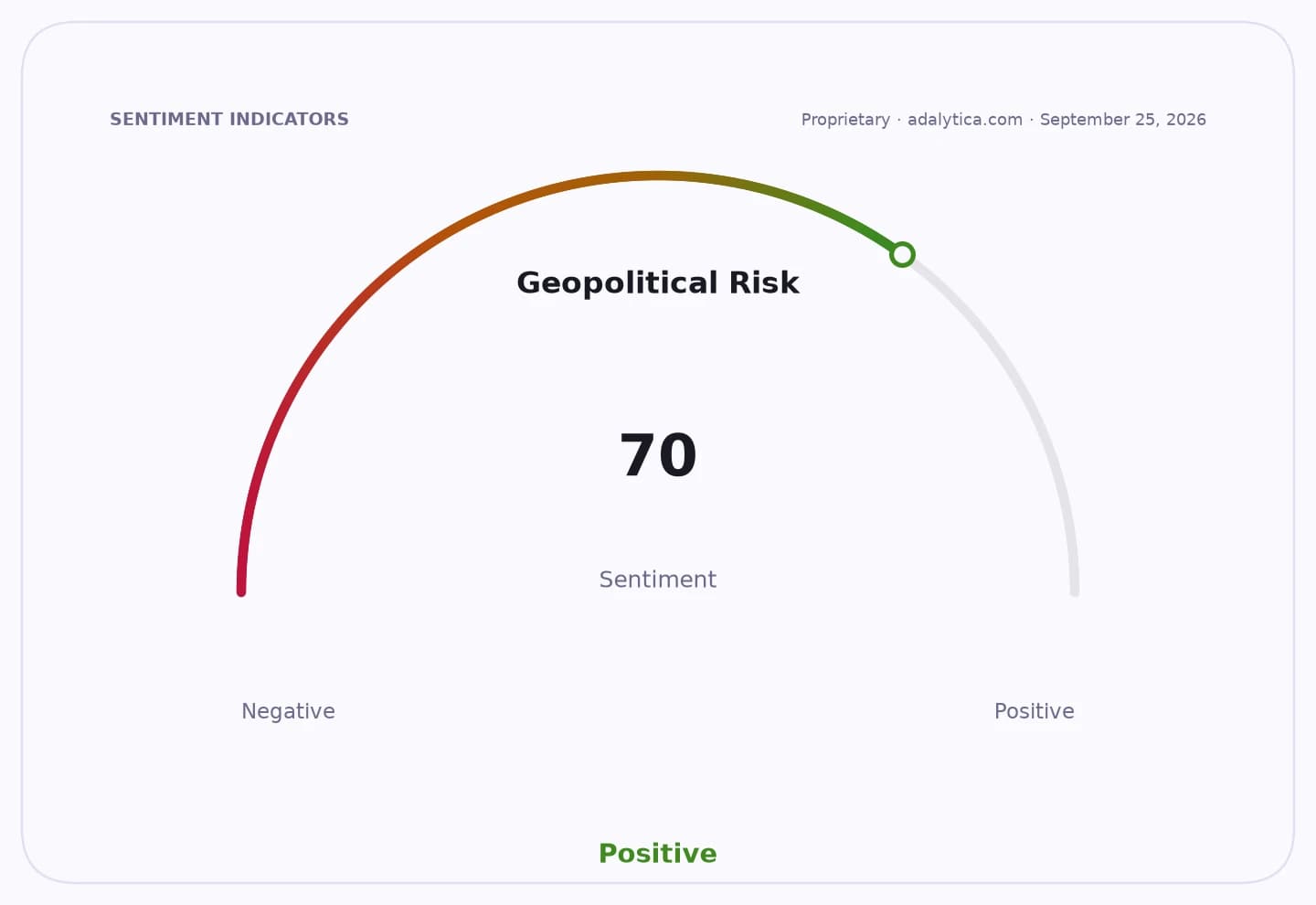
Germany’s manufacturing slowdown is no longer an abstract competitiveness debate: it is turning into a labour-market hit, with industry shedding 177,000 jobs in the past year and the pace of losses running at roughly 10,000 a month. That matters because Germany’s industrial base has long been the engine of growth, export earnings and high-wage employment across the euro area; when factories cut staff, the damage spreads well beyond corporate earnings into household income, tax receipts and domestic demand.
German Industry Losses Signal Broader Eurozone Risk
The immediate economic significance is that Germany is absorbing a structural shock rather than a cyclical pause. Industrial production has barely managed to edge higher in recent months, but the gain has been too weak to offset years of stagnation and the pressure on core sectors such as autos, chemicals and machinery. The backdrop is especially troubling because those industries sit at the heart of Germany’s export model and employ a large share of the country’s skilled workforce. A labour market that can still look relatively resilient in headline unemployment terms can mask a deeper erosion in manufacturing jobs, where the pain tends to arrive before the broader economy rolls over.
Sentiment IndicatorsⓘProprietary · adalytica.com · July 21, 2026
This is a snapshot — live sentiment, awareness and momentum for 130+ markets update continuously in the dashboard.Open AlphaPulse
The drivers are familiar but increasingly severe. German exporters are being squeezed by weaker global demand, higher energy costs than pre-war norms, and intensifying competition from China, which has moved from customer to rival in several capital-intensive industries. The auto sector is the clearest example. Recent estimates suggest as many as 726,000 jobs in Germany’s automotive complex are at risk as producers, suppliers and equipment makers confront slower demand, electric-vehicle disruption and China’s growing industrial capacity. That is a systemic issue, not a company-specific one: every lost job in the industrial core tends to ripple through suppliers, logistics firms, local service businesses and municipal budgets.
For investors, the message is that Germany’s problem is now both macro and market-facing. The DAX and the iShares MSCI Germany ETF, EWG, have both struggled to sustain upside momentum, with recent technical readings showing prices hovering near their 50-day moving averages and momentum flattening. That does not in itself prove a new bear market, but it does suggest investors are unwilling to pay up for a cyclical rebound that has yet to materialize. Meanwhile, the broader risk appetite in global equities has weakened sharply, with Adalytica’s S&P 500 Trade Signals showing sentiment in “Fear” and down steeply over the past month, underscoring how quickly investors are marking down macro-sensitive assets when growth concerns rise.
The China shock matters here because it is not only displacing output; it is eroding the pricing power and employment base that supported Germany’s industrial premium for decades. German firms can still argue that engineering depth, brand strength and advanced manufacturing should preserve competitiveness. The bear case is that those advantages are being narrowed by Chinese rivals who are scaling faster, cheaper and, in some segments, increasingly on par technologically. If that persists, Germany may face a prolonged adjustment in which fewer workers produce less value added, and companies respond with restructuring rather than rehiring.
There is a policy dimension as well. Berlin faces pressure to lower energy costs, speed permitting, support investment and defend trade interests without triggering a broader escalation with Beijing. But the room for manoeuvre is limited. A weaker industrial base constrains fiscal choices, and any attempt to cushion the decline risks slowing the reform agenda needed to restore productivity growth. The alternative—doing too little—would likely leave Germany locked into a pattern of modest industrial output, elevated job losses and rising political strain in regions dependent on manufacturing.
For markets, the most important question is whether this is the beginning of a longer deindustrialization cycle or merely the trough of a difficult adjustment. The bullish view is that German industry is under-earning today but will benefit from lower inflation, eventual rate relief and investment tied to the energy transition and re-shoring of sensitive supply chains. The bearish view is that China’s manufacturing rise, Europe’s energy handicap and Germany’s sluggish domestic demand are combining into a persistent competitiveness gap that cannot be closed quickly.
Either way, the employment data are a warning. Germany is not just losing jobs; it is losing industrial heft. If that continues, the consequences will reach from wages and consumer spending to corporate margins, government revenues and the euro zone’s growth outlook.
| Entity | Gains | Losses |
|---|---|---|
| Chinese manufacturers | ▲Export share | ▼German industrial share |
| German consumers | ▲Lower import prices | ▼Industrial wages |
| Auto rivals outside Germany | ▲Market openings | ▼German suppliers |
| German policymakers | ▲Reform urgency | ▼Fiscal room and credibility |