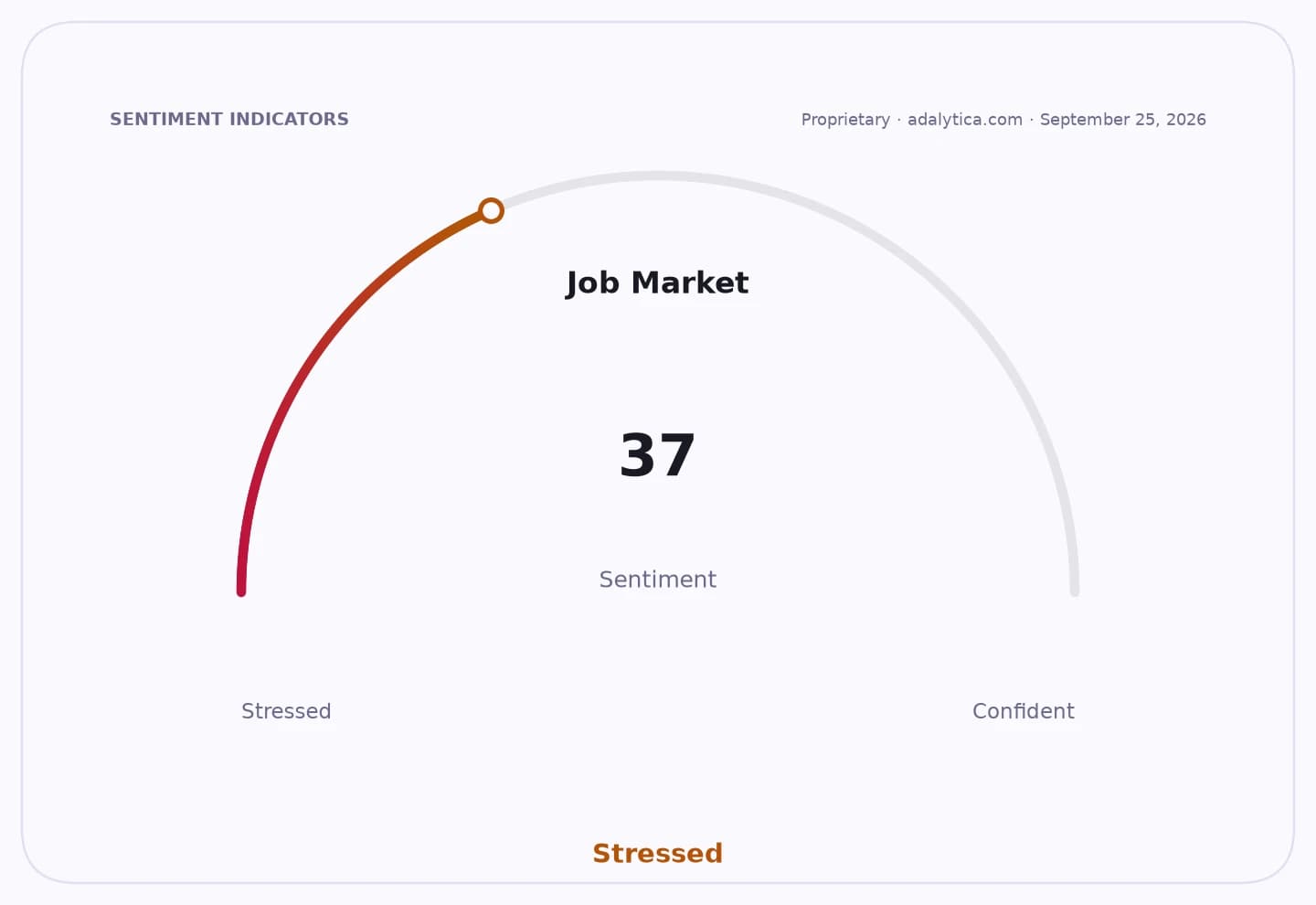
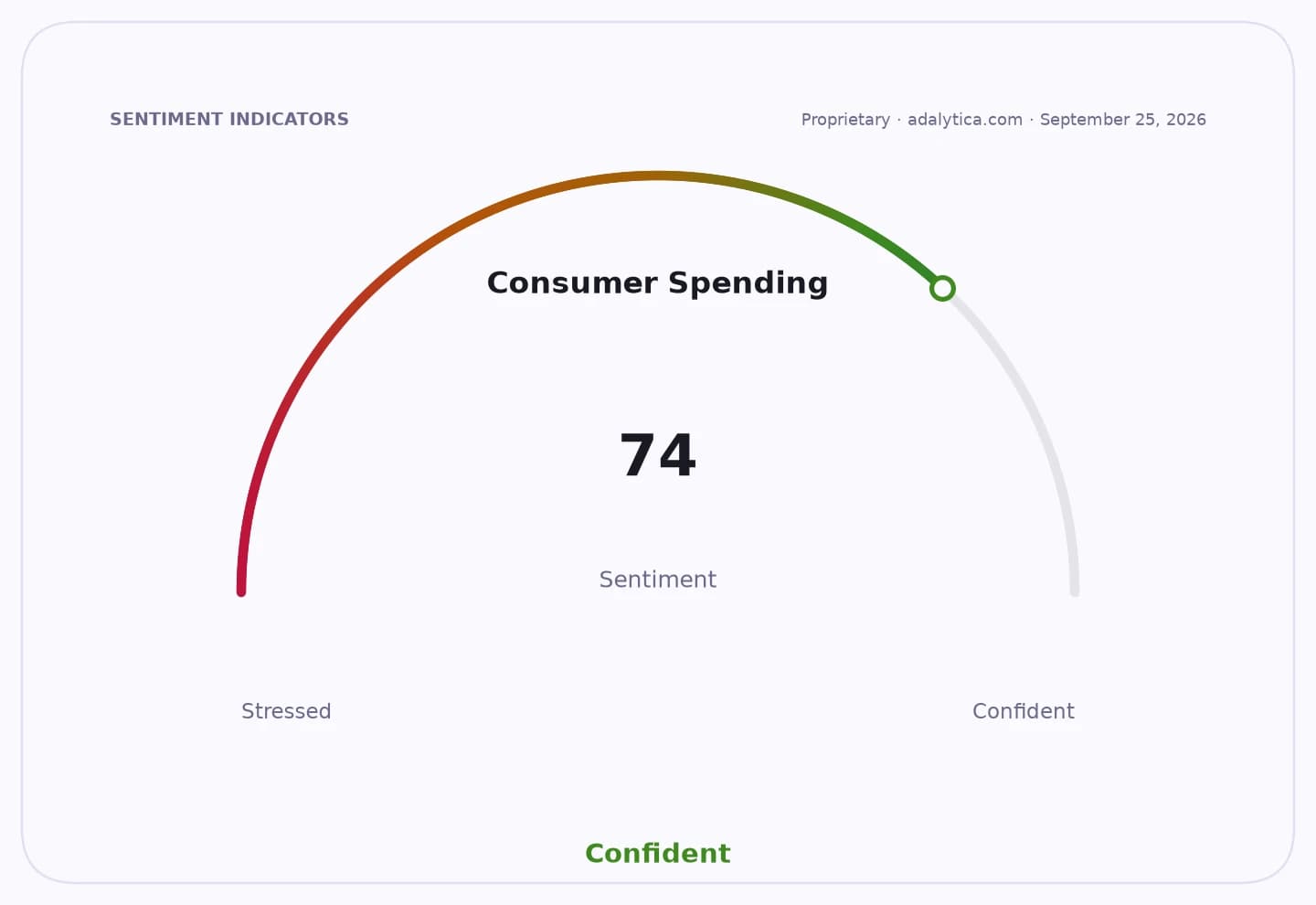
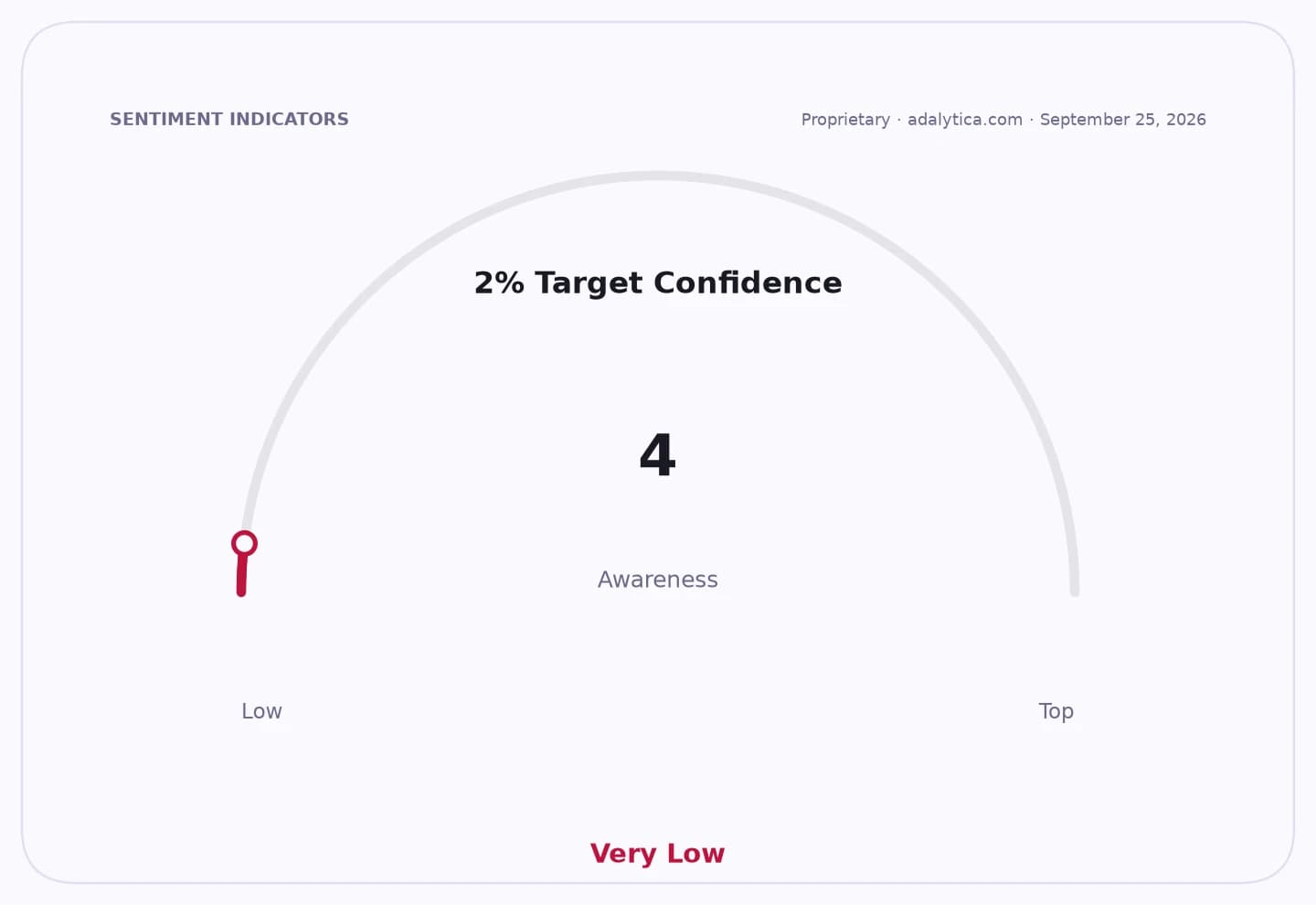
German investor confidence is turning more constructive, with the ZEW Economic Sentiment gauge pointing to firmer expectations for the euro-area economy just as global markets price a softer landing and the U.S. stays out of recession, supporting a broad risk-on move in equities and cyclical assets.
Germany ZEW Sentiment Improves as Risk Assets Rebound
The shift matters because ZEW is one of the earliest barometers of how financial professionals see the next six months, and its direction often feeds into expectations for industrial output, exports and corporate earnings across Europe. A better reading suggests investors are becoming less worried about a prolonged manufacturing slump and more open to the idea that monetary easing and resilient consumer demand can stabilize growth.
Sentiment IndicatorsⓘProprietary · adalytica.com · August 18, 2026
This is a snapshot — live sentiment, awareness and momentum for 130+ markets update continuously in the dashboard.Open AlphaPulse
That macro backdrop is showing up in markets. The S&P 500, tracked by SPY, has rebounded to 776.34, well above its 50-day moving average of 748.54 and 200-day average of 702.75, while RSI readings around 75 indicate the move is extended. Europe has joined the recovery trade too: EFA sits at 108.64, above both its 50-day and 200-day averages, with RSI near 78. EEM has also recovered from a sharp July selloff and is back above its 50-day average, suggesting investors are rotating into global risk assets rather than hiding in defensives.
The ZEW improvement is especially relevant for Europe because it comes against a backdrop of steady growth rather than recession. U.S. recession tracking, as reflected by the USRECM series, remains at zero, while U.S. 10-year Treasury yields are holding around 4.64%-4.68%, a level that keeps financial conditions tighter than many would like but still compatible with continued expansion. For European investors, that combination reduces the odds of a global downturn and supports exporters, banks and industrials that depend on external demand.
The bull case is that lower inflation and easier policy eventually feed through to credit demand and capital spending, allowing Europe’s cyclical names to catch up with U.S. equities. The bear case is that sentiment may be getting ahead of fundamentals: export demand is still vulnerable to trade shocks, rate cuts have a lag, and any renewed rise in long-dated yields could undercut valuation support. With SPY’s Adalytica trade-signal sentiment at Neutral and recent 1-week changes still negative, the market is not yet in a euphoric phase, but it is clearly willing to reward improving macro data.
For investors, the key question is whether better ZEW sentiment is the start of a broader earnings upgrade cycle or just another short-lived bounce in expectations. If incoming activity data confirms the improvement, European equities — especially cyclicals and exporters — could continue to outperform. If not, the market may quickly refocus on weak growth, sticky funding costs and the limits of policy support.
| Entity | Gains | Losses |
|---|---|---|
| European exporters | ▲Better demand outlook | ▼Strong euro risk |
| Cyclical equities | ▲Higher earnings hopes | ▼Growth disappointments |
| Bond bears | ▲Steady yield backdrop | ▼Flight-to-safety bids |
| Defensive sectors | ▲Relative underweight appeal | ▼Receding risk aversion |