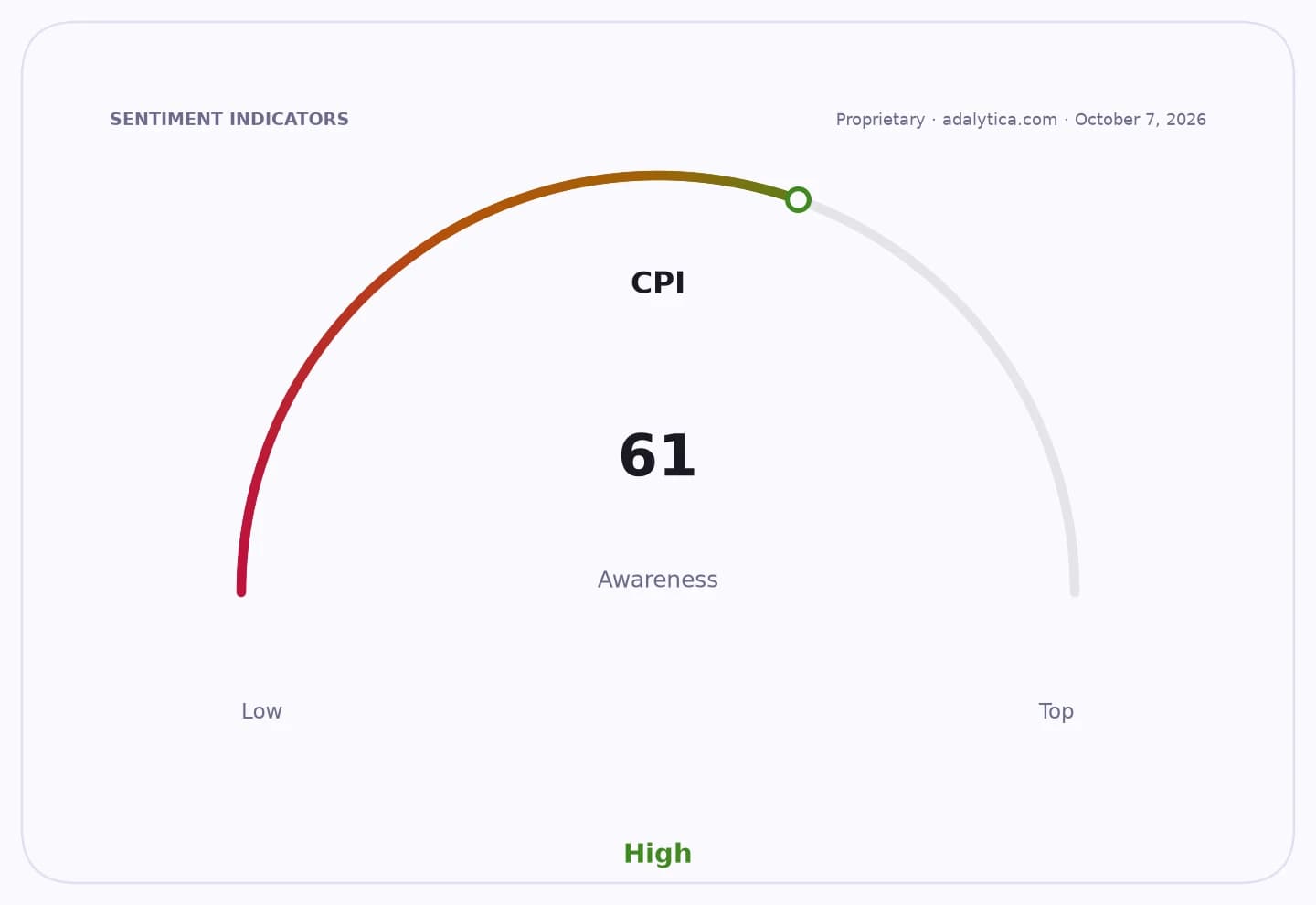
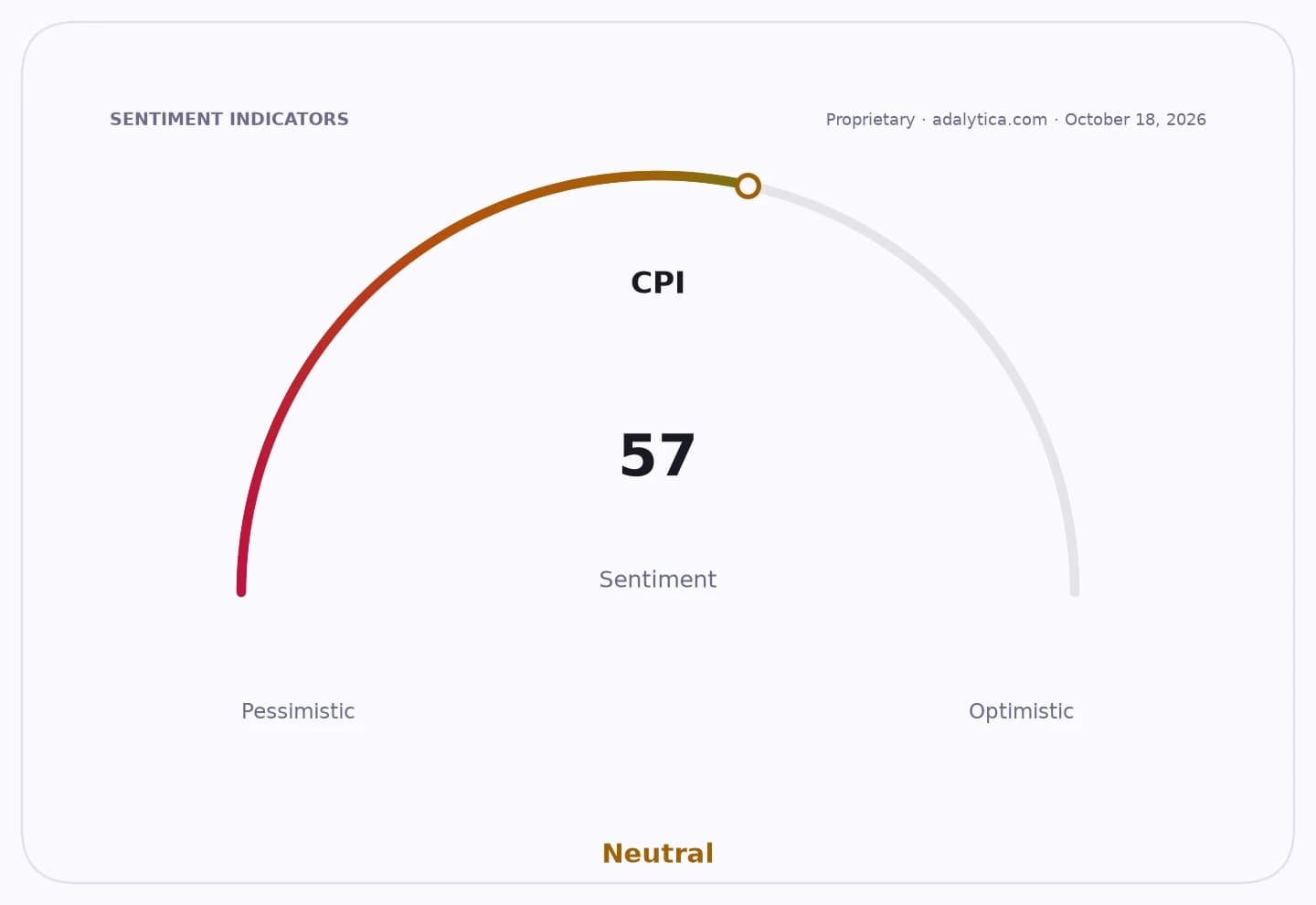
Ghana’s inflation remains in a favourable range even after ticking up to 5.2% in September, reinforcing the view that price stability has been restored enough to give policymakers room to focus on reserves, debt and currency volatility.
Ghana Inflation Rises to 5.2% as Reserves Stay in Focus
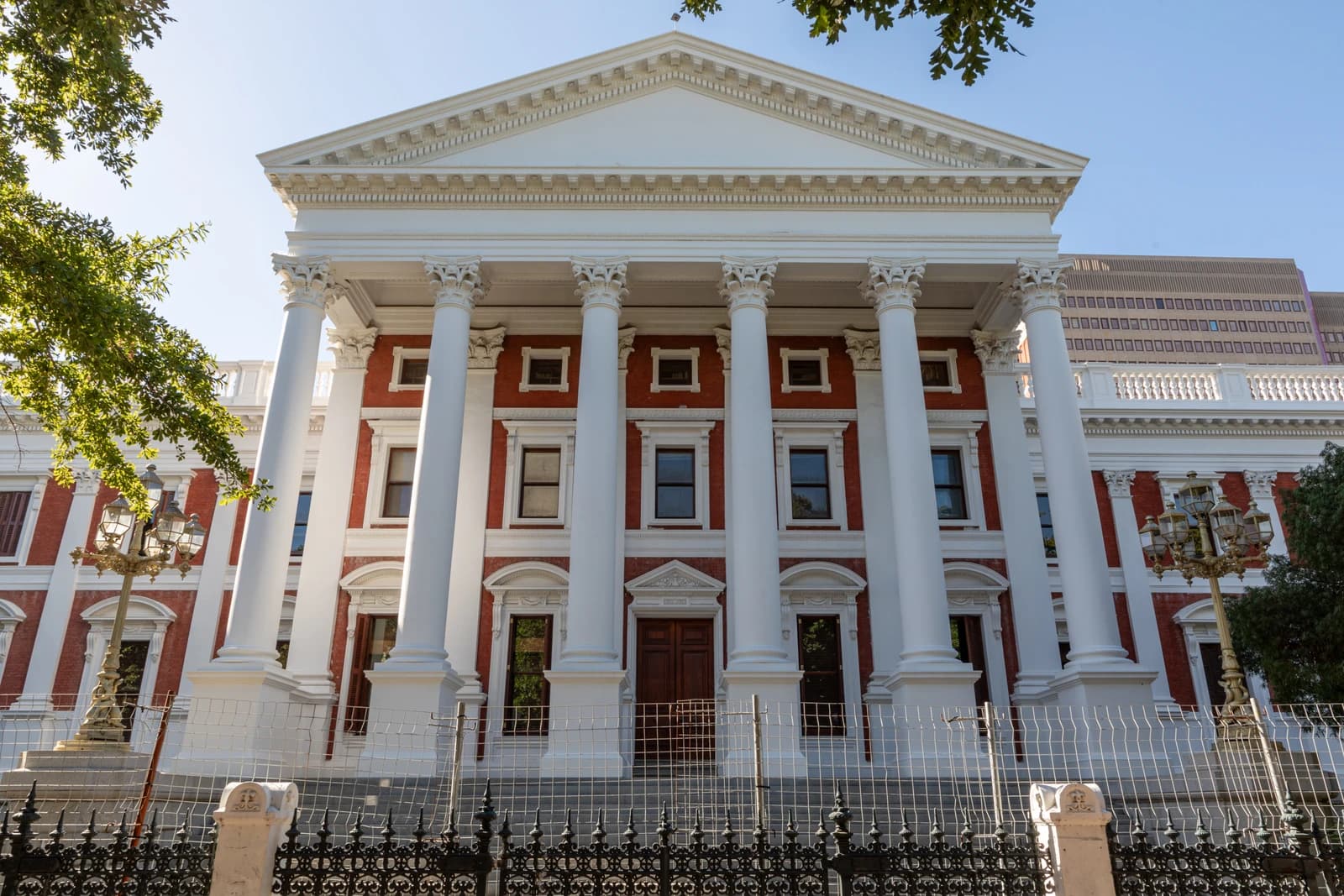
That was the message from former Bank of Ghana research director Philip Abradu-Otoo, who argued the country should be judged by its inflation-targeting framework rather than by simple comparisons with peers that operate currency pegs. In his view, Ghana’s inflation profile reflects a policy regime that uses interest rates as the main tool to contain prices, unlike some West African economies whose currencies are anchored to the euro and benefit from the stability of that exchange-rate arrangement.
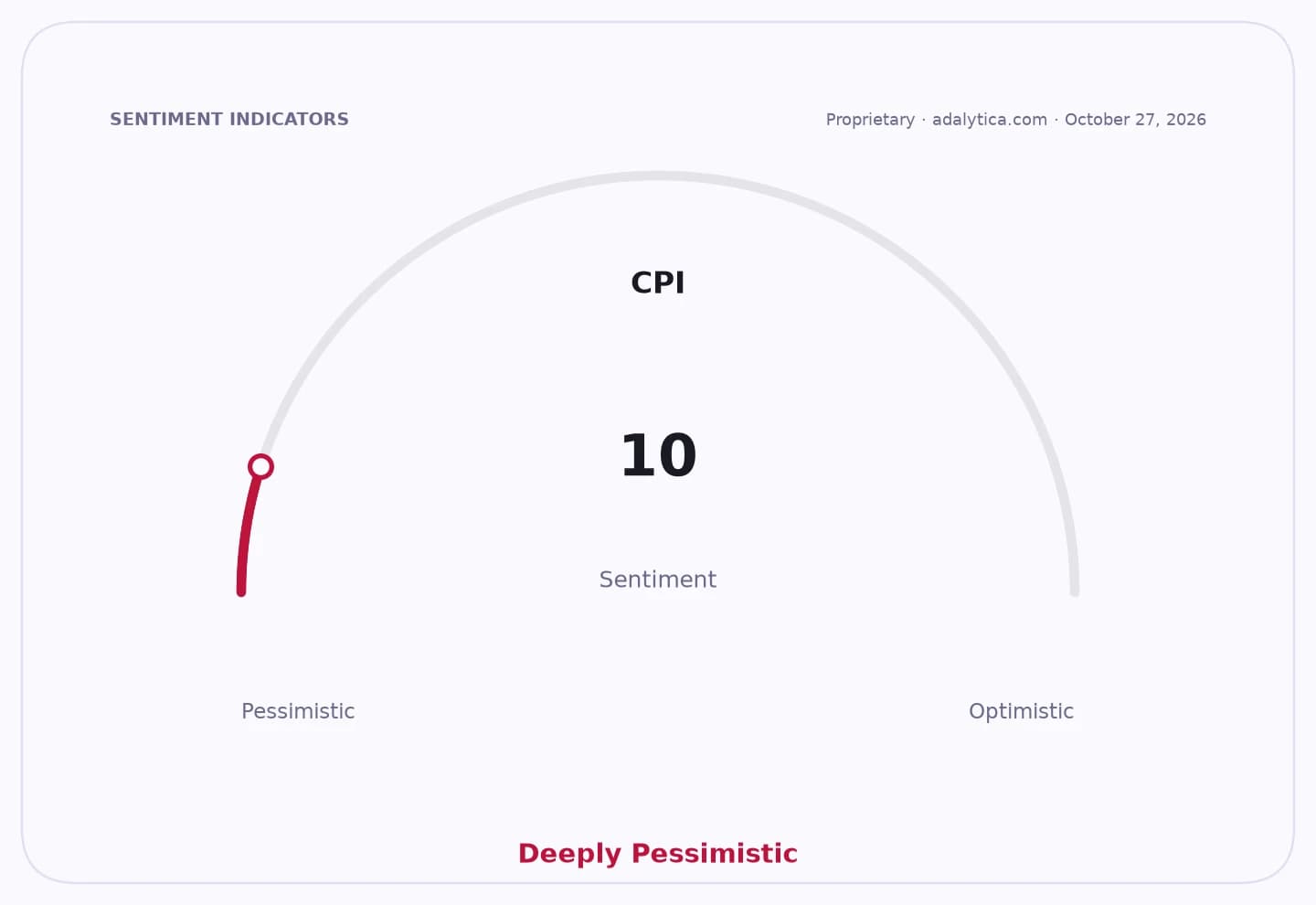
Sentiment IndicatorsⓘProprietary · adalytica.com · October 27, 2026
This is a snapshot — live sentiment, awareness and momentum for 130+ markets update continuously in the dashboard.Open AlphaPulse
The distinction matters economically because inflation targeting leaves Ghana more exposed to domestic policy choices, exchange-rate swings and external shocks, but also gives the central bank more flexibility than a rigid peg. For investors, the implication is that a 5.2% reading is not just a headline number: it is evidence that inflation has cooled from crisis levels and is now low enough to support a steadier nominal environment for bonds, consumer demand and corporate planning, even if price pressures have not fully disappeared.
Abradu-Otoo said Ghana’s recent inflation performance “by and large” remained in “very good territory,” a notable assessment at a time when inflation dynamics across emerging and frontier markets remain closely tied to energy prices, currency moves and fiscal credibility. The latest reading also arrives alongside signs that the broader macro picture is stabilising rather than worsening.
He also defended the Bank of Ghana’s recent drawdown in international reserves, saying disruptions to gold exports during the Middle East crisis constrained reserve accumulation in the first seven months of the year and forced the central bank to use holdings to support trade and activity. Gold exports resumed in September, he said, raising expectations that reserve inflows will improve by year-end.
That links directly to investors’ focus on Ghana’s external balance. Lower inflation without commensurate reserve losses would typically strengthen confidence in the cedi and in local-currency assets. But if reserve rebuilding remains slow, the market will keep pricing in a risk premium for the currency and sovereign debt, especially after the reported 10.8% depreciation so far this year.
Abradu-Otoo also said a modest rise in debt figures was largely an exchange-rate effect rather than fresh borrowing, underscoring how currency weakness can mechanically inflate public debt ratios even when government financing is not accelerating. For fixed-income investors, that distinction is crucial: it suggests the debt story is still being shaped as much by FX valuation as by new fiscal slippage.
The broader narrative is that Ghana is moving from inflation crisis toward macro normalisation, but the recovery is incomplete. Inflation near 5% is a marked improvement, yet the country still faces the twin tests of rebuilding reserves and stabilising the exchange rate. If gold export receipts recover as expected, the outlook for the cedi and local debt could improve into year-end. If not, the market may treat the current inflation calm as fragile rather than durable.
| Entity | Gains | Losses |
|---|---|---|
| Bank of Ghana | ▲Policy credibility | ▼Reserve buffers if exports stay weak |
| Ghana bonds | ▲Lower inflation risk | ▼FX-linked debt risk |
| Cedi | ▲Easier stabilisation | ▼Depreciation pressure |
| Consumers | ▲Slower price growth | ▼Imported-cost pass-through |