New global bond issuance is moving into a more selective market, with sovereign and corporate borrowers still able to clear deals but paying up for duration as U.S. yields stay elevated and investors demand more compensation for risk.
Global bond issuance clears at 4.66% U.S. yields

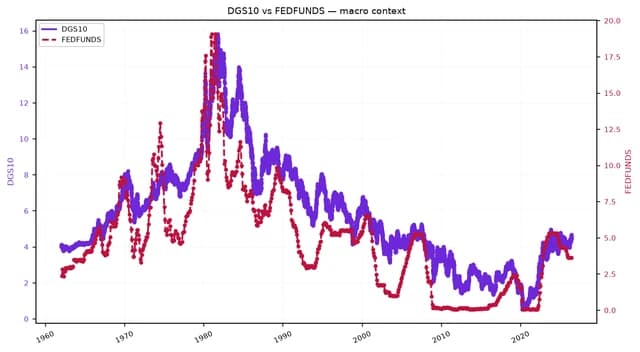
That matters because the benchmark U.S. 10-year Treasury yield is sitting around 4.66%, while the Fed funds rate remains near 3.63%, a spread that keeps borrowing costs structurally high for governments, companies and households. In plain English: the world can still issue debt, but the price of money is no longer cheap, and that changes everything from balance-sheet strategy to merger financing to sovereign refinancing plans.
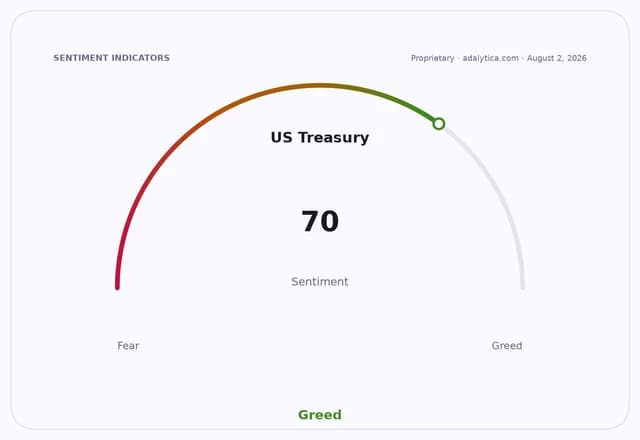
Sentiment IndicatorsⓘProprietary · adalytica.com · August 2, 2026
This is a snapshot — live sentiment, awareness and momentum for 130+ markets update continuously in the dashboard.Open AlphaPulse
For investors, the message is equally important. The latest price action in bond proxies says the market is not yet pricing a decisive fall in rates. TLT, the long-duration Treasury ETF, has slipped to about $82.25, below its 50-day moving average and under its 200-day average, with RSI readings in the low 30s and a negative MACD trend — classic signs that long bonds are still under pressure. LQD, the investment-grade corporate bond ETF, is holding up better at $106.25 but is also trading beneath its 50-day and 200-day moving averages, a reminder that credit can absorb only so much rate pressure before spreads and demand become more vulnerable.
The deeper story is that global bond markets are being pulled in two directions. On one side, borrowers are rushing to fund deficits, refinance maturities and lock in financing before yields move higher again. On the other, investors are still discriminating aggressively between issuers, maturities and currencies. That is exactly the environment in which new global bond issues matter most: issuance can keep flowing, but only to borrowers with enough scale, credibility or policy support to clear at acceptable levels.
The opportunity set is not broad-based duration exposure. It is the plumbing around the market. Big banks, debt underwriters, trading desks and custodians can benefit from the issuance wave even when rates stay sticky. Bank of America’s latest filing showed higher debt issuance fees, while Goldman Sachs and JPMorgan have both been active in public debt markets this month. That is the kind of steady transaction flow that supports capital-markets revenue even if the bond market itself remains choppy.
The macro backdrop reinforces the thesis. The dollar is still firm enough to keep pressure on foreign borrowers, while global investors continue to favor U.S. assets over weaker sovereign credits. In that setting, emerging-market and lower-rated issuers will likely face the highest financing hurdle, while top-tier investment-grade borrowers and sovereigns with deep market access can still tap demand. That creates a widening gap between winners and losers in the new issue market.
For investors, the takeaway is straightforward: the bond market is not offering a clean rally signal, but the issuance cycle itself is investable. The best positioning here is in the toll roads of debt capital formation — the banks that arrange it, the market-makers that intermediate it, and the high-quality credits that can issue through volatility. Until yields break decisively lower, new global bond issues will reward discipline, not indiscriminate duration risk.
| Entity | Gains | Losses |
|---|---|---|
| Global investment banks | ▲Underwriting fees | ▼Duration risk |
| High-grade sovereigns | ▲Reliable funding access | ▼Cheaper refinancing hopes |
| Long-duration Treasury bulls | ▲Inflation hedge appeal | ▼Price pressure |
| Lower-rated borrowers | ▲Little immediate benefit | ▼Higher funding costs |




