Gold jewelry prices have risen sharply, and the biggest reason is simple: the metal underneath it is becoming more expensive in dollars and in local currency terms.
Gold hits $4,134.3; Vietnam jewelry prices rise

That matters because jewelry is the most visible, consumer-facing part of the gold market. When bullion pushes higher, fabricators, retailers and shoppers all feel it fast — especially in markets where gold is both adornment and a store of value. On Aug. 5, the world gold price climbed to $4,134.3 an ounce, while in the domestic market 21-karat prices held firm after a period of volatility. SJC gold bars traded around 138 million to 141 million Vietnamese dong a tael, and gold rings even fetched more than SJC bars as strong local demand kept a floor under prices.
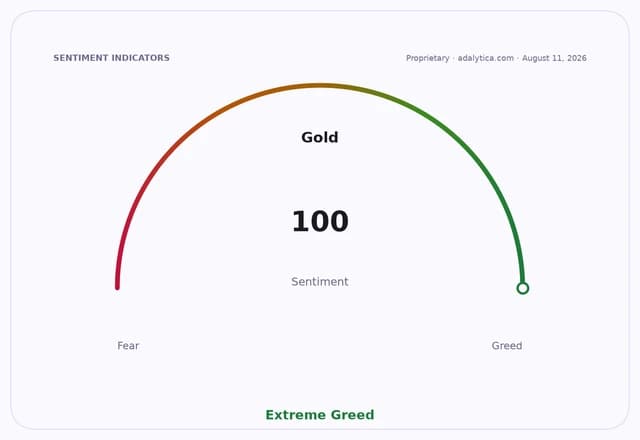
Sentiment IndicatorsⓘProprietary · adalytica.com · August 11, 2026
This is a snapshot — live sentiment, awareness and momentum for 130+ markets update continuously in the dashboard.Open AlphaPulse
For investors, the key takeaway is that this is not just a jewelry story. It is a real-time read on inflation expectations, currency weakness and demand for hard assets. Gold has been benefiting from a softer U.S. dollar and growing anticipation around the Federal Reserve’s next move on interest rates. When traders expect lower real yields, gold becomes more attractive — and that flows through to miners, bullion-backed funds and companies tied to jewelry demand.
The move also helps explain why gold stocks have stayed lively even after sharp swings. Newmont and other producers remain leveraged to metal prices, while Wheaton Precious Metals benefits from the same backdrop through its streaming model. Shares of Signet Jewelers, meanwhile, are more exposed to the margin pressure that comes when higher input costs meet price-sensitive consumers. For long-term investors, that split matters: rising gold can be a tailwind for owners of the metal and miners, but a headwind for retailers that have to pass costs along.
Technical readings in related gold assets also show how strong the move has been. GLD’s Adalytica gold fear-and-greed gauge is at “Extreme Greed,” while the U.S. dollar trade signals are also flashing “Extreme Greed,” underscoring how crowded the macro trade has become. That does not make gold less investable, but it does suggest volatility can stay elevated as the market digests every Fed headline and currency move.
For investors, the bigger narrative is durability. Gold jewelry prices are rising because the same forces supporting bullion — policy uncertainty, currency weakness and demand for perceived safety — are still in place. If you own gold miners, streaming names or a diversified basket that includes them, this backdrop remains constructive. If you are a jewelry buyer, the cost of waiting could keep climbing. Either way, this is a story worth watching, not chasing.
| Entity | Gains | Losses |
|---|---|---|
| Gold miners | ▲Higher realized prices | ▼Margin risk if costs rise |
| Gold-backed funds | ▲Stronger demand | ▼Choppy sentiment if rates shift |
| Jewelry buyers | ▲Less if they buy early | ▼Higher retail prices |
| Retail jewelers | ▲Potentially higher ticket sales | ▼Squeezed by input costs |




