Gold steadied near $4,140 an ounce on Thursday, while crude oil and wheat also turned firmer, as traders balanced a softer dollar, a still-elevated U.S. yield backdrop and lingering uncertainty over Federal Reserve policy.
Gold steadies near $4,140 as oil and wheat rise
The move matters because commodities are trading less on one-off headlines than on the interaction between real rates, the dollar and growth expectations. A weaker dollar typically supports dollar-priced raw materials, while higher Treasury yields raise the opportunity cost of holding non-yielding assets such as gold. That tug of war is showing up across the complex, with investors reluctant to chase a sustained breakout in either direction.
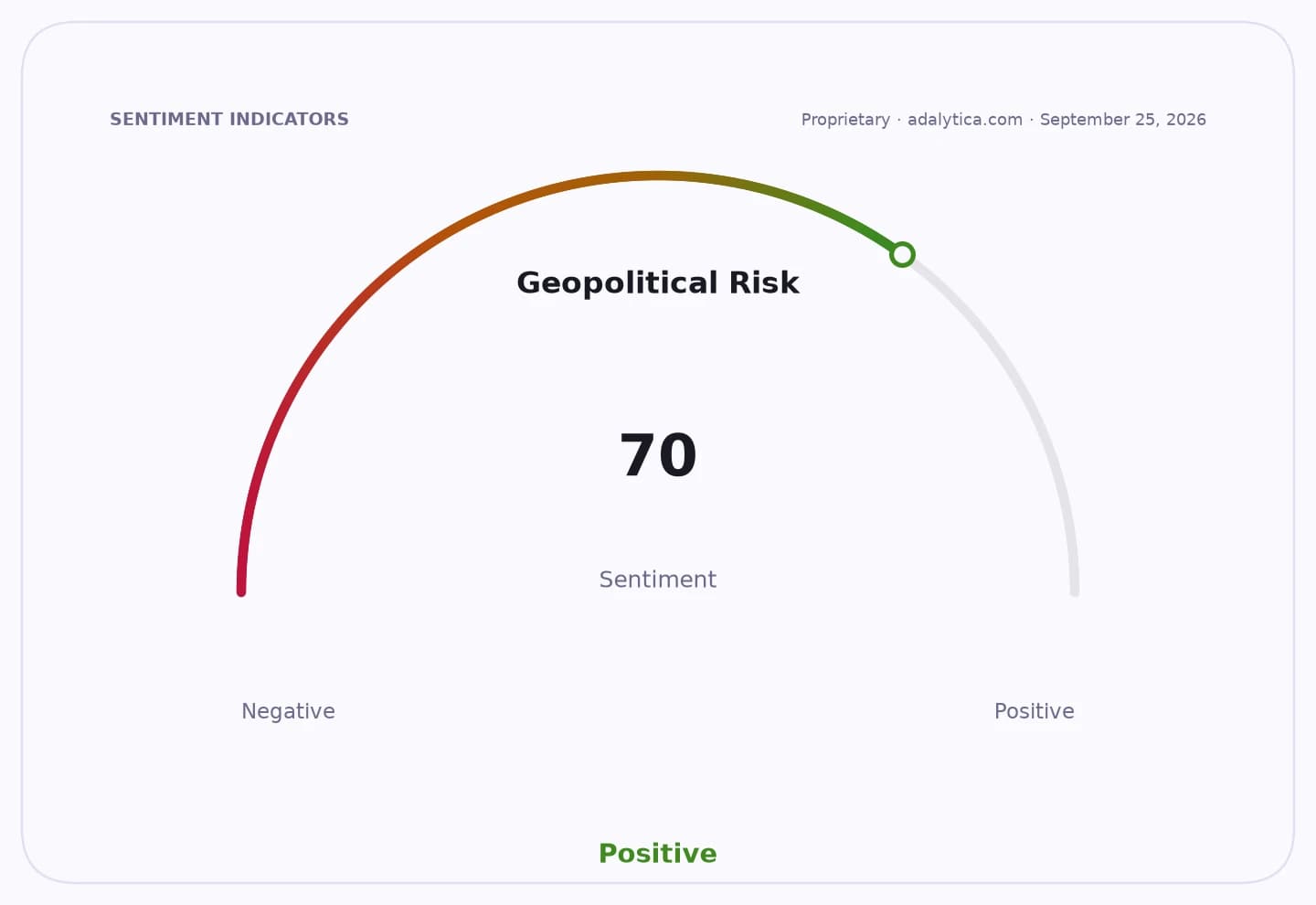
Sentiment IndicatorsⓘProprietary · adalytica.com · July 30, 2026
This is a snapshot — live sentiment, awareness and momentum for 130+ markets update continuously in the dashboard.Open AlphaPulse

Gold finished Thursday at $4,140, up from $4,034.70 a day earlier, but still below this month’s highs above $4,200. The metal has been volatile over recent weeks, with standard technical readings showing it still above its 50-day moving average but well under the extreme momentum seen earlier in the quarter. RSI readings had cooled from overbought levels, suggesting the market was digesting the prior surge rather than starting a fresh trend.
Crude oil also recovered to $83.38 a barrel after dropping to $79.26 on July 28, helped by a modest improvement in risk sentiment and continued sensitivity to supply headlines. Even after the bounce, oil remains lower than its early-March spike and has been swinging sharply as traders reassess inventories, Middle East risk and the outlook for demand. The 10-year Treasury yield, meanwhile, edged down to 4.61%, easing some pressure on inflation hedges and other rate-sensitive trades.
Wheat futures added to the mixed commodity tone, rising to 681.5 cents a bushel from 660.75 cents on July 29. The rebound keeps the grain above its 200-day moving average and well above levels seen earlier in the year, though prices remain far from the peaks that typically trigger a broader inflation scare. For food producers and livestock users, that means input costs are still elevated even if they are no longer accelerating.
The macro backdrop is doing much of the work. Adalytica’s S&P 500 trade signals show neutral sentiment but extreme awareness, while its U.S. dollar gauge points to extreme fear, reinforcing the idea that markets are wary of sudden swings in currencies and policy expectations. CPI sentiment remains in extreme fear territory, underscoring how closely commodity traders are watching the next inflation readout and the Fed’s reaction function.
For investors, the setup favors range trading over clean directional bets. Gold bulls still have the most obvious macro case if real yields drift lower and the dollar stays under pressure. Oil bulls can point to supply sensitivity and inventory discipline, but they need demand to hold up. Wheat traders face the usual weather and export-risk mix, with pricing still vulnerable to any shift in crop prospects or shipping conditions.
The next catalysts are straightforward: Fed communication, U.S. economic data and any fresh geopolitical or inventory shocks. Until those arrive, Thursday’s trade suggests commodities remain a macro barometer more than a pure supply story.
| Entity | Gains | Losses |
|---|---|---|
| Gold bulls | ▲Safe-haven demand | ▼Rate-hike repricing |
| Oil producers | ▲Higher realized prices | ▼Demand-sensitive consumers |
| Wheat farmers | ▲Firmer crop prices | ▼Food manufacturers |
| Importers / consumers | ▲Softer dollar | ▼Higher input costs |