Gold’s biggest headwind may finally be easing: cooler U.S. inflation data is reviving bets that the Federal Reserve is done with aggressive rate hikes, and that’s giving bullion room to run again.
Gold Rises as Cooler Inflation Lifts Fed Bets

For investors, that matters because gold tends to struggle when real yields and the dollar are climbing. When inflation cools, the market often starts to price in a more patient Fed, which can soften Treasury yields and take some pressure off the dollar. That combination has historically been a friend to gold, and the latest move suggests the metal is trying to reclaim that role.
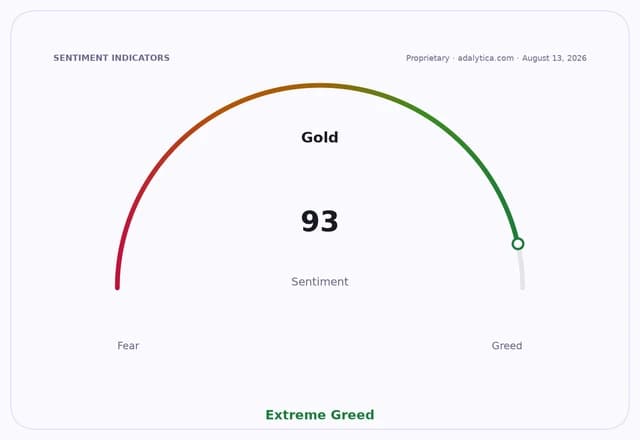
Sentiment IndicatorsⓘProprietary · adalytica.com · August 13, 2026
This is a snapshot — live sentiment, awareness and momentum for 130+ markets update continuously in the dashboard.Open AlphaPulse
The market reaction has been sharp. GLD, the largest gold ETF, closed at $399.56 on Aug. 13 after trading as high as $404.03 in the session, just shy of its upper Bollinger Band at $407.77. The 50-day moving average sits far below at $381.44, a sign of how fast gold has rebounded. The RSI at 71.8 shows the ETF is back in technically overbought territory, which is a reminder that the trend is strong but stretched.
Miners have responded even more forcefully. GDX rose to $88.21, with its RSI at 72.5 and the fund holding above both its 50-day moving average of 78.6 and its 200-day moving average of 87.72. That tells you the move is not just a one-day inflation trade; it reflects renewed confidence that the gold price can stay elevated long enough to improve margins for producers.
The macro backdrop is the real story. U.S. consumer prices are forecast to rise just 0.35% in August after a flat July reading, a much calmer inflation profile than investors have grown used to. At the same time, the 10-year Treasury yield has edged up to about 4.73%, but the broader message from the inflation data is that the Fed has less reason to keep tightening. If that view sticks, gold may be entering a friendlier phase after spending months fighting higher rates and a firmer dollar.
Adalytica’s Gold Fear & Greed Index also shows how quickly sentiment has turned. The gauge is at 93, labeled Extreme Greed, up 72 points over the past month. That does not mean gold is due to collapse; it does mean enthusiasm has surged fast, and investors should expect volatility. Still, when sentiment, momentum and macro all line up, trends can persist far longer than skeptics expect.
The longer-term case for gold remains intact. Inflation is cooling, but it is not disappearing. Central banks are still balancing growth risks, fiscal deficits remain large, and geopolitical stress never really leaves the market. In that world, gold does what it has always done best: it serves as a store of value when confidence in paper assets is fragile.
For long-term investors, the question is not whether gold will move every day — it will. The question is whether the biggest drag from rising rates is peaking. This latest inflation reading says yes, or at least that the burden is lighter than it was a few months ago. That makes gold worth watching, especially for diversified portfolios that want a hedge against policy mistakes, currency weakness and renewed market stress.
| Entity | Gains | Losses |
|---|---|---|
| Gold bulls | ▲Easier rate outlook | ▼Rising-rate pressure |
| GLD holders | ▲Momentum and safe-haven demand | ▼Overbought risk |
| Gold miners | ▲Wider margins if bullion stays firm | ▼Cost inflation and volatility |
| Fed hawks | ▲Less room to push hikes | ▼Dovish easing expectations |