Gold is still drawing buyers, but the most investable way to own the metal is increasingly through bullion-backed ETFs and miners, not jewelry that carries making charges, resale discounts and no yield.
Gold ETFs and miners gain over jewelry
That distinction matters because the market backdrop remains supportive for gold itself. West Texas Intermediate crude is hovering around $86.74 a barrel, U.S. 10-year Treasury yields are near 4.68%, and inflation, while far below its 2022 peaks, is still running at a level that keeps real returns in focus for savers. In that environment, gold’s appeal as a store of value remains intact, but the economics of how investors get exposure are changing.
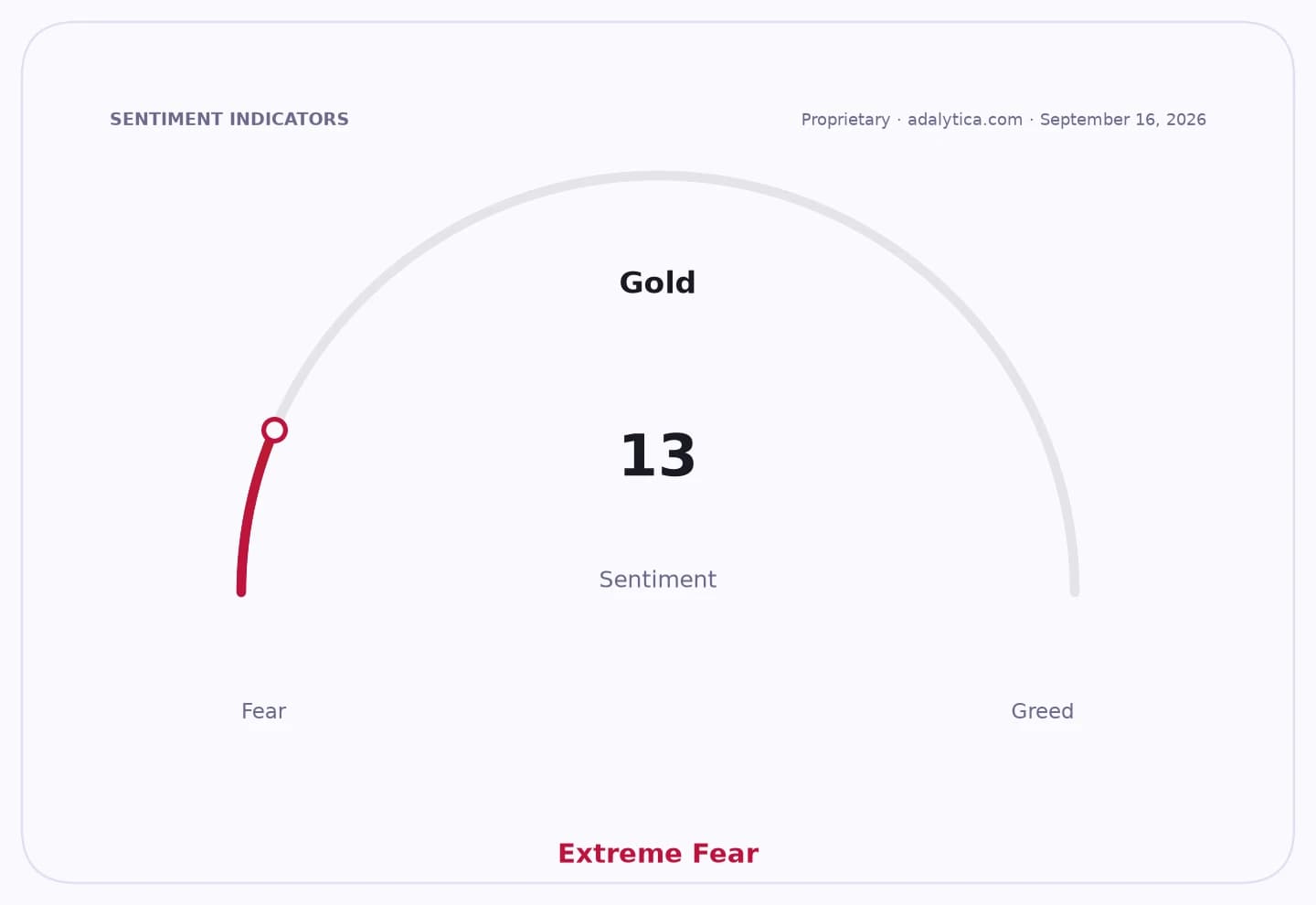
Sentiment IndicatorsⓘProprietary · adalytica.com · August 22, 2026
This is a snapshot — live sentiment, awareness and momentum for 130+ markets update continuously in the dashboard.Open AlphaPulse

GLD, the largest U.S. gold ETF, has climbed to about $423.36, with the fund’s 50-day average at roughly $383 and its 200-day average near $413, a sign of renewed momentum after a sharp spring correction. The ETF’s RSI is above 82, a conventional technical indicator that suggests the move has become extended, while the MACD has turned firmly positive. Adalytica’s Gold Fear & Greed Index also shows sentiment at 74, in “Greed” territory, up 61 points over the past month, underscoring that demand for paper gold has accelerated.
That rally has been broad enough to lift miners too. The VanEck Gold Miners ETF, GDX, has surged to about $102.83 from $76.78 at the end of July, and Newmont has risen to $131.58 from $114.19 earlier this month. Miners tend to outperform bullion in rising-price environments because operating leverage magnifies every incremental move in the gold price, although they also carry cost, political and execution risk. Newmont’s latest filing flagged a 11% increase in all-in sustaining costs per gold ounce, a reminder that miners can disappoint even when the commodity is strong.

For investors, the key point is that gold jewelry is a consumption purchase disguised as an asset. A necklace or bracelet may track the metal price loosely, but it typically includes retail markups, fabrication costs and liquidity friction on resale. ETFs such as GLD and IAU offer far cleaner exposure to spot gold, while miners like Newmont and GDX offer upside if gold prices keep rising, especially if Morgan Stanley’s forecast of gold above $5,000 an ounce by 2027 proves right. But that second route is a bet on margins, not just bullion.
The bull case for jewelry is emotional and practical: it is tangible, easy to gift, and in some markets it serves as both adornment and emergency savings. The bear case is economic: jewelry is an illiquid asset with embedded costs, no cash flow and poor price efficiency versus financial instruments. For investors looking to hedge inflation, currency weakness or market stress, the better trade is usually the metal itself, or the miners if they want leverage and can tolerate volatility.
With gold sentiment already running hot and GLD technically stretched, the next catalyst is less about whether investors want gold and more about which vehicle they choose. If real yields stay high, bullion may struggle to break out sustainably; if they ease and the dollar weakens further, ETFs and miners are likely to capture the biggest gains first.
| Entity | Gains | Losses |
|---|---|---|
| GLD / gold ETFs | ▲Clean spot exposure | ▼None of jewelry’s resale drag |
| Gold miners | ▲Operating leverage to higher gold | ▼Cost inflation and execution risk |
| Jewelry buyers | ▲Tangible ownership | ▼Markups and illiquidity |
| Bullion holders | ▲Direct hedge against inflation | ▼No income generation |