Gold is still being supported by the Federal Reserve’s policy path, even as the metal trades with short-term volatility, because the market is increasingly treating rate settings and bond yields as the main determinant of whether the rally can extend.
Gold Supported by Fed Patience and Sticky Inflation
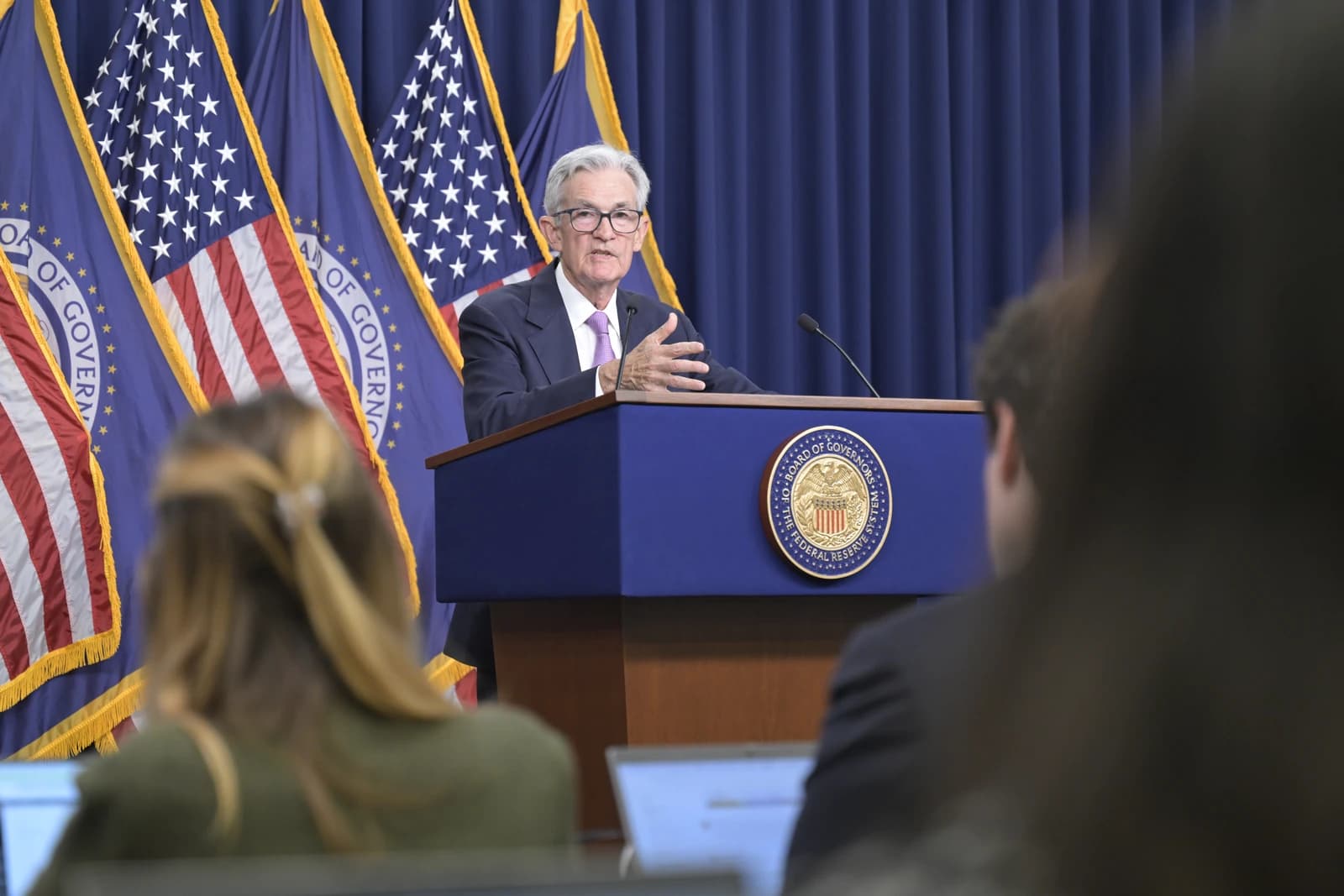
That matters because the latest data still point to a Fed that is not easing aggressively enough to crush gold’s appeal, while Treasury yields remain elevated but not decisively restrictive enough to end the trade. The fed funds rate is forecast at 3.627% for July 2026, only marginally below June’s 3.63%, suggesting policy is stable rather than tightening into the metal. At the same time, the 10-year Treasury yield has climbed to 4.6% and is forecast to edge higher, a level that keeps the opportunity cost of holding bullion relevant but has not prevented gold from remaining near historically elevated levels.
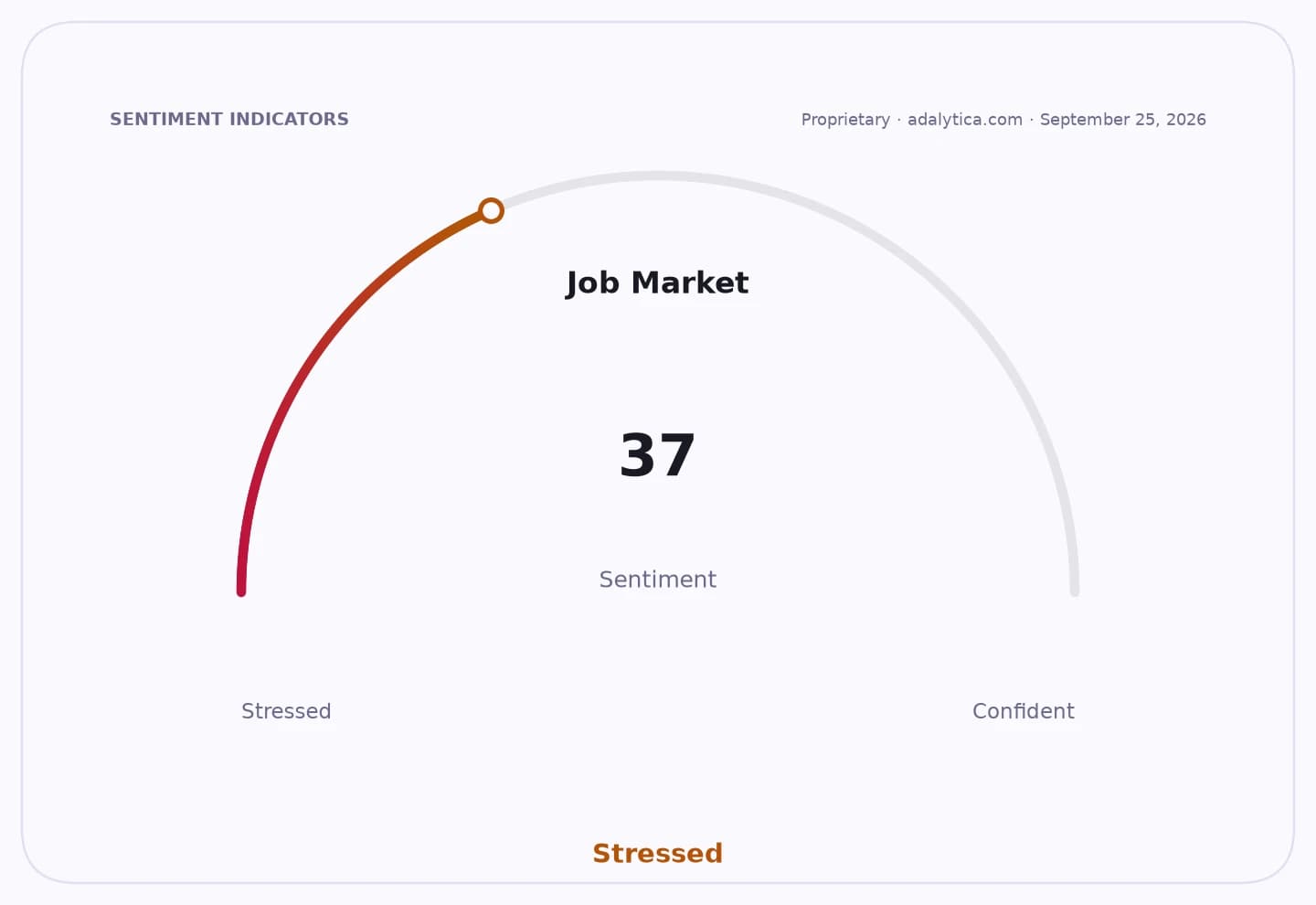
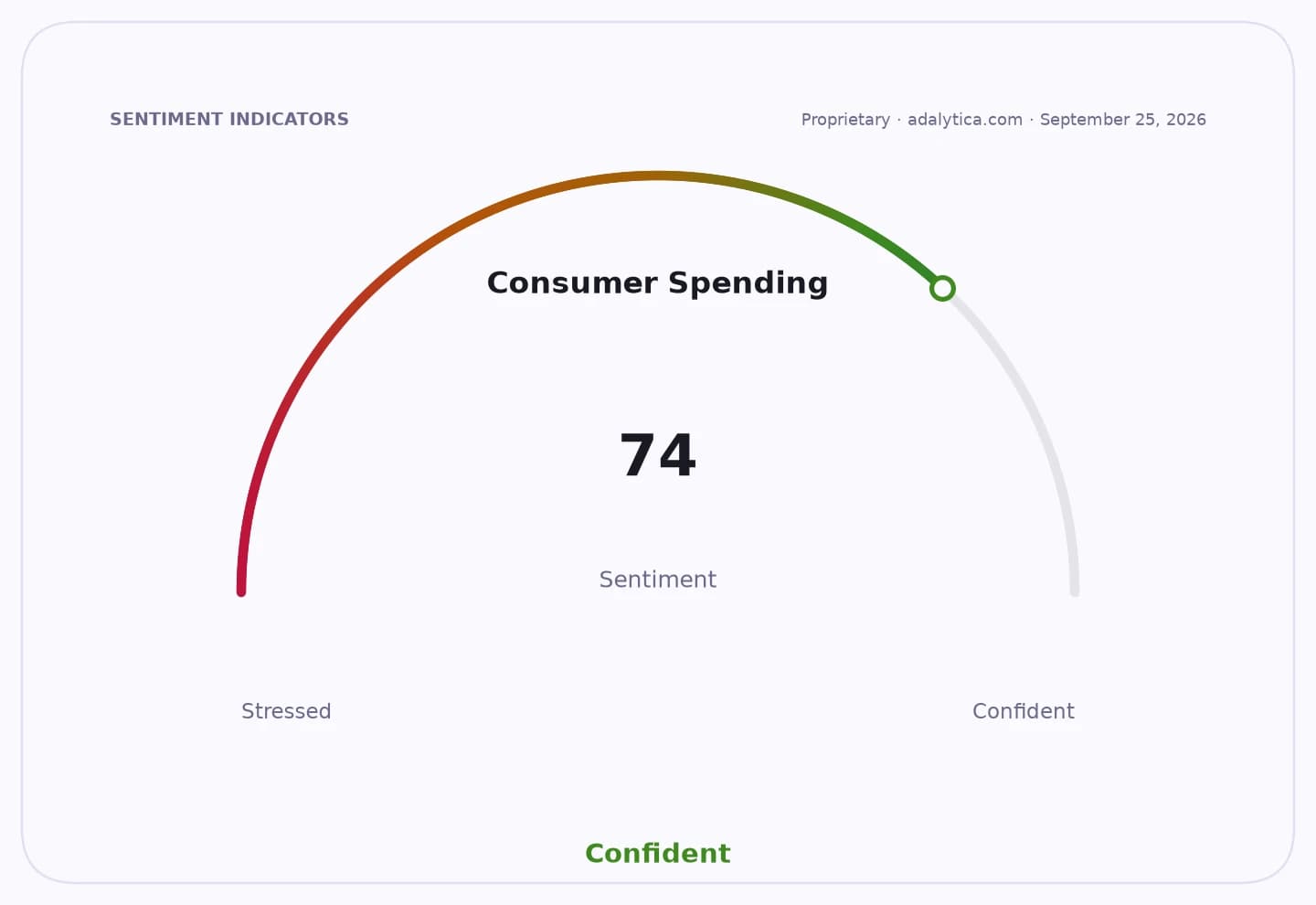
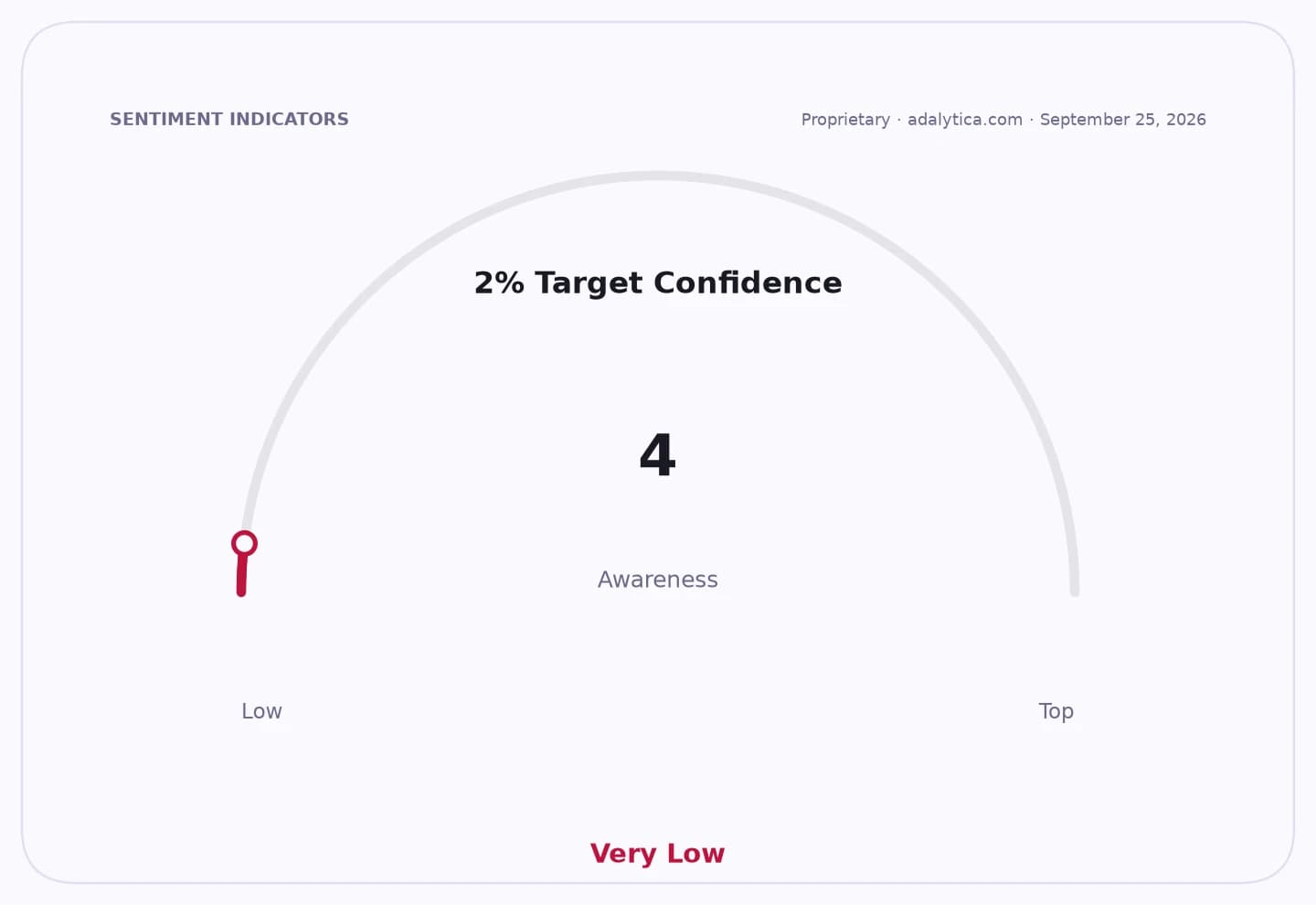
Sentiment IndicatorsⓘProprietary · adalytica.com · July 24, 2026
This is a snapshot — live sentiment, awareness and momentum for 130+ markets update continuously in the dashboard.Open AlphaPulse
The bigger picture is inflation. The CPI index remains high at 332.568 in June and is forecast to rise to 335.512 in July, reinforcing the view that the Fed has limited room to pivot forcefully toward easier money. That combination — sticky prices, a restrictive but steady policy rate, and a bond market that has not forced a dramatic repricing of growth — is the backdrop in which gold continues to find support. For investors, the key point is that gold often performs best not when rates collapse, but when markets believe the Fed is moving from tightening risk to policy patience.
That is reflected in trading. Gold futures have been volatile, with GC=F closing at 4,028.3 on July 24 after briefly trading above 5,200 in March. The pullback has been sharp, but the price remains far above last year’s levels and well above the 50-day moving average at 4,254.05? Actually the more telling signal is that the recent price has slipped below both the 50-day average and the 200-day average at 4,478.08, showing the broader trend has cooled even as the market continues to respect gold’s strategic role as a policy hedge. The MACD remains negative, and RSI has eased to 41.0, which suggests momentum has weakened without yet signalling outright capitulation.
Gold miners have followed the same pattern. GDX closed at 75.02 on July 23, below its 50-day and 200-day moving averages, after a huge surge earlier in the year and a subsequent correction. That tells investors the sector is no longer in the explosive phase of the rally, but the fundamental link to rates and inflation has not broken. Newmont’s latest filing also underlines the risk: gold prices directly drive profitability and cash flow, so even modest shifts in the policy narrative can move earnings estimates sharply.
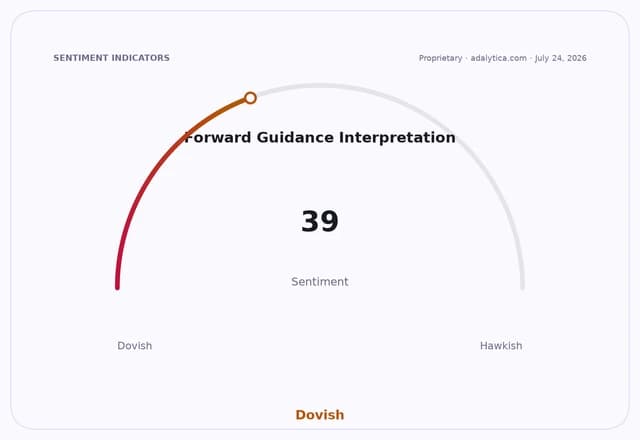
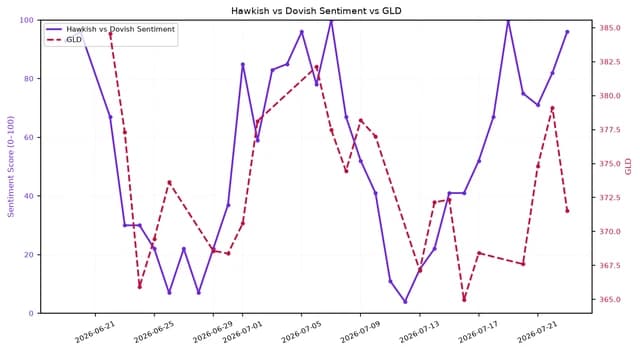
Adalytica’s Hawkish vs Dovish Fed Policy Sentiment gauge is flashing extreme hawkishness at 96, while forward guidance sentiment sits neutral at 39. That split captures the central market tension: traders see a still-restrictive Fed, but not one delivering a clear new tightening shock. In practice, that leaves gold in a battleground between higher real yields and persistent macro uncertainty.
The bull case is that the Fed is done with aggressive tightening, inflation is still sticky, and any slowdown in growth or policy turn toward cuts would quickly restore upside for bullion and miners. The bear case is that real yields stay elevated, the dollar remains firm, and gold’s recent breakout proves temporary. For now, the policy game still favors gold more than it favors bonds — but only if investors believe the Fed is pausing, not re-accelerating.
| Entity | Gains | Losses |
|---|---|---|
| Gold bullion | ▲Hedge demand, policy support | ▼Higher real yields |
| Gold miners | ▲Stronger margin expectations | ▼Price volatility |
| Fed hawks | ▲Credibility on inflation | ▼Softer gold prices |
| Bondholders | ▲Higher carry | ▼Inflation uncertainty |