21-carat gold is trading at 84 dinars in the local market, a price point that underscores how quickly bullion costs are being pulled higher by a mix of global price swings and still-elevated inflation pressures.
Gold Prices Rise as Inflation and Yields Clash
The move matters because gold in many local markets is not just a luxury purchase but a store of value and a hedge against currency weakness and rising prices. When retail gold prices jump, it can tighten household spending, delay jewelry purchases and widen the gap between international bullion benchmarks and what consumers actually pay on the street.
The latest reading comes as U.S. consumer prices remain elevated, with the CPI running at 332.6 in June after a 40.1% increase from the earlier level shown in the data. That inflation backdrop helps keep gold attractive, even as the 10-year Treasury yield has climbed to 4.71%, reinforcing the tug-of-war between inflation hedging and higher real-return alternatives.
Global crude at about $84 a barrel also feeds the story, since energy costs remain a key input into transportation, refining and broader price pressures. For local buyers, that means the 84-dinar quote is part of a wider cost-of-living squeeze, not an isolated move in precious metals.
Investors are watching because gold-related assets are still drawing strong demand. GLD closed at $373.90 on July 27, with the ETF trading above its 50-day moving average but below its 200-day moving average, while RSI readings and MACD suggest the recent rebound has cooled from the extreme momentum seen earlier in the year. IAU and GDX show a similar pattern: prices have recovered from recent lows, but the broader trend still reflects choppy positioning rather than a clean breakout.
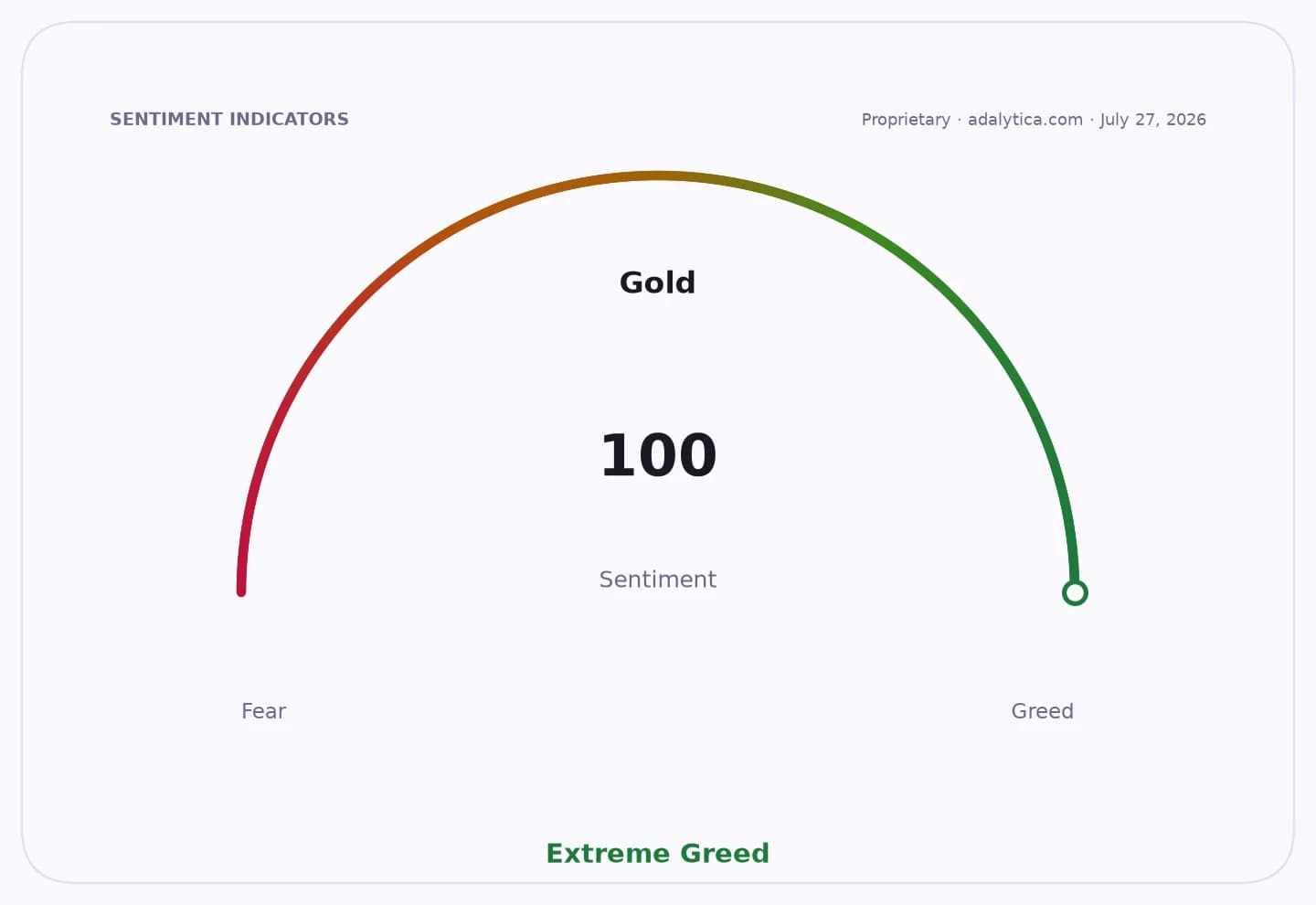
Adalytica’s Gold Fear & Greed Index is at 100, labeled Extreme Greed, with awareness at 70 and a 30-day jump of 73 points. That suggests sentiment remains stretched even after recent pullbacks, which leaves the market vulnerable to sharp swings if the dollar, Treasury yields or inflation data surprise.
For consumers, the key risk is that another leg higher in international bullion or local currency weakness could push retail gold higher again. For investors, the next catalyst is the next inflation read and any move in bond yields, both of which will shape whether gold stays bid or finally loses some of its shine.
| Entity | Gains | Losses |
|---|---|---|
| Gold holders | ▲Inflation hedge | ▼Higher entry costs |
| Local consumers | ▲Store-of-value access | ▼Jewelry affordability |
| Gold ETFs/miners | ▲Strong demand | ▼Volatility risk |
| Bond investors | ▲Higher yields | ▼Less gold appeal |