Gold climbed to its strongest level since early June as investors piled into the metal on the back of falling US yields, a softer dollar and mounting concern that record Treasury issuance and AI-fueled spending are keeping long-term borrowing costs elevated.
Gold Rises on Lower Yields and Soft Dollar

That matters because gold is once again behaving like a hedge against a macro regime the market does not fully trust: stubborn inflation, heavy government borrowing and an increasingly expensive financing backdrop for both the public and private sectors. When real yields stop giving gold a hard headwind, the metal’s appeal rises fast — especially when Washington is preparing to push national debt above $40 trillion and Treasury markets remain volatile.
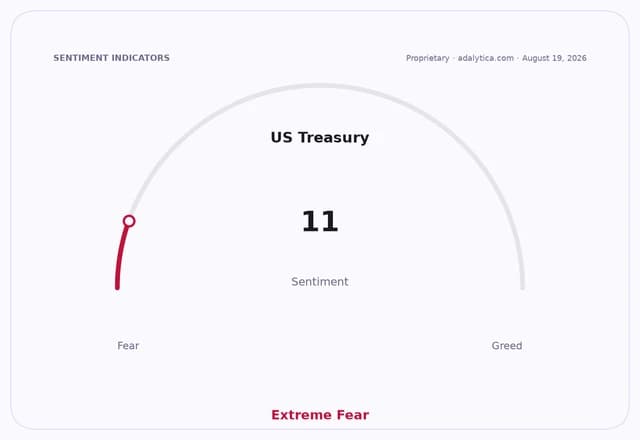
Sentiment IndicatorsⓘProprietary · adalytica.com · August 19, 2026
This is a snapshot — live sentiment, awareness and momentum for 130+ markets update continuously in the dashboard.Open AlphaPulse
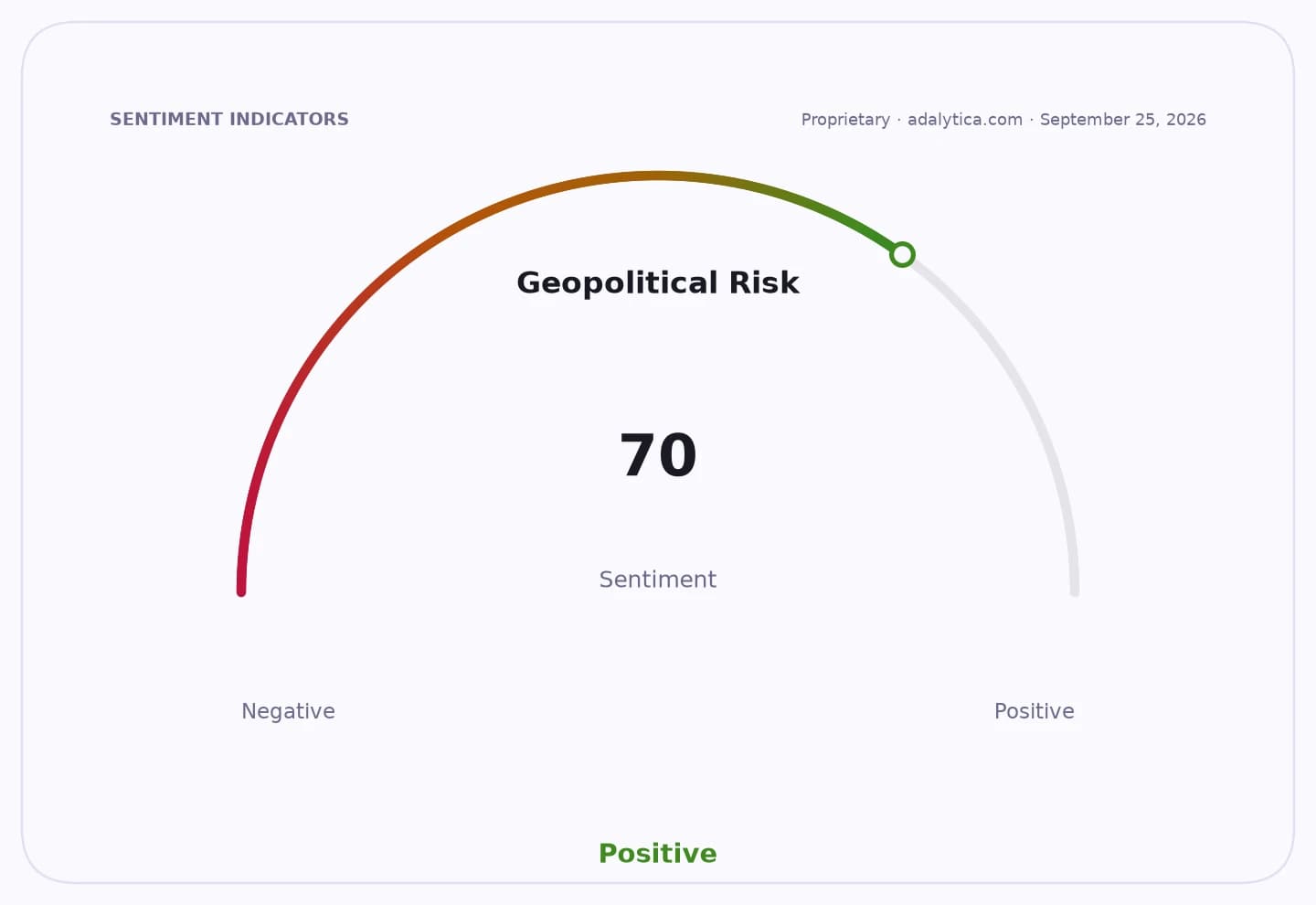
December gold futures rose to $4,552.9 an ounce on Wednesday, while GLD, the largest gold-backed exchange-traded fund, closed at $412.26 after touching a high of $412.69. The ETF is now trading above its 50-day moving average and near its upper Bollinger Band, with RSI readings in overbought territory, a sign that momentum is strong even after a sharp run. Adalytica’s gold fear-and-greed gauge still sits in neutral mode, suggesting the move has not yet reached the kind of euphoric positioning that usually marks a near-term top.
The catalyst is a bond market that is starting to price in a more fragile fiscal outlook. The 10-year Treasury yield was around 4.694%, down from recent highs but still elevated by historical standards, while high-yield credit spreads narrowed only modestly to 2.729 percentage points, showing investors remain selective rather than broadly relaxed about risk. The Treasury’s plan to double long-dated debt buybacks underscores how serious the pressure has become as Washington tries to smooth liquidity in the long end of the curve.
For investors, the trade is bigger than a short-term gold pop. The setup points to a structural bid for hard assets, miners and balance-sheet hedges if borrowing costs stay sticky and deficits keep rising. The market is also underestimating the second-order effect of AI capex: if massive data-center and infrastructure spending continues to require heavy debt issuance, it can keep pressure on yields and reinforce demand for non-yielding stores of value like gold.
That is the narrative the market is waking up to — not just inflation, but the cost of financing the next wave of growth. If Treasury supply keeps swelling and the dollar stays soft, gold can keep attracting capital from institutions that want protection from fiscal drift without betting directly against risk assets. For now, the message is clear: buy the hedge before the debt math gets worse.
| Entity | Gains | Losses |
|---|---|---|
| Gold / GLD | ▲Safe-haven demand | ▼Higher volatility in overbought runs |
| Gold miners | ▲Stronger margins | ▼Input-cost pressure |
| US Treasury | ▲Buyback flexibility | ▼Higher funding burden |
| Dollar / bond bulls | ▲Short-term relief from yields | ▼Loss of momentum to hard assets |